 English
  Spanish
  German
  Russian
  Italian
  French

Introduction
Aluminum alloys are widely used in a wide range of industries due to their high strength to weight ratio, inherent corrosion resistance, and ease of forming. Of all the aluminum grades, 5052 and 6061 are among the most popular aluminum alloys. Both of them are part of the wrought aluminum alloys group and have some similarities, but they have differences that qualify them for certain uses.
It is important for engineers, designers and manufacturers to understand the differences in the 5052 vs 6061 comparison in order to make the right choices that meet the requirements of the project. This paper will provide an overview of their chemical compositions, physical and mechanical properties, fabrication characteristics and their applications to provide a clear understanding for selection.
What is Aluminum 5052?
Aluminum 5052 is the unquestioned king of strength and shapeability in the world of aluminum alloys. Being the strongest of the non-heat-treatable grades, it is based on a simple yet potent ingredient: magnesium. This is the most important feature that 5052 possesses:
- Unparalleled Corrosion Resistance: It has excellent performance in severe conditions, especially in saltwater, which makes it the default option in marine and chemical applications.
- Exceptional Formability: It can be readily bent, stamped and drawn into intricate shapes without cracking, a feature that sheet metal fabricators treasure highly.
- High Fatigue Strength: It is very strong against vibrations and cyclic loading, which guarantees the parts life in dynamic conditions.
Think of 5052 as the “Coastal Defender.” It is not as tough as structural alloys, but its toughness, flexibility and almost complete resistance to corrosive attack make it invaluable. In brief, where your design requires easy fabrication and will encounter the elements, 5052 is the expert you call upon.
What is Aluminum 6061?
Aluminum 6061 would be a regular in the ”Most Valuable Player” award had there been such a thing. It is the classic structural alloy, prized due to its vast versatility and strength which is a result of its heat-treatability. Its strength is in an exact combination of magnesium and silicon, which opens the door to its precipitation-hardening to the legendary T6 temper. This renders it a real all-rounder with a winning mix of properties:
- Superior Strength-to-Weight Ratio: It offers excellent strength after heat treatment, which makes it ideal in load-bearing applications where the weight is of paramount importance.
- High Machinability: It cuts well and is popular in CNC machining, where it is possible to produce accurate and intricate components with a good surface finish.
- High Versatility: It is easily welded and joined and it is responsive to finishing processes such as anodizing.
We refer to 6061 as the ”Structural Workhorse”. Its corrosion resistance is good in most general applications, but it is a calculated trade-off with enormous strength. In simple terms, 6061 is the most reliable choice in the industry when your project needs a high-strength, hard, and machinable backbone, whether it is an aircraft wing or a robotic arm.
5052 Aluminum vs 6061: Chemical and Physical Properties
To fully grasp the 6061 vs 5052 aluminum debate, it is important to first understand the chemical composition and physical properties of the two metals. These differences in the components determine their characteristics, including superior strength, and their ability to be used in various applications.
Chemical Composition
The primary distinction in the al 5052 vs 6061 matchup lies in their chemical composition.
| Property | 5052 Aluminum | 6061 Aluminum |
| Primary Alloying Element | Magnesium (Mg) 2.2-2.8% | Magnesium (Mg) 0.8-1.2%, Silicon (Si) 0.4-0.8% |
| Other Elements | Chromium (Cr) 0.15-0.35%, Silicon, Iron, Copper, Manganese, Zinc | Copper (Cu) 0.15-0.40%, Chromium (Cr), Iron, Manganese, Zinc, Titanium |
The most significant element added to 5052 aluminum is magnesium which makes up between 2.2% and 2.8% of the alloy. This high magnesium content also increases its strength and makes it to be resistant to corrosion such as pitting especially in marine environment. Chromium (0.15%-0.35%) enhance the corrosion resistance and also arrest the grain growth during welding.
The remaining element include silicon of not more than 0.25%, iron of not more than 0.40%, and copper, manganese, and zinc of not more than 0.10% each. These are some of the factors that make the alloy strong and suitable to work under high pressure and stress.
On the other hand, 6061 aluminum is a more complicated alloy, and it contains magnesium and silicon as the main alloying elements, the magnesium content varies from 0.8-1.2% and silicon content from 0.4-0.8%. This makes 6061 to be heat treated in a way that will increase its strength to a very large extent due to the presence of magnesium and silicon.
Other elements that are also added to 6061 include copper at 0.15% – 0.40% to increase the hardness of the metal and chromium at 0.04% – 0.35% for enhanced corrosion resistance. Iron not more than 0.7%, manganese not more than 0.15%, zinc not more than 0.25% and titanium not more than 0.15% are added to enhance the product’s strength. This balanced composition makes 6061 suitable for structural and high stress applications, for instance, parts of pressure vessels.
Curious about the differences between titanium and aluminum? Head over to titanium vs aluminum for a deeper dive.
Physical Properties Comparison
Beyond their chemical composition, the physical properties of 5052 and 6061 aluminum also reveal important distinctions. These properties define the characteristics of the materials and their performance under different conditions and are very essential in determining the design and use of the materials. These properties help define the outcome of a 6061 vs 5052 comparison.
| Property | 5052 Aluminum | 6061 Aluminum |
| Density | 2.68 g/cm³ | 2.70 g/cm³ |
| Thermal Conductivity | 138 W/m-K | 151-167 W/m-K |
| Electrical Conductivity | 34% IACS | 40-43% IACS |
| Corrosion Resistance | Excellent, especially marine | Good, less so in seawater |
Density: The densities of both the alloys are almost the same with a slight difference that 6061 is denser. This minor difference does not make a big difference in the selection of the material unless weight is a very sensitive factor.
Thermal Conductivity: 6061 aluminum has a better thermal conductivity than 5052. This makes 6061 a better conductor of heat and therefore ideal for use in heat sinks or some automotive parts.
Electrical Conductivity: As in the case of thermal conductivity, electrical conductivity is also higher in 6061. This makes it more suitable for electrical applications where there is need to have efficient flow of current.
Corrosion Resistance: This is a major factor of difference. 5052 aluminum has a higher corrosion resistance compared to other aluminum alloys especially to salt water and marine environment. It has a higher content of magnesium that gives it a better protection through a strong oxide layer. Although 6061 has relatively higher corrosion resistance than other grades, it is less resistant to corrosion than 5052 particularly in marine environment. This makes 5052 the ideal one for use in areas where it will be exposed to corrosive substances for a long time.
5052 Aluminum vs 6061: Mechanical Property Differences
Mechanical properties of aluminum alloy include the strength to resist different types of stress and strain, which are important for structural and load bearing applications. The table below provides a practical comparison of 5052-H32 and 6061-T6, the most common commercial forms of these alloys, reflecting a true-to-life material selection scenario for engineers and designers when evaluating 5052-h32 vs 6061-t6.
| Property | 5052 Aluminum (H32) | 6061 Aluminum (T6) |
| Tensile Strength (MPa) | 262 | 310 |
| Yield Strength (MPa) | 214 | 276 |
| Fatigue Strength (MPa) | 130 | 96.5 |
| Hardness (Brinell) | 77 | 95 |
| Modulus of Elasticity (GPa) | 70.3 | 68.9 |
Note: The values given above are average and may havdiffer depending on the temper and the form of the product.
Tensile Strength
Tensile strength is the maximum stress an alloy can take before failure under tension. The tensile strength of 6061-T6 aluminum remains higher at 310 MPa compared to the 262 MPa of 5052-H32 aluminum. This makes 6061-T6 a stronger material for applications that require high load-bearing capacity.
Yield Strength
Yield strength is the stress level at which an alloy starts to undergo permanent deformation. Like tensile strength, 6061-T6 has a higher yield strength of 276 MPa than 5052-H32, which has a yield strength of 214 MPa. This means that 6061 can take higher loads before it deforms permanently and is therefore very suitable for structural parts.
Fatigue Strength
Fatigue strength is the ability of a material to withstand cyclic stress without failure. Notably, 5052-H32 has a significantly high fatigue strength of 130 MPa, which is considerably greater than the 96.5 MPa of 6061-T6. This makes 5052-H32 an excellent choice for applications that involve constant cyclic loading or vibration.
Hardness
Hardness is a material property that measures its ability to resist localized plastic deformation such as scratching or indentation. 6061-T6 has a higher Brinell hardness of 95 compared to 5052-H32’s hardness of 77, which indicates that the former is more resistant to surface scratching and indentation.
Modulus of Elasticity
Young’s modulus of elasticity is the measure of a material’s stiffness. The modulus of elasticity of 5052-H32 is 70.3 GPa and 6061-T6 is 68.9 GPa. This shows that both materials have very similar stiffness, with 5052 being slightly stiffer.
5052 Aluminum vs 6061: Fabrication and Processing

The workability of an aluminum alloy is an important factor in manufacturing processes and techniques because aluminum alloy can be easily formed, bonded, and finished for specific applications. There are also differences in the ability of the various aluminum alloys to be machined, formed, welded, and their behavior when subjected to heat treatments.
Machinability
Aluminum 6061-T6 is characterized by high machinability, which is why it is one of the best materials to use in such operations as milling, turning, and drilling. Its structure permits predictable, brittle chip breaking, which increases the rate of material removal and a high-quality surface finish. This is why it is perfect in high-speed machining using standard carbide tools, which leads to faster production and reduced costs of precision components.
Conversely, 5052-H32 aluminum is thought to be more difficult to machine. It is relatively soft and therefore tends to form long, sticky chips and form a built-up edge on the cutting tool. To overcome this, special machining techniques are needed, including very sharp tooling (such as High-Speed Steel) and parameter settings, such as feed rates, to successfully control chip formation and obtain a clean cut.
Formability
In forming, 5052-H32 is much better alloy. It is also very ductile and therefore it is best suited to complex sheet metal work such as complex bends, stamping and deep drawing. On the other hand, 6061-T6 is much harder to form. Its heat treatment has provided it with high strength at the literal expense of lower ductility, which poses serious Design for Manufacturability (DFM) challenges.
As an example, the minimum bend radius of 5052-H32 is significantly smaller (usually 1.0T with a 1.5mm sheet) than that of 6061-T6, which must have a significantly larger radius (usually 2.5T or more) to avoid stress fractures along the bend line. Moreover, 6061-T6 has a much greater springback, or the ability to resume its original shape following bending. This effect must be accurately compensated to achieve tight dimensional tolerances and needs advanced process controls and tooling. At TZR, this is overcome by leveraging advanced press brake controls and proprietary tooling to consistently achieve high precision on complex bends.
Welding
Aluminum 5052 and 6061 can be welded using methods such as GMAW and GTAW. However, welding procedures, filler alloys, and post-weld treatments have to be selected depending on the alloy and the application of the material, considering the specific alloy and the purpose of its usage.
5052 aluminum is highly suitable for welding, and the welds are strong and consistent when the right welding procedures are used. However, 6061 is also weldable, but it has heat-treatable characteristics that are difficult to manage. The heat produced during welding can change the characteristics of the material in the heat affected zone and thus decrease its strength. In some instances, post-weld heat treatment may be required to restore the material to its intended mechanical characteristics.
Heat Treatment
One of the major differences between 5052 and 6061 aluminum is that the former is not heat-treatable while the latter is heat-treatable, which means that the strength and hardness of the 6061 aluminum can be significantly enhanced through controlled heating and cooling processes. For instance, the T6 temper of 6061 involves solution heat treatment, artificial aging, which causes the formation of fine particles within the microstructure of the alloy and thus increases the strength of the material.
5052, on the other hand, can normally not be heat treated for strength. It does not gain strength by heat treatment but by strain hardening which is done through cold working methods such as rolling or drawing. To obtain the desired strength in 5052, the amount of cold working is regulated, which leads to the creation of tempers such as H32, H34, H38, and so on, which indicate the level of strain hardening. Heat treatment does not strengthen 5052 but annealing can be used to make it softer and more pliable for further forming.
Finishing
The final finish of a part is critical for both aesthetics and protection. The alloy choice significantly impacts the outcome, especially with anodizing.
6061 aluminum is the ideal choice for decorative anodizing. Its chemical composition allows it to form a clean, uniform, and aesthetically pleasing anodic layer, available in various colors.
5052 aluminum, while it can be anodized for protection (clear anodize), is not well-suited for decorative colors. Variations in its composition, especially after welding, can lead to a blotchy or inconsistent color finish. If your product’s appearance relies on a high-quality colored anodized finish, 6061 is the superior choice.
For painting or powder coating, both alloys provide a good base after proper chemical pretreatment, with minimal differences in the final result.
For more information on aluminum fabrication, please visit https://www.tzrmetal.com/aluminium-fabrication/.
Cost Analysis: Beyond the Price Per Pound
Although the cost per pound of the raw material of 5052-H32 and 6061-T6 is usually similar, the actual cost of a finished part is determined by the overall manufacturing time and complexity. In manufacturing perspective, cost analysis should hence be based on overall production efficiency.
- Machining & Cutting Costs: 6061-T6 is generally less expensive when it comes to parts that need a lot of milling, drilling or intricate cutouts. It has a superior chip control that enables it to cut faster and longer tool life, which decreases machine hours and operational costs. The more cautious, slower style required in 5052 may add to the expense of highly machined parts.
- Forming & Fabrication Costs: 5052-H32 can be a less expensive total cost than complex bends and forms. Its high formability significantly minimizes the chances of failure of parts and scrap of materials during bending. Moreover, it can be flexible enough to allow a single, complicated part to be made where a 6061 design would need several distinct parts to be welded together, which would save a lot of labor and assembly time.
- Welding and Post-Processing Costs: The possibility of post-weld heat treatment to re-establish the strength of the Heat Affected Zone in 6061-T6 is a cost adder. This additional measure includes furnace time, energy use, and other quality control, not necessary in 5052.
- Finishing Costs: When a high quality, decorative anodized finish is a design consideration, it is more cost effective to choose 6061-T6 initially. It eliminates the possible expense of rework or scraped parts because of the blotchy or uneven finish that may arise when anodizing 5052.
5052 Aluminum vs 6061: Applications
The significant property differences in the aluminum 6061 vs 5052 comparison mean that both materials are widely used in different industries.
Applications of 5052 Aluminum
Marine Industry
5052 aluminum vs 6061 is a frequent consideration in the marine industry, where 5052 aluminum is ideal for use in marine applications since it is highly resistant to saltwater corrosion. This encompasses the fabrication of boat shells especially for boats that are small and those that are used in marine environments. These types of aluminum alloys are also applied to marine hardware such as cleats, railings, and fittings that need to be resistant to the marine environment for a long time.
Automotive Parts
The good formability of 5052 aluminum makes it ideal for use in manufacturing of auto parts such as body and fuel tank. It can be easily molded and has a reasonable strength to make it suitable for these applications. It also has application in some non-load bearing interior components and decorative moldings because of its appearance and ease of processing.
Electronic Product Housings
5052 aluminum is a versatile material that has moderate strength, good corrosion resistance and excellent formability, which makes it suitable for use in the construction of housingselectronic enclosures and enclosureshousings of electronics products. In this application area, it has the advantage of shielding internal components from environmental factors and at the same time having a relatively low weight.
Food Processing Equipment
In the food processing industry, the material used has to withstand the effects of cleaning chemicals and the food products themselves. 5052 aluminum alloy has high resistance to corrosion from cleaning solutions and the food products themselves, and is non-toxic, making it suitable for use in food processing equipment such as containers, tanks, and structural members that come into contact with food.
Sheet Metal Fabrication
Due to its high workability, 5052 aluminum is widely used in different sheet metal fabrication techniques. Its capacity to be bent, stamped, and deep drawn into various shapes without breaking is essential in manufacturing small intricate parts for use in appliances, construction and other structures.
Applications of 6061 Aluminum
Aerospace Industry Components
The high tensile strength and high strength-to-weight ratio of 6061 aluminum is a critical factor in the aerospace industry, making it ideal for numerous structural components. These include aircraft fittings, fuselage structures, wing ribs, and seat supports where minimizing weight while maintaining high strength is paramount for fuel efficiency and performance.
Automotive Parts
While 5052 is used for body panels, 6061 aluminum’s higher strength makes it suitable for more structurally demanding automotive applications. This includes chassis components, suspension parts, brackets, and various structural elements where the ability to withstand significant loads and stresses is essential for vehicle safety and performance.
Medical Equipment
The good strength, machinability, and corrosion resistance of 6061 aluminum make it a suitable material for a range of medical devices and equipment. This can include components for surgical instruments, orthopedic implants (often with specific surface treatments), and housings for medical diagnostic equipment where precision and reliability are crucial.
Building Structures
In the construction industry, 6061 aluminum is utilized for various structural applications where its high strength and good corrosion resistance offer advantages over steel in certain situations. This includes structural frameworks for buildings, roofing systems, bridge components, and architectural extrusions where a lightweight yet strong material is required.
Sheet Metal Fabrication
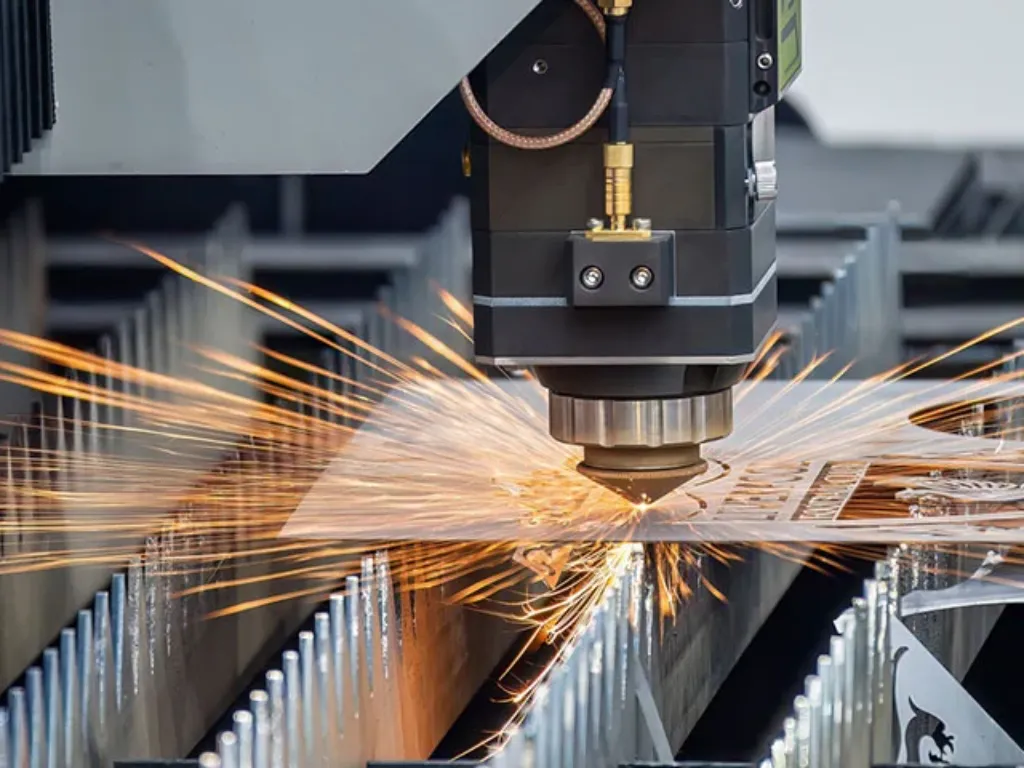
While known for its strength and machinability, 6061 aluminum is also utilized in sheet metal fabrication, particularly for parts requiring higher strength and rigidity. Processes like laser cutting, bending, and some forming operations are common, often used for creating structural brackets, enclosures, and components where durability is key.

TZR: Your Precision Sheet Metal Partner
When your project demands high-quality sheet metal components, choosing a partner with the right expertise is essential. TZR, a leading sheet metal manufacturer, specializes in precision processing of various metal sheets, including aluminum 5052 and 6061, offering tailored solutions across automotive, medical, 3D printing, and renewable energy industries.
With over 20 years of experience, we deliver precise and efficient manufacturing for projects of any scale. Our advanced processes enable us to handle complex bending angles with minimal marks, achieving an exceptional precision of ±0.02mm.
We maintain a 98% product qualification rate, meeting strict global standards. Trust TZR for reliable, high-precision sheet metal fabrication.
Contact us today to discuss your project requirements!
Conclusion
In the comparison of 6061 aluminum vs 5052, both alloys are industry workhorses, each possessing a distinct set of properties that makes them suitable for different applications. The aluminum 5052 vs 6061 choice depends entirely on project needs. 5052 shines with its superior corrosion resistance and excellent formability, making it ideal for marine and intricate sheet metal applications. On the other hand, 6061 boasts higher strength and good weldability, rendering it a preferred choice for structural and load-bearing components across various industries.
A brief note on cost. Generally, 6061 aluminum, particularly in heat-treated tempers, tends to be slightly more expensive than 5052 aluminum. This cost difference can be a factor in material selection, especially for large-volume production. Ultimately, the correct choice in the aluminium 6061 vs 5052 debate is not about determining which alloy is universally superior, but which is best suited for the specific demands of the project. By carefully matching the unique properties of 5052 or 6061 to their application’s requirements, engineers and designers can ensure the success and longevity of their projects.