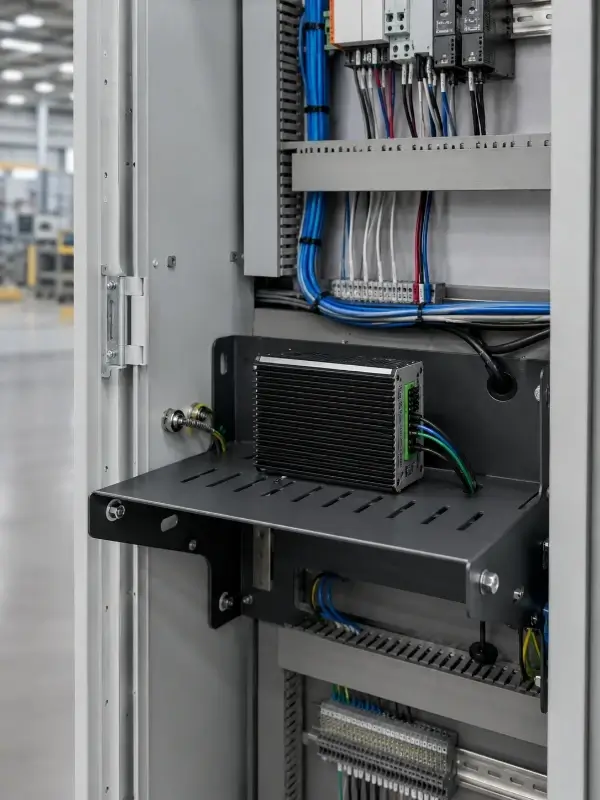
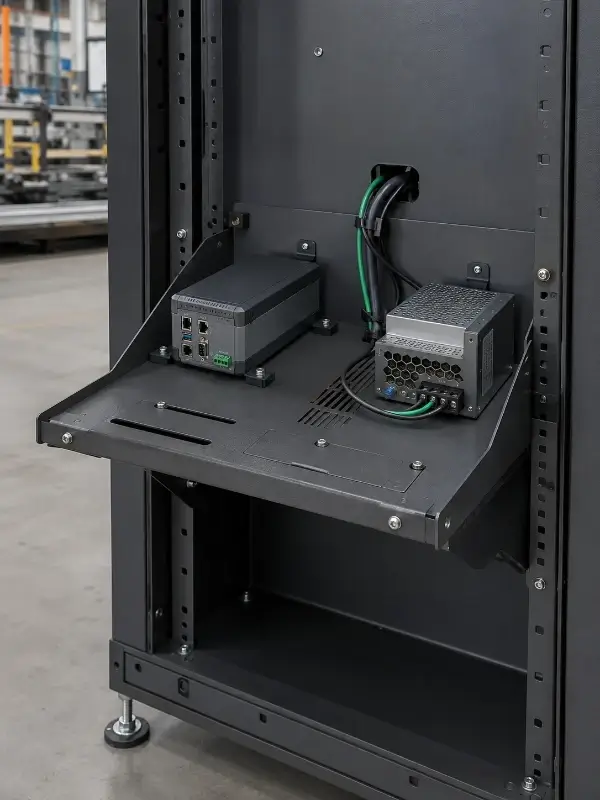
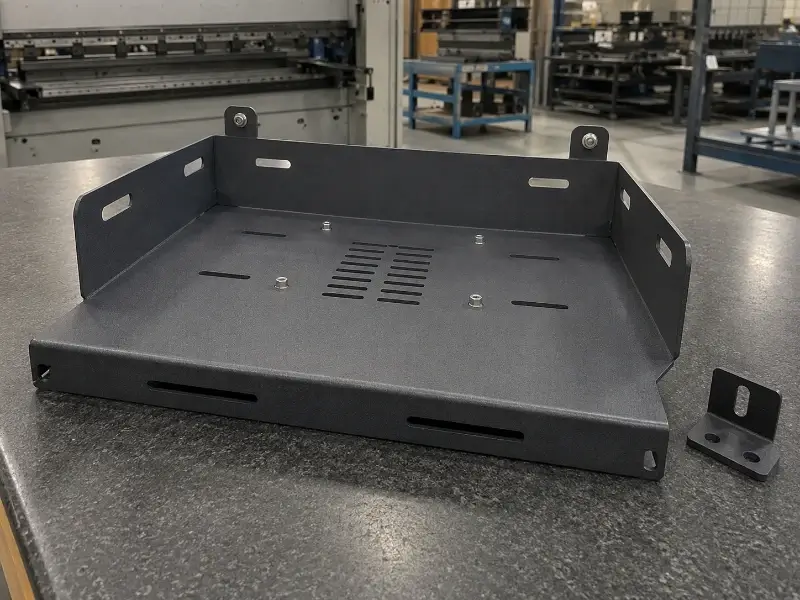
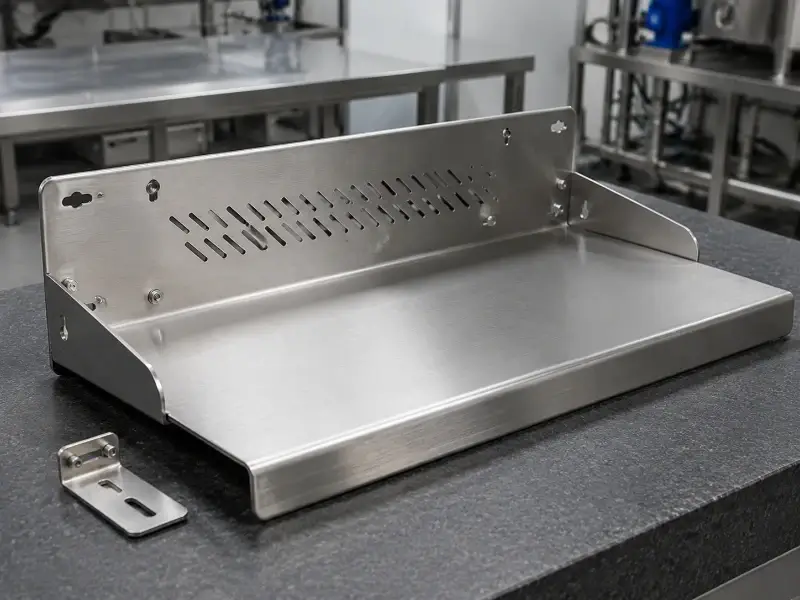
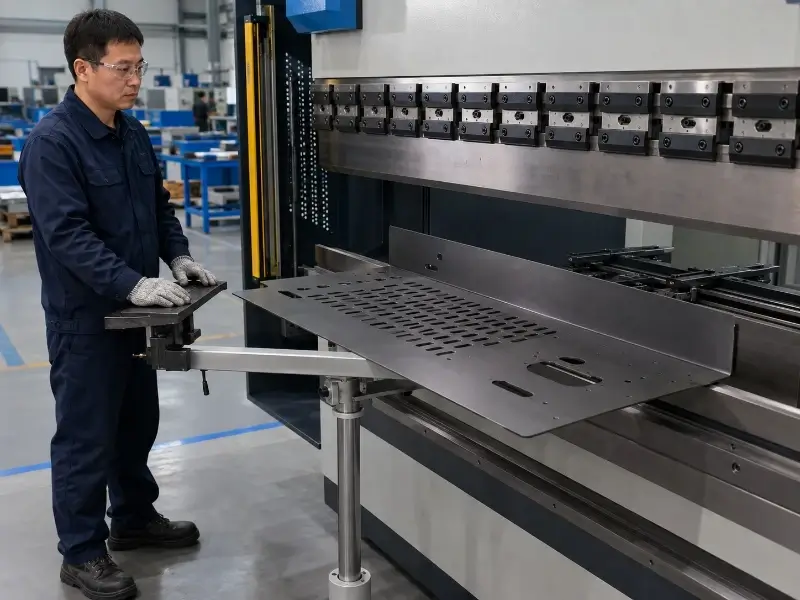
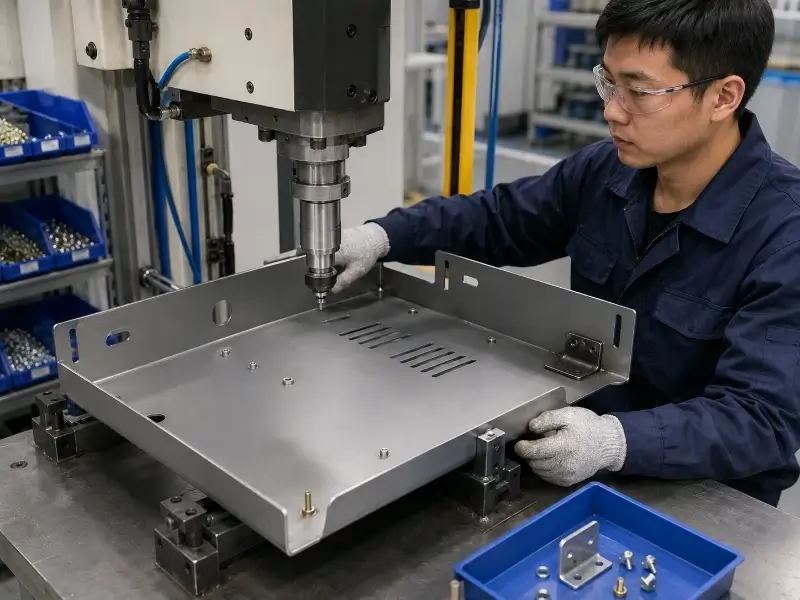
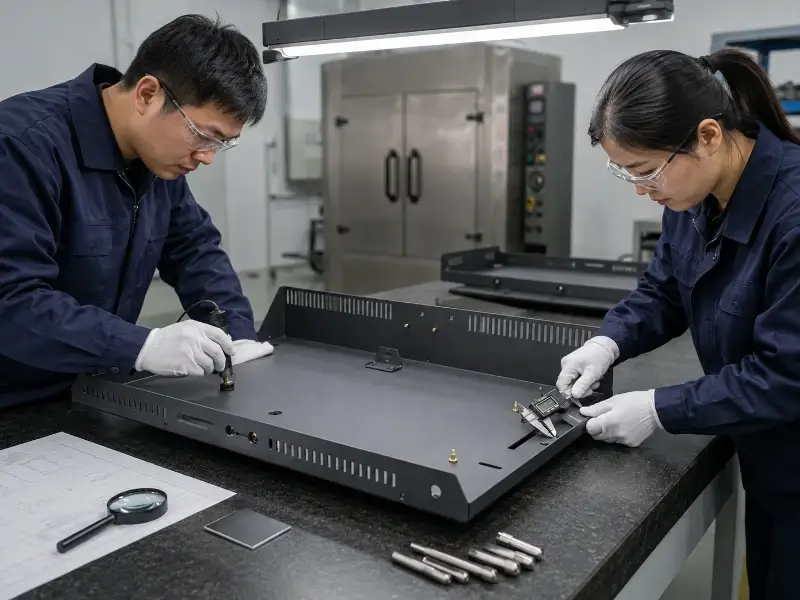
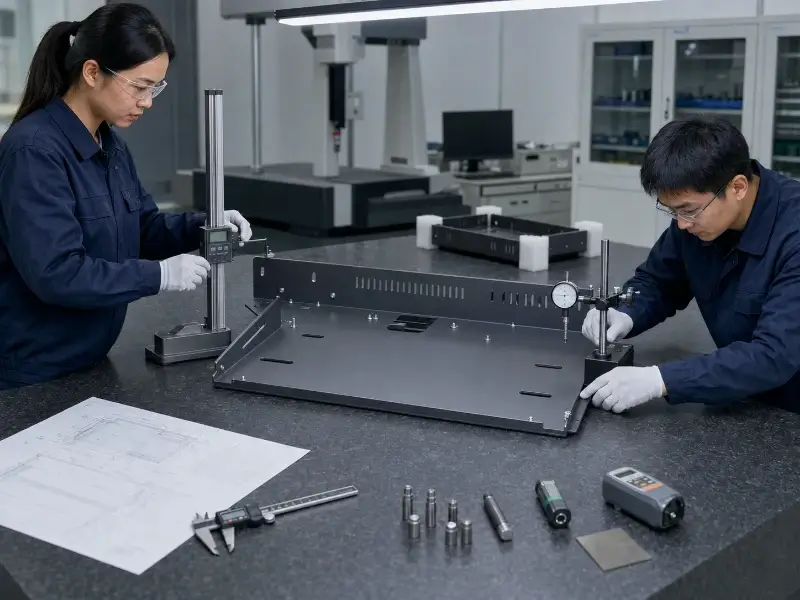
A custom mount shelf should fit the complete assembly rather than work as an isolated metal part. Mounting position, equipment weight, cable routing, cooling, access, and maintenance all affect the design.
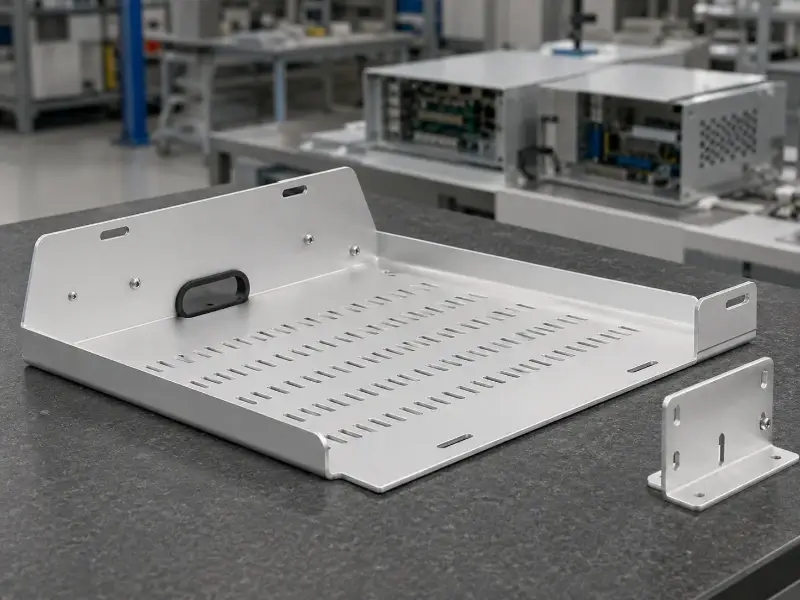
Features can include mounting flanges, locating tabs, slotted holes, equipment stops, cable openings, fan cutouts, brackets, and installed hardware.
Provide the enclosure or mating-part drawings so we can review how the shelf fits the complete assembly.
Material selection affects shelf weight, stiffness, corrosion resistance, appearance, and manufacturing cost.
A shelf can be formed from one sheet or built as a welded or mechanically fastened assembly. The right construction depends on shelf width, load, support points, access, and quantity.
Define the required finish, color, texture, visible areas, and masking requirements on the drawing.
Sheet thickness alone does not determine whether a mount shelf will perform correctly. Support span, flange height, bend direction, mounting location, hole pattern, and reinforcement also affect shelf stiffness.
Distributed or concentrated equipment loads
Equipment weight and center of gravity
Distance between supporting fasteners
Deflection across unsupported areas
Strength around ventilation openings
Clearance for cables and connectors
Access to screws and installed hardware
Bend and weld effects on final fit
Return flanges, formed channels, ribs, support brackets, or welded reinforcement may be considered when greater stiffness is required.
A finished mount shelf can arrive ready for assembly, reducing drilling, hardware installation, and manual adjustment at your facility.
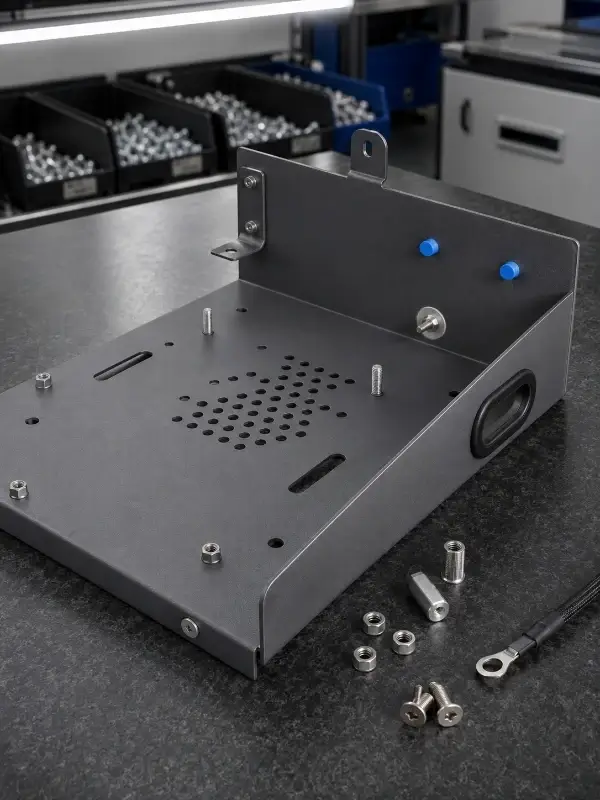
Round holes, slots, countersinks, counterbores, tabs, hooks, and notches can be produced. Specified PEM nuts, studs, standoffs, rivet nuts, and other hardware can also be installed.
Ventilation patterns, fan openings, and cable pass-throughs can be added without removing unnecessary material from critical load areas.
Grounding areas, masked threads, hardware orientation, visible surfaces, and cosmetic requirements should be marked on the drawing.
Clear feature definitions help reduce modification and adjustment during final equipment assembly.
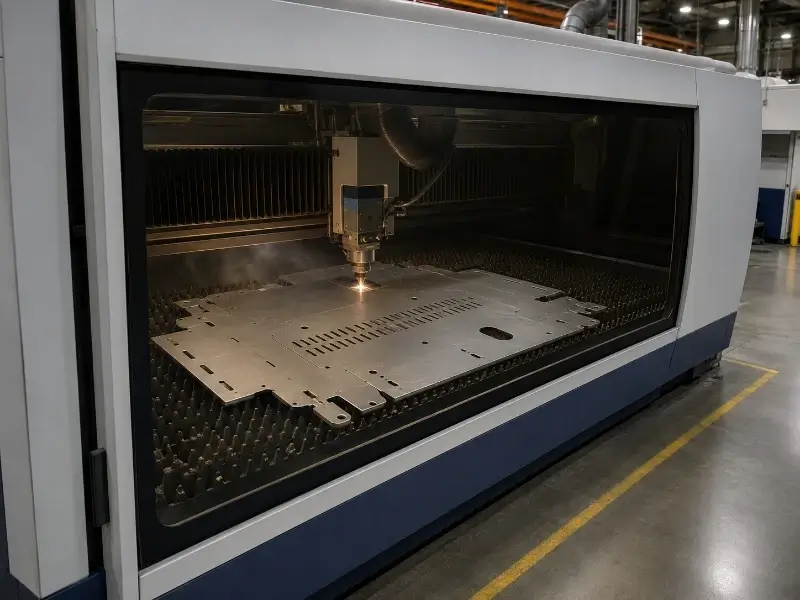
The production route is planned around the shelf design so that hole position, bend location, installed hardware, coating, and final fit remain coordinated.
This construction can reduce welding and simplify dimensional control.
This construction offers more structural options but requires control of distortion, flatness, and cosmetic surfaces.
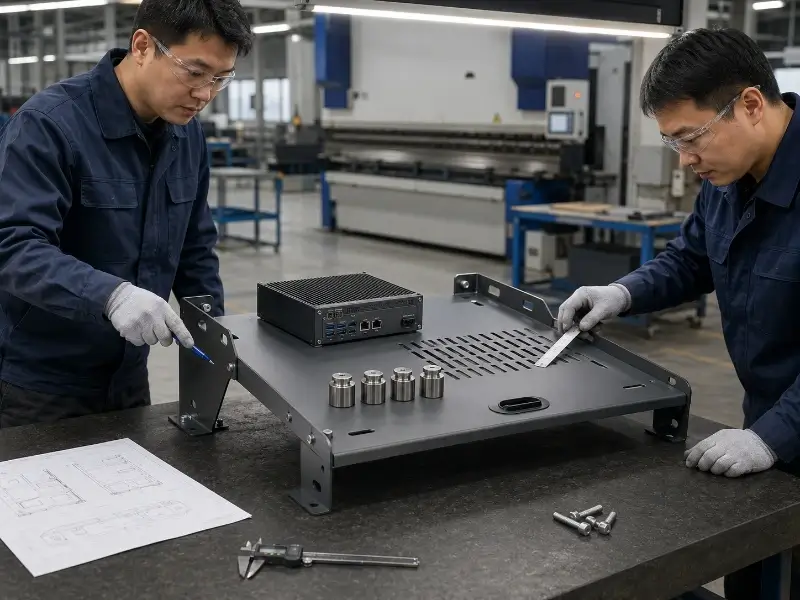
Prototype or first article builds can be used to confirm equipment fit before repeat production begins.
TZR operates under an ISO 9001:2015 quality management system.
Inspection requirements are based on the approved drawing, current revision, specifications, and agreed inspection plan.
Material grade and sheet thickness
Flatness using the agreed method
Overall shelf dimensions
Hardware type and installation
Mounting-hole size and location
Weld location and visible condition
Bend angles and flange positions
Finish coverage, color, and texture
First article reports, dimensional records, material certificates, or approved samples can be discussed during quotation.
Revision-controlled files and protective packaging help maintain consistency and protect finished surfaces and installed hardware.

 English
  Spanish
  German
  Russian
  Italian
  French