 English
  Spanish
  German
  Russian
  Italian
  French
Introduction
Choosing the right rating for your NEMA enclosures is not usually a box-ticking exercise. It is an operational and financial choice that weighs the initial purchase cost against the potentially disastrous equipment failure cost and the harmful effects on the equipment.
To engineers and procurement managers, the decision usually comes down to two industry giants, NEMA 12 and NEMA 4X. The difference appears easy on the surface: one is for indoor and the other for outdoor use. Nevertheless, the truth about industrial settings is hardly that black and white. Any wrong move here will result in either spending more money on protection than is necessary, or underspecifying and seeing costly electrical enclosure and their sensitive control panels drown in moisture and corrosion.
TZR, as a manufacturer of integrated sheet metal fabrication, is exposed to the practical aspect of this debate on a daily basis. We do not just read the standards, but bend the steel and weld the seams that guarantee strict adherence to them. This guide cuts through the technical jargon to give you a clear actionable comparison so that you invest in the specific degree of protection that your project needs.
What is NEMA 12 Rating?
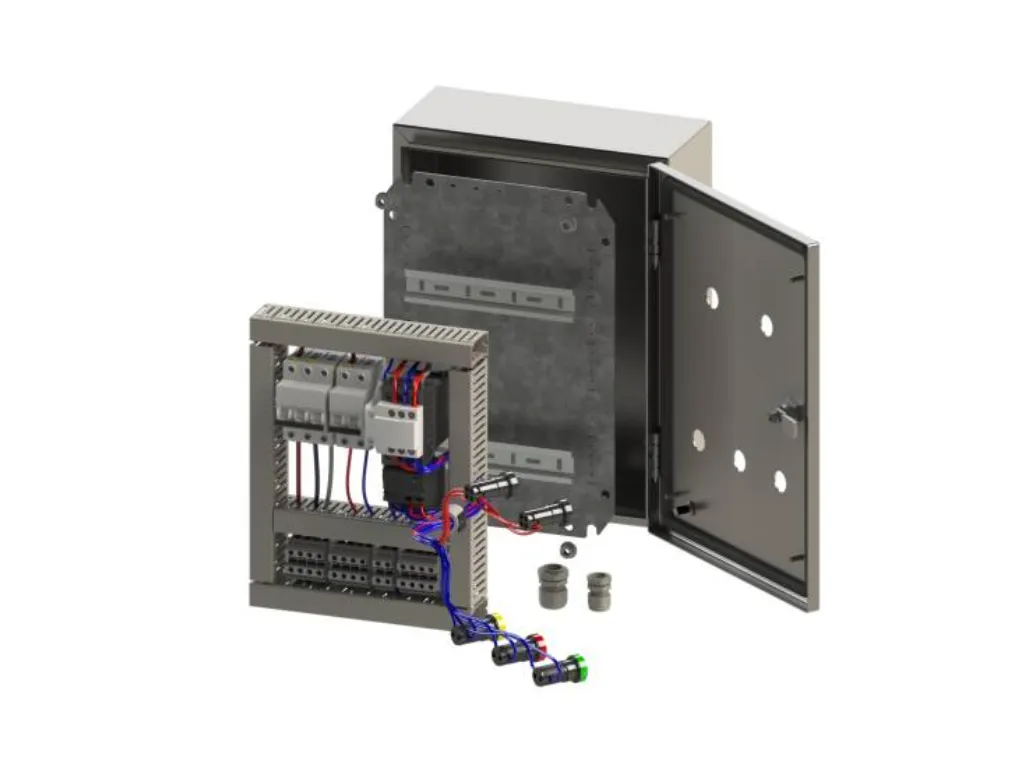
We should be specific about what NEMA 12 is according to established NEMA standards. NEMA 12 is the standard of indoor protection in the field of industrial manufacturing. It is intended to be used in general purpose in enclosed structures- consider factory floors, automation control rooms, and machining centers.
A NEMA 12 enclosure is designed to offer some level of protection against the ingress of dust and solid foreign objects, including falling dirt, circulating dust, lint, fibers, and flying. The enclosure is preferred in the environment where the air is not clean, but the weather conditions is not an issue. Importantly, it also provides a defense against the intrusion of water in certain forms: dripping and light splashing. It is not waterproof as to submersion or pressure washing, but it can cope with the condensation and small leaks of a working plant. It is an effective way of keeping the operator out of the way of dangerous electrical components and the equipment out of the dirt of daily manufacturing.
What is NEMA 4X Rating?
NEMA 4X is the fortress; should NEMA 12 be the standard. The 4 means that it is water tight and can withstand a lot of pressure of ingress of water. The distinguishing factor is the “X” which refers to high corrosive resistance.
NEMA 4X enclosures are designed to be used either indoors or outdoors to offer some protection against falling dirt, rain, sleet, snow, windblown dust, splashing water, and above all, hose-directed water. This rating implies that the enclosure should be able to resist a stream of water with a nozzle of 1 inch and 65 gallons per minute without a single drop of water breaking the seal.
Moreover, the corrosion resistance criterion requires that the enclosure material (usually stainless steel or non-metallic composites) should not be damaged by corrosive substances. This renders NEMA 4X the only option that is required in the harsh conditions such as marine, chemical plants or food processing plants where caustic cleaning agents are involved. It is made to outlast carbon steel.
NEMA 12 vs NEMA 4X: Critical Differences Breakdown
You have to go beyond the label and see the engineering differences to make the right decision. The difference in these two ratings affects all the processes of the fabrication process, including the choice of the raw material and the welding method.
| Feature | NEMA 12 (Indoor Industrial) | NEMA 4X (Watertight Fortress) |
| Primary Environment | Indoor use only | Indoor & Outdoor |
| Water Protection | Drip-proof & light splashing (Passive) | Watertight & Hose-directed (65 GPM) |
| Corrosion Resistance | Low (Phosphate coated carbon steel) | High (Stainless steel / Non-metallic) |
| Specific Contaminants | Circulating dust, lint, fibers, oil seepage | Windblown dust, rain, sleet, snow, ice |
| Fabrication Standard | Stitch/Spot welding allowed | Continuous TIG welding (Hermetic seal) |
| Gasket Type | Foam strips (Dust/Oil resistant) | High-performance FIP or EPDM |
| Typical Cost | Cost-effective (Standard option) | Premium (30% – 50% higher) |
Environmental Suitability
The roof of your equipment is the main demarcation.
NEMA 12 is intended for indoor use. It does not have the UV protection and thermal management design to support solar gain or the freezing and thawing of the outdoors. It is intended to work in the moderately chaotic environment of a building, where temperature changes are moderate and the weather is unnatural (such as dust on a conveyor belt).
NEMA 4X is a solution that is all-weather. It is constructed to withstand the elements. It is either the salt spray of an offshore rig or the direct sunlight of a desert solar farm, NEMA 4X is designed to preserve its structural integrity. It keeps the rain and snow out and the delicate parts inside are dry no matter what the storm is like outside.
Water Ingress Protection
Here the manufacturing tolerances are critical.
NEMA 12 is resistant to passive water. This involves dripping of non-corrosive liquids (such as condensation of an overhead pipe) or light splashing. NEMA 12 testing includes a drip test, which is not very strict. The gaskets employed are meant to prevent moisture fed by gravity.
NEMA 4X is resistant to aggressive water. The enclosure should pass the hose-down test to attain NEMA 4X rating. This entails the use of high pressure stream of water on all seams, gaskets, and door interfaces. This is a condition that stipulates that the fabrication should be perfect. This cannot be done with a mere spot weld; the seams have to be waterproof. NEMA 12 will not work in case your facility has washdown procedures to clean equipment at the end of a shift. You require NEMA 4X.
Corrosion Resistance
The X is corrosion and this determines the material logic of the project.
NEMA 12 enclosures are usually made of carbon steel. The phosphate pre-treatment and powder coat finish are the main oxidation protection as they are designed to be used in dry and indoor settings. When the paint is scratched, the steel beneath it will rust, which is controlled in a typical factory.
NEMA 4X enclosures should be corrosion resistant in nature. These are usually made of Type 304 or Type 316L stainless steel. 304 is adequate in general washdown, whereas 316L (with molybdenum) is needed in the marine environment or when exposed to chlorides. It is the material that offers the protection, not only the paint. When you scratch a stainless steel NEMA 4X box, it passivates itself and does not rust.
Specific Contaminants
The decision is often influenced by the nature of debris in your surroundings which is often ignored.
NEMA 12 is the king of dust and oil. The standard specifically refers to defence against the seepage of oil and non-corrosive coolants. This qualifies it as the best choice in CNC machine shops and automotive lines where oil mist is everywhere. The gasket material used in NEMA 12 is selected to avoid swelling under the influence of industrial lubricants.
NEMA 4X is used with ice and chemicals. NEMA 12 is not able to cope with formation of ice; the mechanism can freeze or the gaskets can crack. NEMA 4X is designed to be operable even when it is covered with ice. Moreover, it is windblown dust resistant – particles that are carried at velocity – and it needs a more airtight seal than the settling dust NEMA 12 can manage.
Construction & Fabrication Standards
This is where the view of TZR as a manufacturer comes in. The door rating is as good as the fabrication process.
- Welding: NEMA 12 structural integrity is important. Internal stiffeners are frequently stitch welded or spot welded and the powder coating is used to close small holes. In the case of NEMA 4X, constant TIG welding is a must. All the seams should be welded completely to form a hermetic seal. No pinholes or craters can exist. This demands greater skill and more sophisticated robotic welding machines to guarantee uniformity.
- Finishing (Passivation): The mere use of stainless steel does not assure NEMA 4X rating. The welding process also changes the surface chemistry of the metal, forming a heat-affected zone that is unexpectedly susceptible to rust. In order to be fully NEMA 4X compliant, the welding process should be followed by chemical passivation of the fabrication. This is usually done by immersing the completed enclosure in an acid solution to dissolve free iron and actively replenish the protective layer of chromium oxide. Most low-end 4X enclosures omit this important step, and the weld seams corrode in a few months after installation.
- Gasketing: NEMA 12 gaskets are usually plain foam strips. NEMA 4X uses high-performance poured-in-place (FIP) polyurethane or EPDM gaskets which are placed in a special channel. The door should have stiffeners that are rigid so that they compress the gasket uniformly against the high pressure of a water hose.
Cost-Benefit Analysis: NEMA 12 vs 4X – Which Offers Better Value
The difference in prices between NEMA 12 and NEMA 4X is very high, mainly because of the jump to stainless steel and the additional work in welding and finishing. A NEMA 4X enclosure is usually 30 to 50 per cent more expensive than a NEMA 12 enclosure.
- The NEMA 12 Value Case: When your environment is dry, climate-controlled, and contains no corrosive chemicals, then paying for NEMA 4X is like insuring against a loss that you cannot make. NEMA 12 is the most economical in terms of ROI in the case of server rooms, assembly areas, and warehouses. It offers all the protection required without the high cost of stainless steel.
- The NEMA 4X Value Case: Value is not purchase price, it is the Total Cost of Ownership (TCO). When you put a NEMA 12 box in a wet food processing plant, it will start corroding immediately. The downtime cost, the danger of electrical shortage due to water intrusion, and the effort to substitute the enclosure in half a year will be way more than the original savings. The NEMA 4X is cheaper than the NEMA 5X in a five-year period in harsh environments due to its durability.
Ideal Applications: When to Choose 12 vs 4X
To make the decision easier, we shall consider where such enclosures are successful in the real world.
Where NEMA 12 Wins:
- Automotive Manufacturing: Assembly lines in which oil mist and dust are the primary issues.
- Material Handling: Dust-generating conveyor systems in warehouses.
- Machine Control: Locating PLCs and drives adjacent to milling machines or lathes.
- Indoor Power Distribution: Electric rooms in commercial buildings.
Where NEMA 4X Wins:
- Food and Beverage: Any place that needs sanitary washdown using caustic cleaners.
- Wastewater Treatment Plants: Humid and corrosive gases (such as hydrogen sulfide) environments.
- Marine & Offshore: Salt spray exposed shipboard controls or docks.
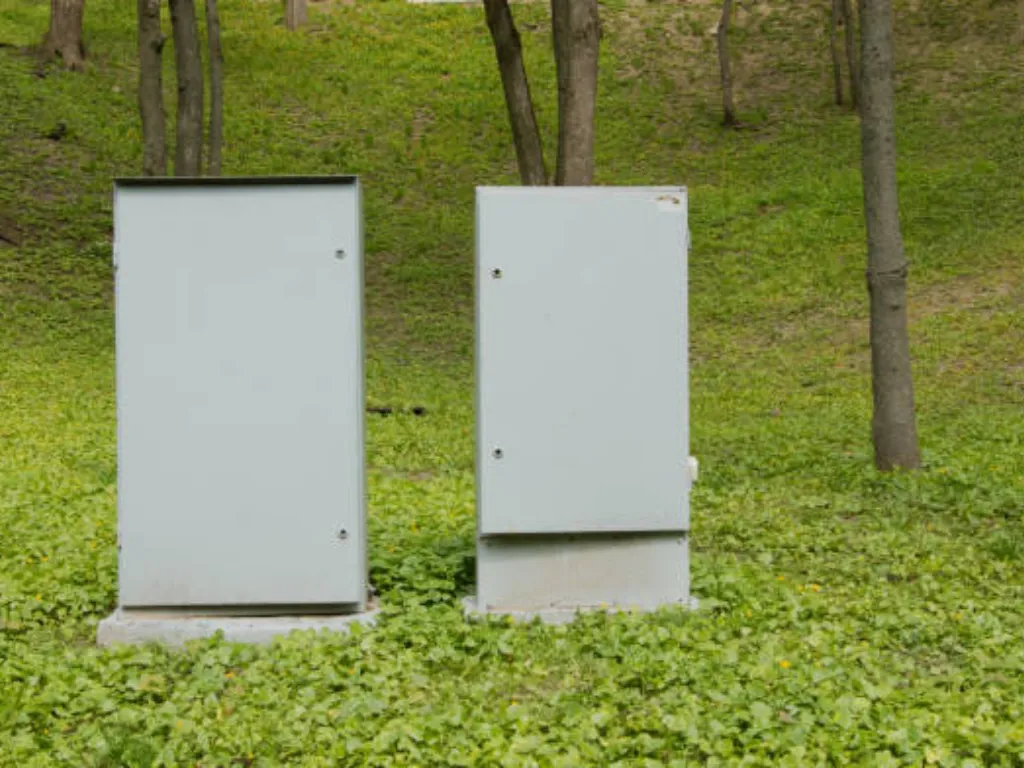
- Outdoor Telecom: Enclosures that are exposed to rain, snow and direct sun.
- Pharmaceutical Manufacturing: Sterilized Clean rooms.
Common Misconceptions About NEMA 12 and 4X
Even seasoned engineers may succumb to the constant myths about these standards. Let’s clarify a few.
- Myth 1: “NEMA 12 is waterproof.” It is not. It is “drip-proof.” The difference between opposing a leaky pipe and opposing a pressure washer is enormous. NEMA 12 should not be used in case of any possibility of hose-directed water.
- Myth 2: “Every stainless steel enclosure is NEMA 4X.” Material is not equal to rating. NEMA 1 can be constructed of 316 stainless steel. Without continuous welding of the seams and a watertight gasket, it is merely a glittering NEMA 1 box. The rating is determined by the construction method as much as it is determined by the material.
- Myth 3: “NEMA 4X is always better.” More protection, yes, but not necessarily a better one. The NEMA 4X may be difficult to manage thermally in a benign environment. Stainless steel does not conduct heat in the same manner as painted carbon steel and NEMA 4X boxes are more tightly sealed and thus the internal heat is trapped. Excessive specification may cause overheating problems when cooling is not done properly.
How to Decide the Right Enclosure for Your Project
When the catalog options are overwhelming, follow this three-step audit to determine the correct specification.
Step 1: The Environmental Audit. Walk the floor where the enclosure will sit. Ask three questions:
- Is it outdoors? (If yes -> NEMA 4X).
- Will anyone point a hose at it? (If yes -> NEMA 4X).
- Are there corrosive chemicals or salt in the air? (If yes -> NEMA 4X). If the answer to all three is “no,” and the main issue is just dust or oil, NEMA 12 is your answer.
Step 2: What Type of Equipment Are You Protecting? Your choice should reflect the value of the assets inside and the required degree of protection of the equipment.
- Asset Sensitivity: If you are housing sensitive electronics, automation systems, or high-value gear, relying on the “good enough” protection of NEMA 12 is a risk.
- The Insurance Logic: NEMA 4X offers a tougher, hermetic seal compared to NEMA 12. For critical equipment, the extra investment in NEMA 4X is a small price to pay to avoid water damage, unplanned downtime, and costly repairs.
Step 3: Check Your Dimensions & Thermal Needs (Standard vs. Custom) This is the most common stumbling block. You determine you need NEMA 4X. You check the standard catalogs from large suppliers, but their stock sizes don’t fit your proprietary PCB board, or the footprint is too large for your machine.
- The Trap: Buying a standard box and planning to drill holes in it yourself.
- The Reality: DIY modifications on a NEMA 4X enclosure are risky. A jagged drill hole or a slightly misplaced cutout ruins the paint seal (on NEMA 12) or the surface passivity (on 4X), inviting rust. Worse, standard boxes may not have the thermal dissipation surface area your components require.
Step 4: Consider Lead Time & Modification Risks. If you need specific cutouts for HMIs, pushbuttons, or cable glands, factory fabrication is superior to field modification. A manufacturer can laser-cut these features before painting or passivation, ensuring the edges are protected and the rating is maintained.
Ensuring True Compliance: Why Partner with TZR for Custom Fabrication
Knowing you need a specific NEMA rating is one thing; sourcing a product that truly meets that standard is another. When off-the-shelf options fail to meet your dimensional requirements, custom fabrication is the logical path.
As a leading sheet metal manufacturer serving the automotive, medical, and renewable energy sectors, TZR brings precision engineering to enclosure fabrication. Here is how we ensure your project succeeds:
- Multi-Industry Expertise: We master the materials essential for NEMA compliance—including steel, stainless steel, aluminium, and copper—leveraging our experience in high-standard industries like medical and automotive.
- Extreme Precision: Our advanced laser cutting and CNC bending achieve tolerances as tight as ±0.02mm. This precision is critical for ensuring the tight gaps required for effective NEMA sealing.
- Proven Quality Standards: Backed by a workforce with over 10 years of experience and adhering to ISO 9000 standards, we maintain a 98% quality pass rate.
- Comprehensive Support: We provide professional DFM and 12 in-house surface finishing options to optimise both the protection and aesthetics of your enclosure.
At TZR, we bridge the gap between “custom design” and “compliant performance.”
Conclusion
The choice between NEMA 12 and NEMA 4X is a decision between two distinct protective philosophies: one for the controlled indoor environment, and one for the chaotic, corrosive reality of the outdoors and washdown zones.
Choosing NEMA 12 when you can safeguard your budget; choosing NEMA 4X when you must safeguard your equipment.
However, the rating is only as robust as the manufacturing behind it. Whether you need a cost-effective NEMA 12 run for an automation line or a complex, custom NEMA 4X solution for a marine application, the quality of the fabrication dictates the lifespan of the product. Don’t compromise your engineering integrity with sub-par enclosures.
Ready to build? Contact TZR’s engineering team today. Let’s discuss your environment, your dimensions, and how we can fabricate the precise protection your project requires.