
 English
  Spanish
  German
  Russian
  Italian
  French
In stainless steel fabrication, the surface finish is an engineering decision, not just about looks. It directly affects corrosion resistance, weld quality, and maintenance cost. Many failures, such as rust or cleaning problems, come from using the wrong surface finish, not from choosing the wrong alloy.
A smoother surface strengthens the protective chromium oxide layer, reducing the risk of corrosion. Rougher surfaces may improve grip or hide scratches, but they also hold dirt and moisture that can damage the metal over time. In sanitary or marine environments, even a 0.2 µm difference in roughness can decide whether a part passes inspection.
Standards like ASTM A480 and EN 10088 group stainless steel finishes by process and texture. When combined with measurable data such as Ra (roughness average), these standards help ensure consistent quality in global manufacturing.
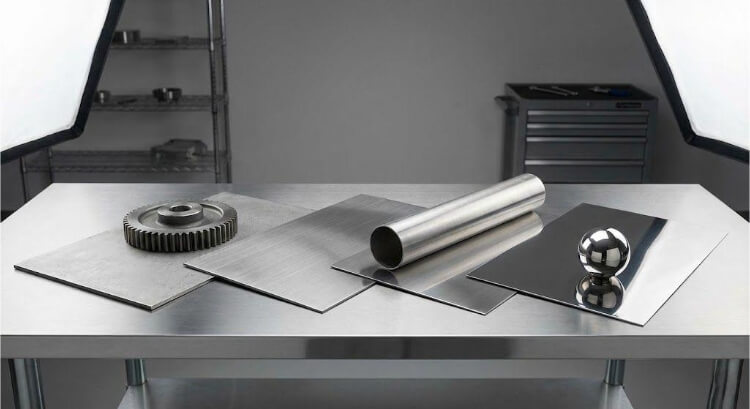
Basics of Stainless Steel Surface Finishes
Before choosing a finish, it helps to understand how surface texture forms and how it’s measured. Every production step — rolling, annealing, pickling, and polishing — changes the surface at a microscopic level, which affects corrosion resistance.
How Alloy and Process Shape the Surface?
The surface of stainless steel shows the story of its production:
- Hot-rolling produces a coarse surface with scale.
- Cold rolling smooths the grain and improves thickness control.
- Annealing relieves stress, and pickling removes oxide layers.
- Polishing or electropolishing sets the final smoothness, shine, and cleanliness.
Surface roughness is measured by Ra, in micrometers (µm). A lower Ra means a smoother surface and better corrosion resistance.
Tests show that lowering roughness from 1.0 µm to 0.3 µm can reduce bacterial buildup by 70–80% and extend corrosion life by 30–40%.
Finish Classification
Stainless steel finishes fall into four main categories based on how they’re made and what they’re used for.
| Finish Type | Process | Main Benefit | Typical Use |
|---|---|---|---|
| Mill Finishes | Rolled, annealed, pickled | Strong, low-cost surface | Frames, hidden structures |
| Mechanically Polished | Buffed with abrasive belts | Clean, shiny, hygienic surface | Appliances, visible panels |
| Chemically / Electropolished | Acid bath with electricity | High corrosion resistance | Food and pharma equipment |
| Textured / Decorative | Embossed, blasted, or colored | Visual appeal, easy maintenance | Architecture, interiors |
Codes such as ASTM No. 4 or EN 2G, along with grit size and Ra value, help define the exact surface quality. Avoid unclear terms such as “smooth” or “mirror” in engineering drawings.
Mill Finishes: Practical Surfaces from the Mill
Mill finishes come straight from the mill after rolling and pickling. They serve as the basis for many later finishing steps.
No. 1 – Hot Rolled, Annealed, and Pickled
Process: Hot rolling → annealing → pickling
Appearance: Dull matte with heavy grain
Typical Ra: 3.0–7.5 µm
This rough, non-reflective surface is suitable for furnace parts, pressure vessels, and heavy machinery. It handles high heat well but isn’t meant for appearance.
Engineering takeaway: Use No. 1 when you care about strength and durability more than looks.
No. 2D – Cold Rolled, Annealed, and Pickled
Process: Cold rolling → annealing → pickling
Appearance: Dull gray with even texture
Typical Ra: 0.8–1.6 µm
No. 2D is smoother and more consistent than No. 1. It offers better forming ability and thickness control, making it suitable for industrial housings, tanks, and enclosures. It also works well as a base for later polishing or coating.
No. 2B – Bright Cold Rolled Finish
Process: Cold rolling → annealing → skin-pass on polished rolls
Appearance: Smooth and lightly reflective
Typical Ra: 0.2–0.5 µm
No. 2B is the most common mill finish in the stainless steel industry. It provides good corrosion resistance, easy cleaning, and moderate shine. It’s often used for kitchen tools, chemical tanks, and panel work, and it serves as the base for finishes like No. 4 or No. 8.
Mill Finish Comparison
| Finish | Process Summary | Ra (µm) | Shine | Typical Uses |
|---|---|---|---|---|
| No. 1 | Hot rolled + annealed + pickled | 3.0–7.5 | Low | Structural parts, tanks |
| 2D | Cold rolled + annealed + pickled | 0.8–1.6 | Low | Housings, enclosures |
| 2B | Cold rolled + bright rolled | 0.2–0.5 | Medium | Food equipment, decorative parts |
Mechanically Polished and Decorative Finishes
After the mill process, mechanical finishing defines how stainless steel looks, feels, and performs. Grinding, brushing, and buffing create specific surface textures measured by Ra (roughness average).
Mechanically Polished Finishes
No. 3 – Coarse Polished Finish
Process: Ground with 100–120 grit abrasives
Appearance: Coarse, visible grain pattern
Typical Ra: 0.8–1.0 µm
No. 3 has a brushed texture that hides fingerprints and scratches. It’s used in industrial interiors, kitchen tools, and transport panels. It’s not very reflective but is durable and works well as a base finish for further polishing.
No. 4 – Brushed or Satin Finish
Process: Refined with 150–180 grit abrasives
Appearance: Smooth, satin-like with an apparent grain
Typical Ra: 0.4–0.6 µm
No. 4 is the most widely used finish for architecture and appliances. It’s common in elevators, kitchen fixtures, wall panels, and enclosures. The surface is easy to clean, looks professional, and can be repaired if scratched.
No. 6 – Fine Satin Finish
Process: Polished with finer abrasives or non-woven pads
Appearance: Soft gloss with less visible grain
Typical Ra: 0.2–0.3 µm
No. 6 provides a smooth, semi-reflective surface that feels pleasant to touch. It’s often used in handrails, control panels, and decorative interiors where soft light reflection is desired.
No. 8 – Mirror Finish
Process: Multi-stage polishing and buffing
Appearance: Bright, mirror-like reflection
Typical Ra: ≤0.1 µm
No. 8 has the smoothest, shiniest finish. It’s used in luxury architecture, medical tools, and cleanroom equipment. While it resists corrosion very well, it shows fingerprints easily and needs regular cleaning.

Comparison of Mechanically Polished Finishes
| Finish | Grit Range | Ra (µm) | Shine | Typical Use |
|---|---|---|---|---|
| No. 3 | 100–120 | 0.8–1.0 | Low | Industrial, kitchens |
| No. 4 | 150–180 | 0.4–0.6 | Medium | Architecture, appliances |
| No. 6 | 220+ | 0.2–0.3 | Semi-high | Interiors, handrails |
| No. 8 | Buffed | ≤0.1 | High | Decorative, cleanrooms |
Special and Decorative Finishes
Modern stainless steel often serves both mechanical and visual purposes. Decorative finishes bring design creativity into engineering, improving appearance and durability simultaneously.
Patterned and Textured Surfaces
Process: Embossed or rolled with patterned rollers
Ra: 0.6–1.2 µm
These surfaces create three-dimensional patterns that hide wear, reduce glare, and increase stiffness. Common patterns include linen, diamond, quilted, and leather grain. They’re used in elevators, transport interiors, and architectural façades.
Bead-Blasted and Sand-Blasted Finishes
Process: Blasting with glass beads or sand particles
Ra: 0.8–1.0 µm
Appearance: Smooth, uniform matte tone
Bead blasting gives a soft, non-directional look, evenly spreading light. It’s often used in machinery covers, housings, and industrial panels. Clean blasting is essential — leftover particles can harm corrosion resistance.
Electropolished Surfaces
Process: Electrochemical removal of surface metal
Ra: ≤0.2 µm
Appearance: Bright and smooth
Electropolishing removes microscopic peaks and contaminants, leaving a pure and corrosion-resistant surface. It’s the top choice for sanitary tubing, food processing, and medical systems.
Colored Stainless Steel Finishes
Process: Controlled oxide growth or PVD coating
Colors: Gold, bronze, black, blue, green
Ra: Depends on base polish
Colored finishes add style and brand identity without losing corrosion protection. The colors form from thin oxide layers that reflect light differently, not from paint or pigments. They’re used in signage, modern interiors, and architectural walls.

Summary of Decorative Finishes
| Finish Type | Method | Ra (µm) | Main Benefit | Typical Use |
|---|---|---|---|---|
| Patterned / Embossed | Roll forming | 0.6–1.2 | Scratch resistance, strength | Architecture, elevators |
| Bead-Blasted | Media impact | 0.8–1.0 | Matte, even tone | Machinery, covers |
| Electropolished | Electrochemical | ≤0.2 | Cleanroom-level cleanliness | Food, pharma, medical |
| Colored | Oxide / PVD | — | Color + corrosion protection | Interiors, signage |
Functional Impact of Stainless Steel Finishes
A stainless steel surface directly affects how the material behaves in use. Smoother finishes improve corrosion resistance and cleaning, while rougher ones offer better grip or hide wear marks.
Corrosion Resistance and Cleanability
Stainless steel’s corrosion resistance comes from the passive chromium oxide layer on its surface. This layer becomes stronger and more stable on smoother finishes.
When roughness (Ra) drops from 1.0 µm to 0.3 µm, the number of small surface pits decreases sharply. According to Corrosion Science (2022), smoother finishes can delay pitting corrosion by up to 40% in chloride-rich conditions.
| Finish Type | Typical Ra (µm) | Corrosion Resistance | Cleanability |
|---|---|---|---|
| No. 1 | 3.0–7.5 | Low | Difficult |
| 2D | 0.8–1.6 | Moderate | Fair |
| 2B | 0.2–0.5 | Good | Easy |
| No. 4 | 0.4–0.6 | Very Good | Excellent |
| Electropolished | ≤0.2 | Outstanding | Excellent |
Finishes such as 2B, No. 4, and electropolished are preferred in hygiene-sensitive industries, such as food, medical, and pharmaceutical production. Directional finishes like No. 4 are easier to clean along the grain, while matte surfaces like bead-blasted finishes require more frequent maintenance.
Weldability and Post-Weld Surface Treatment
Welding changes both the chemistry and structure of stainless steel at the joint. Heat reduces chromium at the surface, temporarily weakening corrosion protection. That’s why post-weld cleaning and treatment are needed to restore complete resistance.
Common recovery steps include:
- Pickling: Removes heat tint and scale.
- Passivation: Rebuilds the chromium oxide layer.
- Mechanical blending: Matches the surface grain and gloss.
Finishes like 2B and No.4 are easier to restore after welding. Mirror finishes (No. 8) require careful polishing to prevent uneven shine.
Surface Durability and Maintenance
Every finish reacts differently over time. All stainless steels resist corrosion, but texture and Ra value control how quickly they collect dirt or scratches.
- Mirror finishes (No. 8): Great corrosion resistance, but fingerprints show easily.
- Brushed finishes (No. 4–No. 6): Hide wear marks better and require less cleaning.
- Electropolished: Offer the best long-term performance in harsh or sterile settings.
A 2023 Stainless Steel World study found that surfaces with Ra ≤ 0.3 µm lasted over 1,000 hours in salt spray tests, while rougher surfaces with Ra> 1.0 µm showed rust after 400 hours.
Maintenance best practices:
- Use mild or neutral cleaners.
- Avoid carbon steel brushes or tools.
- Rinse well and dry thoroughly after washing.
Aesthetic and Functional Stability Over Time
Finishes change slowly with use and exposure.
- Brushed textures become shinier from frequent touch.
- Matte surfaces can dull over time or accumulate dust.
- Colored or PVD finishes retain their color for years but require gentle cleaning to prevent scratches.
These changes are expected and can be controlled.
Choosing the correct grain direction and cleaning method helps the finish keep its intended look.
Quantitative Surface Roughness Reference
Ra measures microscopic peaks and valleys on a surface, shown in micrometers (µm). Lower Ra values mean smoother, more reflective, and easier-to-clean surfaces.
| Finish | Ra (µm) | Reflectivity | Cleanability | Common Use |
|---|---|---|---|---|
| No. 1 | 3.0–7.5 | Low | Poor | Structural parts |
| 2D | 0.8–1.6 | Low | Fair | Tanks, housings |
| 2B | 0.2–0.5 | Medium | Good | Food and chemical systems |
| No. 3 | 0.8–1.0 | Medium-low | Fair | Industrial panels |
| No. 4 | 0.4–0.6 | Medium | Excellent | Architecture, elevators |
| No. 6 | 0.2–0.3 | Semi-bright | Excellent | Decorative interiors |
| No. 8 | ≤0.1 | High | Excellent | Mirrors, cleanrooms |
| Electropolished | ≤0.2 | Very high | Excellent | Medical, pharmaceutical |
A lower Ra doesn’t always mean it’s the best choice.
For instance:
- Decorative use: No.4 gives a balanced, elegant look.
- Industrial use: 2B or 2D performs well at low cost.
- Sanitary use: Electropolished (Ra ≤ 0.2 µm) ensures top hygiene.
Selecting the Right Stainless Steel Finish
A stainless steel finish determines how your product performs in the real world. Selecting the right finish prevents over-engineering, avoids early wear, and lowers total upkeep cost.
By Function and Environment
Every environment has different performance demands. The table below shows which finishes fit best for each use case:
| Application Environment | Recommended Finish | Performance Benefit |
|---|---|---|
| Structural / Industrial | No. 1 / 2D | Durable and affordable for non-visible parts |
| Food, Medical, or Pharmaceutical | 2B / Electropolished | Smooth, hygienic surface prevents bacterial buildup |
| Architectural Interiors | No. 4 / No. 6 / No. 8 | Attractive look, consistent shine, easy to clean |
| Marine or Outdoor Exposure | Polished / Electropolished | Higher salt and moisture resistance |
For industrial parts, finishes such as No. 1 or 2D provide strength and reliability at a lower cost. For clean or medical environments, smoother surfaces (Ra ≤ 0.4 µm) maintain hygiene and reduce contamination risk. For architectural use, brushed and mirror finishes combine visual appeal with long-term protection.
By Cost and Manufacturability
Each polishing step increases both quality and cost. Finer textures take more time and labor, so applying them only where needed saves money.
Approximate cost increase over a standard 2B base:
- No. 4: +20–30%
- No. 6: +50%
- No. 8 or PVD colored: +200–300%
The best strategy is “finish where it matters.” Use high-end finishes only on visible or hygiene-critical areas, keeping hidden surfaces at mill or 2B levels.
| Finish | Relative Cost Index | Aesthetic Level | Maintenance Needs | Typical Use |
|---|---|---|---|---|
| 2B | 1 | Neutral | Low | Base or hidden parts |
| No. 4 | 1.3 | Satin | Low | Panels, interiors |
| No. 6 | 1.5 | Fine satin | Low | Touch surfaces |
| No. 8 | 2.5–3.0 | Mirror | High | Decorative, premium use |
| Electropolished | 2 | Bright | Very low | Sanitary equipment |
By Inspection and Specification Standards
Clear definitions ensure consistent finish quality between suppliers. Vague terms like “polished surface” often lead to inconsistent results or mismatched texture.
To avoid that, specify finishes by process, grit, and roughness:
| Specification Parameter | Example Definition |
|---|---|
| Finish Designation | ASTM No. 4 / EN 2G |
| Grit Range | 150–180 grit |
| Surface Roughness | Ra ≤ 0.5 µm |
| Grain Orientation | Longitudinal (for panels) |
| Post-Weld Treatment | Pickle + Passivate per ASTM A380 |
Adding these details to drawings helps ensure identical finishes in production. Use tools such as profilometers or gloss meters to verify texture, and include sample coupons for reference during RFQ review.
Conclusion
A stainless steel finish is more than a cosmetic choice — it’s a functional design decision. It defines how metal interacts with its surroundings, how long it lasts, and how it looks to end users. Specifying finishes with clear parameters — such as Ra, grit, and surface codes — ensures consistent results, predictable performance, and lower maintenance.
Ready to define your next stainless steel project? Our engineering team can help you evaluate finish performance, cost, and manufacturability — from design to production. Contact us today to discuss your surface finishing needs.
FAQs
What’s the most common stainless steel finish?
The No. 4 brushed finish. It offers the best balance between cost, corrosion resistance, and appearance for most industrial and architectural uses.
Does surface finish affect corrosion resistance?
Yes. Smoother finishes below Ra 0.5 µm resist corrosion and contamination better. Electropolished and No. 4 finishes outperform rough mill surfaces in marine or chemical settings.
Which finishes are easiest to clean?
2B, No. 8, and electropolished finishes. Their smooth texture limits dirt buildup and allows fast sanitization, making them ideal for food and pharmaceutical use.
How should I specify finishes in technical drawings?
Include the following:
- Finish code (ASTM / EN)
- Grit size
- Target Ra value
- Grain direction
- Any post-treatment
This ensures production and inspection consistency.
Is a mirror finish suitable for outdoor use?
Yes, but it needs regular cleaning. Mirror surfaces resist corrosion well but are prone to smudging. For easier maintenance outdoors, polished or electropolished finishes (Ra ≤ 0.3 µm) are good alternatives.