 English
  Spanish
  German
  Russian
  Italian
  French
Alodine coating is used on aluminum parts that need surface protection without adding a heavier finish. It is common on enclosures, machined housings, brackets, covers, chassis parts, and other components where fit, contact, or later painting still matter after finishing.
It is usually chosen for function, not appearance. Alodine works well when the part needs corrosion protection, paint support, or electrical contact with minimal added build. It is a poor fit when the real need is wear resistance, surface hardness, or cosmetic consistency.
What Is Alodine Coating?
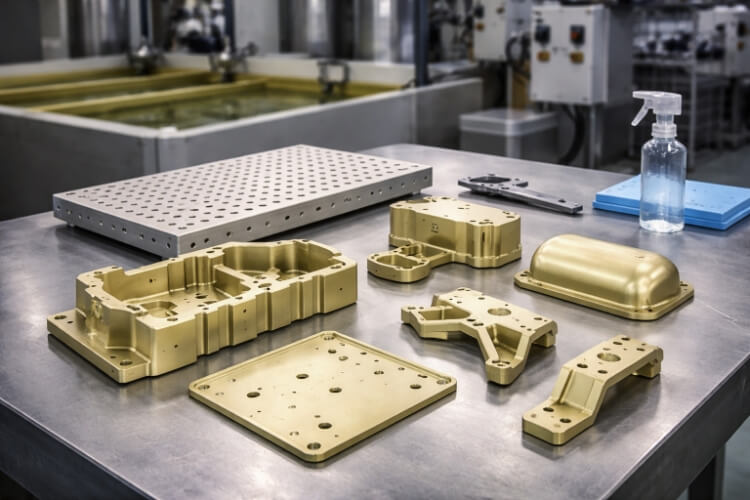
Alodine coating is a chemical conversion coating for aluminum and aluminum alloys. It reacts with the metal surface, forming a thin protective film rather than building a thick outer layer.
A typical Alodine coating is often around 0.25–1 μm, which is why it remains useful on parts where added build can affect fit, masking, or contact behavior.
Alodine is used when bare aluminum needs a more functional surface. The usual goals are better corrosion resistance, a better base for paint, or lower-resistance contact than many thicker finishes allow.
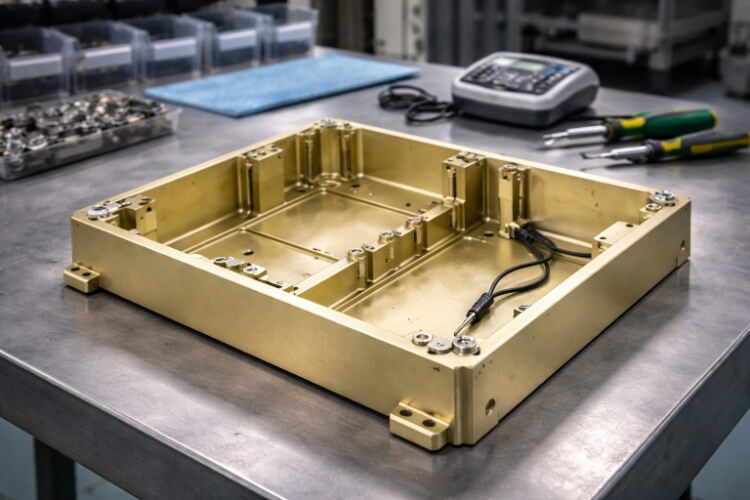
That is why it appears on grounding faces, enclosure contact areas, threaded features, sealing lands, mounting surfaces, and machined interfaces. It improves the surface without creating as much dimensional risk as a heavier coating.
Why is it also called a chem film or a chromate conversion coating?
Alodine, chem film, and chromate conversion coating are often used for the same finish family.
“Chem film” is the common shop-floor term. “Chromate conversion coating” is the more technical name. Both describe a coating formed by chemical reaction at the surface, not by adding a thick layer on top of the part.
When Should You Use Alodine Coating?
Use Alodine when the part needs a thin, functional finish. Start with what the surface must still do after finishing.
When does conductivity matter?
This is one of the clearest reasons to choose Alodine.
Some aluminum parts must still support electrical contact after finishing. This is common on grounding faces, chassis contact areas, enclosure mating surfaces, and other metal-to-metal interfaces where a thicker finish could create too much resistance.
If electrical contact is part of the job, that requirement should lead to the final decision early.
When corrosion protection is needed without much added build?
Some parts need more corrosion protection than bare aluminum can provide, but they do not have much room for a finish build.
This is common on machined housings, brackets, covers, and assemblies with controlled fits. A heavier finish can solve one problem and create another. Alodine is often selected because it improves surface finish while remaining easier to manage on parts where added build can affect fit or assembly.
When will the part be painted after finishing?
Alodine is often used before painting because it gives the aluminum surface a better starting condition.
This is common on panels, covers, enclosures, and structural parts where paint performance over time matters. In these cases, Alodine is part of the full finish system, not the whole system by itself.
When must tight tolerances or contact surfaces be maintained?
Some parts are sensitive to finishing, even with a thin coating. This includes threaded holes, mounting faces, sealing lands, machined interfaces, and electrical contact zones.
A typical Alodine layer is often only 0.25–1 μm, which is one reason it is easier to use on these features than a heavier finish. That does not remove finish effects. It makes them easier to control.
When Is Alodine Not the Right Choice?
Alodine is useful when the part needs a thin, functional finish. It is a poor choice when the real problem is wear, surface damage, or cosmetic consistency.
When does wear resistance matter more than corrosion protection?
Alodine is not a wear finish.
It can help protect aluminum from corrosion, but it does not create a hard surface for sliding contact, repeated rubbing, or frequent handling. That matters in guide features, latch areas, moving hardware, and parts that are opened, closed, or assembled often.
If the surface is more likely to wear before it corrodes, Alodine is solving the wrong problem.
When is surface hardness the real requirement?
Some parts do not fail because the surface is unprotected. They fail because the surface is too soft.
This is common on edges, tool-contact areas, exposed housings, and parts that see repeated handling during use or service. Alodine does not add meaningful surface hardness.
If hardness is part of the functional need, another finish should be reviewed first.
When is appearance part of the product value?
Alodine is usually chosen for function, not for looks.
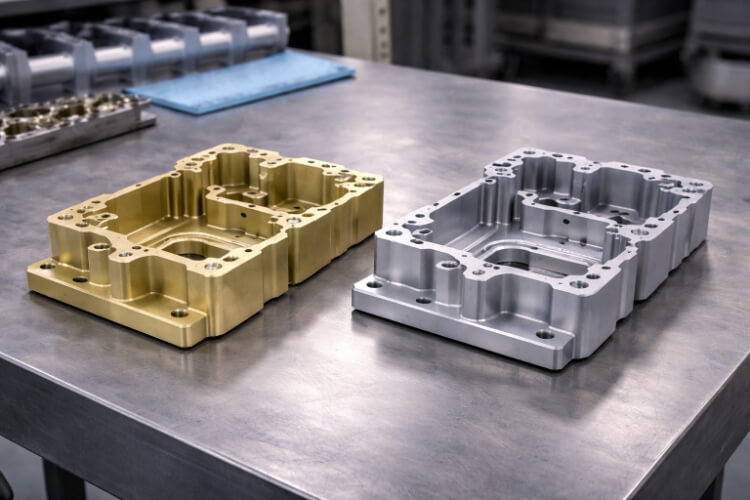
It can leave a clear or light gold appearance depending on the process, but it is not the right choice when the part needs a more decorative, uniform, or customer-facing finish. Small appearance differences can also be more noticeable when the alloy, surface condition, or preparation varies from part to part.
If the product is judged heavily by visual consistency, Alodine is usually not the strongest option.
When is the service environment more demanding than the finish?
Some parts need more protection than a thin conversion coating can provide on its own.
This is common on exposed hardware, frequently handled covers, rough-use assemblies, and parts that see abrasion or harsher field conditions. In those cases, the question is whether Alodine is enough for that part.
Use Alodine when the surface needs a function without much build-up. Do not use it when the real need is wear resistance, hardness, or a stronger cosmetic finish.
Alodine Coating vs Anodizing
Alodine and anodizing are both common finishes for aluminum parts, but they serve different purposes. The better choice depends on what the surface must do after finishing.
How do the two finishes differ?
Alodine forms a thin chemical conversion film on the aluminum surface. Anodizing creates a thicker oxide layer that more clearly changes the surface. A common anodized layer is often in the 5–25 μm range, offering a different balance of protection, hardness, and build than Alodine.
That difference affects fit, contact behavior, appearance, and service life.
When is Alodine the better choice?
Alodine is usually the better choice when the part needs corrosion protection without much added build.
It is also a strong option when the surface must still support electrical contact, or when the part will be painted later and needs a better base first. That is why it is common on electrical enclosures, chassis parts, machined housings, brackets, covers, and other functional aluminum components.
Choose Alodine when the finish needs to protect the part without interfering with fit or contact.
When is anodizing the better choice?
Anodizing is usually the better choice when the part needs a harder and more wear-resistant surface.
It is often used when the part will see more handling, light abrasion, or stronger cosmetic requirements. It can also be the better option when the surface needs to hold up better in service, and an added finish build is less of a concern.
Choose anodizing when the surface needs to do more than stay conductive and lightly protected.
How to choose based on the part function?
A simple finish decision starts with three questions.
- Does the part need to stay electrically usable after finishing? If yes, Alodine often has the advantage.
- Does the part need better hardness or wear resistance? If yes, anodizing is often the better direction.
- Does the part have close fits, contact surfaces, or features that are sensitive to added build? If yes, Alodine is often easier to manage.
Choose Alodine when conductivity and low build matter more. Choose anodizing when hardness and wear resistance matter more.
Types and Classes That Matter
Not every Alodine callout means the same thing. If the drawing only says Alodine or chem film, the requirement may still be too vague for production.
What does Type I mean in practical use?
Type I is the traditional conversion coating route.
In practice, it shows up on older drawings, legacy programs, or customer requirements that already define it. If a drawing calls out Type I, treat it as a defined requirement, not something the supplier changes by habit.
The main question is whether the called-out type matches the customer requirement and the project standard.
What does Type II mean in practical use?
Type II is the non-hexavalent route.
This usually comes up when the project needs a different compliance path while still keeping the main benefits of a thin conversion coating. A team may still say Alodine in daily discussion, but the drawing should state the correct type if the job depends on it.
What Class 1A is usually chosen for?
Class 1A is usually reviewed first when corrosion protection leads the decision.
That often applies to painted panels, covers, brackets, housings, and other parts where corrosion margin matters more than electrical contact.
If corrosion protection is the main requirement, start with Class 1A.
What Class 3 is usually chosen for?
Class 3 is usually reviewed first when low-resistance electrical contact is the primary concern.
This often applies to grounding faces, enclosure mating surfaces, chassis contact areas, and other metal-to-metal features where the finish must not interfere too much with function.
If conductivity matters, do not leave the class vague.
How to match the type and class to the real job of the part?
Start with the part function, not the old drawing note.
If corrosion protection is the lead requirement, review the finish in that direction first. If electrical contact matters more, let that drive the class choice instead. Then check whether the type matches the customer spec, project standard, and compliance needs.
Type and class should follow function. They should not be copied forward without review.
How to Specify Alodine Coating on a Drawing?
A good finish note does more than name the process. It tells the supplier what the part needs and removes avoidable guesswork before production starts.
What to include in the finish callout?
A clear callout should define four things:
standard + type/class + coating coverage + masked or function-critical surfaces
That is the working structure. If one of those is missing, the supplier may still be forced to guess.
How to note the required standard, type, and class?
Start with the standard. Then state the type and class.
That creates a clearer instruction path for quoting, processing, inspection, and later quality review. It also prevents a common problem: using Alodine as a catchall when the drawing needs to be more precise.
How to define coated areas and masked areas?
Not every surface on a part should always be treated the same way.
Some areas need coating for protection. Others need masking because of fit, sealing, contact behavior, appearance, or later assembly. This is common on threaded holes, mounting faces, sealing lands, grounding faces, enclosure contact zones, and datum-related interfaces.
If those surfaces matter, show them clearly. Do not leave them to shop-floor interpretation.
What to confirm with the supplier before release?
Before release, confirm four points:
- Does the finish match the part’s actual job?
- Are the type and class clearly defined?
- Are coated and masked surfaces identified?
- Will later painting, assembly, or electrical contact change how the finish should be handled?
These checks are simple, but they prevent a large share of avoidable finish problems.
Common Alodine Coating Problems and Their Causes
Most Alodine problems do not start in the coating tank. They usually start with the wrong finish choice, weak surface preparation, or a drawing that did not clearly define the requirement.
Uneven color or patchy appearance
Uneven color is one of the most common concerns with Alodine.
In many cases, it does not mean the finish has failed. Color can change with alloy, surface roughness, machining marks, forming condition, and cleaning quality. A part can look less uniform and still be functionally acceptable.
Use this check order:
- First, review whether the surface condition was consistent before finishing.
- Second, check cleaning and handling.
- Third, check whether different areas of the part were made differently, such as machined versus formed surfaces.
- Then decide whether the issue is cosmetic only or linked to real performance loss.
Appearance and performance are not always the same issue.
Poor paint adhesion
Poor paint adhesion usually starts before paint is applied.
If the aluminum surface is not cleaned well, the conversion coating may not form evenly. If the coating process is unstable, the paint system above it may also become less reliable. The delay between coating and painting can also hurt the result if the surface is not handled properly afterward.
Use this check order:
- First, review pre-cleaning.
- Second, review coating consistency.
- Third, check handling and storage before painting.
- Then review the paint process itself.
If paint adhesion matters, review the full finish path, not just the paint layer.
Early corrosion on the part
Early corrosion usually points to one of three problems:
- The finish was too light for the environment,
- The surface was not prepared well,
- Or the process was not controlled consistently.
A part can be coated correctly and still fail because the finish system was wrong for the job. This is common when the part undergoes rough handling, outdoor exposure, repeated contact, or a service condition more demanding than the finish was selected for.
When corrosion shows up early, ask the hardest question first: was this the right finish system for the actual environment?
Conductivity that does not meet the requirement
Conductivity problems usually point back to the requirement, not just the process.
In many cases, the class was not chosen carefully enough, or the drawing did not clearly define which surfaces needed reliable electrical contact. The finish may look acceptable while still failing to meet the real functional need.
Use this check order:
- First, check whether the drawing defines the contact surfaces.
- Second, check whether the class matched the function.
- Third, review whether masked and coated areas were applied correctly.
- Then review the process itself.
If conductivity matters, it should drive the class choice and the drawing note from the start.
What usually causes these failures?
Most Alodine failures come from three sources:
- the wrong finish for the job,
- weak surface preparation,
- or an incomplete drawing requirement.
Process variation can add to the problem, but it is often not the first cause.
A useful rule is simple: if the finish underperforms, check the requirement first, then the surface condition, then the process.
Conclusion
Alodine is a strong finish for aluminum parts that need corrosion protection, paint support, or electrical contact without the trade-offs of a heavier coating. It is not the best choice when the main problem is wear, hardness, or appearance. In those cases, another finish usually fits the part better.
The right finish decision starts with the part function. Then the type, class, drawing callout, and supplier review should all support that same requirement.
Not sure if Alodine is the right finish for your part? Share your drawing, material, and application with our team. We will review your finish requirements and help you choose a practical solution based on corrosion needs, electrical contact, tolerance limits, and downstream finishing.
FAQs
Is Alodine coating the same as chem film?
In most shop-floor discussions, yes. Alodine, chem film, and chromate conversion coating are often used for the same finish family.
Is Alodine coating conductive?
It can keep better surface conductivity than many thicker finishes. That is why it is often used on grounding surfaces, enclosure contact areas, and other parts that still need electrical contact after finishing.
Can Alodine coating be used under paint?
Yes. It is often used before painting because it improves the surface and provides a better base for the paint to bond to.
Does Alodine coating change part dimensions?
It usually adds far less build than thicker finish systems. That is one reason it is often used on parts with tight tolerances, contact surfaces, and other controlled features.
Why does Alodine color vary from part to part?
Color can change with alloy, surface condition, machining marks, cleaning, and process variation. Appearance differences do not always mean the finish failed functionally.


