 English
  Spanish
  German
  Russian
  Italian
  French
CNC precision machining is not needed just because a part is made on a CNC machine.
What matters is whether dimensional drift will change fit, sealing, motion, alignment, or repeatability in real use. Many covers, spacers, brackets, and support parts work well with general shop tolerances for non-critical features, typically ±0.05 mm to ±0.10 mm. Once tight control spreads to edges, profiles, or clearance faces that do not affect function, cost usually rises faster than value.
A part becomes precision-critical when a small group of features controls how the product assembles, seals, locates, or runs. That is common with bearing bores, shaft fits, locating features, sealing faces, and parts that must stay consistent across repeat batches. In those cases, a drift of a few hundredths of a millimeter can create misfit, leak risk, noise, extra wear, or unstable performance.
That is why good precision machining is not about making the whole part tight. It is about identifying the features that can actually cause failure, applying tighter control where it matters, and keeping the rest of the part manufacturable.
What Makes a Part Truly Precision-Critical?
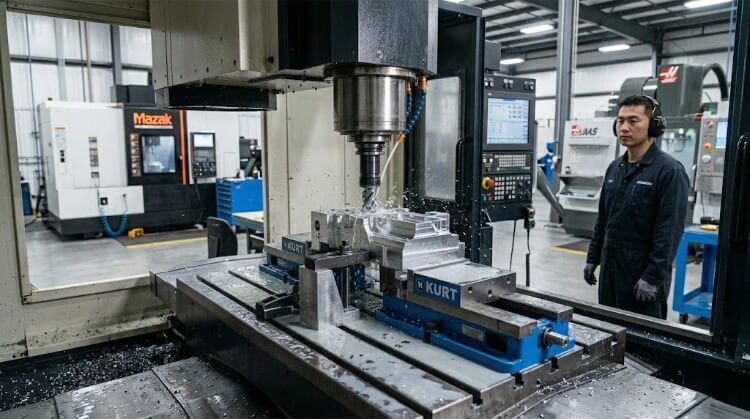
CNC precision machining is a process that uses computer-controlled machines to produce parts with tight tolerances, typically ±0.01 mm to ±0.05 mm. It is used for parts that need an accurate fit, stable performance, and repeatable quality.
Tighten the features that drive the result
Most parts do not need the same tolerance level everywhere. The features that usually deserve tighter control are bores, locating features, datums, sealing surfaces, and geometry tied directly to fit or motion.
Suppose a bore controls bearing position, size, and location. If a face carries a gasket or O-ring load, flatness and finish matter. If a datum structure drives assembly, those locating features matter more than outside edges or open clearance areas.
A drawing can carry many dimensions, but only a few usually justify precision-level control.
Do not tighten non-critical geometry without a reason
Many machined parts still work well when non-critical features stay at general shop tolerances. This is common on covers, adapter plates, guards, spacers, and simple mounting parts.
Problems start when tight tolerances are applied to outer profiles, non-contact edges, or cosmetic geometry that does not affect fit, sealing, or assembly. That adds machining time, more inspection, and a harder quotation without improving the part in a useful way.
On many projects, ±0.02 mm is acceptable for selected functional features, not across the whole part.
Judge precision by consequence
The word “precision” does not tell the shop what really matters. A better question is simple: if this feature drifts, what goes wrong?
If the answer is bearing play, poor alignment, leak risk, unstable sliding, or assembly failure, tighter control makes sense. If the answer is “not much,” the feature probably does not require precision.
Good machining decisions start there. Tighten the features that can cause real problems. Open the ones that cannot.
Which Parts Usually Need CNC Precision Machining?
Some parts require tighter control because even small variations can cause failure. These cases are usually driven by fit, sealing, geometry, or repeatability.
Features that control fit
Bearing bores, shaft seats, dowel locations, and close-tolerance alignment features are common candidates for precision machining.
These features usually need better size and position control than ordinary mounting holes or outside profiles. A small drift may still look minor on paper, but it can quickly change assembly feel, load distribution, or running stability.
This matters most when a feature locates another part instead of simply providing clearance.
Sealing areas with little room for drift
Sealing-related features often need tighter control, even when the part itself is not very complex.
On valve parts, machined covers, manifolds, and fluid housings, flatness, position, and local surface condition can matter as much as nominal size. A face can measure close to the target and still create a leak risk if the sealing area is uneven or not positioned correctly.
That is why sealing features often need closer review than the drawing first suggests.
Geometry that is harder to hold
Some parts become precision-sensitive because the geometry is harder to machine consistently.
Thin walls, deep pockets, long tool reach, narrow ribs, and small internal features reduce rigidity and make variation harder to control. Wall sections of about 1 mm or below can become more sensitive to clamping force and cutting heat, depending on material, span, and support.
In these cases, the challenge is not only the printed tolerance. It is keeping the process stable enough to hold the feature repeatedly.
When repeatability matters more than one good sample?
Repeatability becomes much more important once a part moves beyond prototype work.
A prototype may still assemble after light fitting or adjustment. Production parts usually need to be assembled the same way across 50, 200, or more pieces. A feature that appears stable across five samples may still drift in later batches as setup, tool wear, or material response changes.
Precision machining is often less about making a single good part and more about maintaining the same result over time.
When failure costs more than tighter control?
Tighter control is usually justified when dimensional failure costs more than the added machining and inspection costs.
That is common on parts tied to sealing, alignment, motion, safety, difficult replacement, or expensive downstream assemblies. In those cases, spending more on control is often cheaper than paying for failure later.
Where Accuracy Is Usually Lost During Machining?
Accuracy is often lost during the process, not from the drawing itself. Setup, tooling, heat, and geometry all affect how well dimensions hold.
The setup drift starts before cutting problems do
A machine can only hold what the setup allows. If the part is not well located, supported, or clamped consistently, size and position can drift before cutting conditions become the main issue.
This is common on thin sections, irregular shapes, and parts with a limited clamping area. Too much force can move the part. Too little support can cause it to shift during cutting. A part may measure correctly in one setup and still move enough to affect the next operation.
For precision work, setup repeatability matters as much as machine capability.
A stable cut can still drift over a full run
Accuracy also changes as the cut progresses.
Tool wear can slowly shift size, edge condition, and surface finish. Heat can expand both the tool and the part. Some materials also move after internal stress is released during roughing or semi-finishing. A part can look stable early in the cycle and still drift later in the run.
The risk increases when the feature is small, the tolerance is tight, or the material is harder to machine consistently. On these jobs, holding one good part is not enough. The process has to remain stable throughout the entire batch.
Geometry can narrow the process window fast
Some features are harder to hold because the geometry makes the cut less stable.
Deep cavities, thin walls, narrow slots, and long tool reach all reduce rigidity. As rigidity drops, deflection, chatter, wall variation, and floor flatness problems become more likely. A dimension may still look simple on the print, but the safe process window can become narrow very quickly.
The same tolerance can be easy on one part and difficult on another. The number on the drawing is only part of the story. Geometry determines how hard it is to hold that number.
The wrong check can hide the real problem
Accuracy is not only about cutting. It is also about how the part is checked.
A part can be cut well and still fail if the wrong feature is checked too late or incorrectly. This is especially true for position, flatness, concentricity, and sealing-related areas.
For precision work, in-process checks usually matter more than final inspection alone. The goal is to catch drift before it turns into scrap, rework, or batch variation.
Why Do Tighter Tolerances Raise Costs So Quickly?
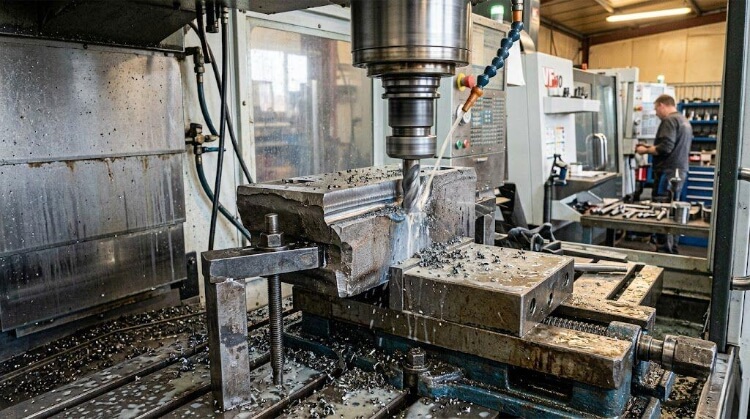
Tighter tolerances change how a part is made and how it is checked. Small numbers often require more control, more time, and higher process risk.
A smaller tolerance can mean a different process window
The jump from a general shop tolerance to a tighter functional tolerance is rarely just a small adjustment.
A feature held at ±0.10 mm may be straightforward with a stable setup and normal inspection. The same feature at ±0.02 mm may require more careful fixturing, lighter finishing passes, closer tool control, and more frequent checks. The machine may be the same, but the room for drift becomes much smaller.
That is why cost often rises faster than the tolerance number suggests.
More control usually means more time
Tighter work usually adds time in several places at once.
Setup may take longer. Cutting parameters may need to be more conservative. Finishing passes may need more attention. Inspection frequency often increases. If the feature is critical, more parts may need to be checked during the run instead of only at the end.
Each step may look small by itself, but together they push up cycle time, inspection time, and quoting risk.
Surface finish and geometry can raise the cost further
Tolerance is not the only cost driver. Surface finish and geometry can make things difficult at the same time.
A sealing face may need not only size control, but also better flatness and local finish. A deep pocket may require tighter size control under less stable cutting conditions. A thin wall may carry the same nominal tolerance as a rigid block, but the risk of movement will be much higher.
Two parts with similar dimensions can be priced very differently because the real cost comes from the control the process must hold.
Over-tolerancing often adds cost without adding value
One of the most common cost problems is over-tolerancing.
When tight requirements are applied to non-critical edges, outside profiles, or simple clearance features, the shop still has to treat those numbers seriously. That can lead to slower machining, more inspection, and less efficient production, even when the extra control does not improve assembly or function.
A better approach is to keep tight control over areas where failure has real consequences and open the rest. In many cases, that gives a better balance of performance, cost, and lead time.
Design Rules That Make Precision Parts Easier to Produce
Better design reduces machining risk before production begins. Small changes in geometry or tolerance can make precision easier to hold.
Tighten only the features that affect function
Not every dimension needs the same level of control.
If fit, sealing, alignment, or motion depends on a feature, a tighter tolerance makes sense. If a feature only defines an outside edge, a non-contact face, or a clearance area, tighter control may add cost without improving the part.
Selective tightening works better than making the whole drawing strict. It keeps process effort focused on the features that actually drive the result.
Avoid geometry that narrows the process window
Some designs are difficult, not because the tolerance looks extreme, but because the feature is hard to machine stably.
Deep narrow pockets, thin unsupported walls, long-reach features, small internal corners, and narrow ribs all reduce rigidity and make variation harder to control. The part may still be manufacturable, but the process will usually need more care and more control.
If the function allows it, small changes in wall thickness, corner size, reach, or feature depth can make the part much easier to hold.
Separate functional requirements from cosmetic ones
A part can have both performance-critical features and appearance-related features, but they do not always need the same machining strategy.
A sealing face may need better flatness and finish. A locating bore may need tighter size and position control. An outside face may only need to look clean and consistent. When these requirements are combined without distinction, the whole can become more expensive than necessary.
It helps to make clear which features affect function and which ones are mainly visual.
Leave room for tooling and inspection
Precision gets harder when the tool cannot reach the feature cleanly or when the feature is difficult to measure.
Very tight internal corners, limited probe access, narrow channels, and awkward datum schemes make production harder. They often push the shop toward slower cutting, more manual handling, or weaker inspection confidence.
A stronger drawing gives the shop enough room to machine, deburr, and verify the feature without forcing unstable workarounds.
How a Precision Machining Job Should Be Judged and Verified?
A precision job is defined by consistency, not a single good part. The process must retain critical features and verify them reliably.
Start with feature risk, not overall complexity
A part does not need a precision workflow just because it looks complicated.
The better question is which features can create a real problem if they drift. That usually points back to fit, sealing, alignment, motion, or repeatability. Once those features are identified, the shop can decide where tighter control, different fixturing, or added inspection is justified.
This approach is more reliable than treating every dimension equally.
Check critical features early
For precision work, waiting until the end of the run is risky.
Critical bores, sealing faces, locating features, and other high-consequence dimensions are usually better checked early and during production, not only at final inspection. That helps catch setup shift, tool wear, or material movement before the variation spreads across the batch.
In many jobs, catching drift after the first few parts is far cheaper than sorting a full batch after final inspection.
Use the inspection method that matches the risk
Not every feature should be checked the same way.
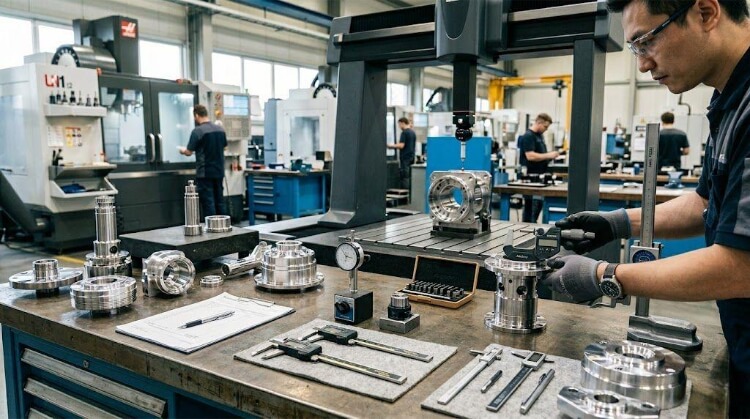
Simple sizes may be verified with standard gauges or micrometers. Position, flatness, concentricity, or sealing-related geometry may need a more suitable measurement method. If the check does not match the feature, the report may appear acceptable while the actual risk persists.
For precision work, measurements must reflect how the feature actually functions.
Judge success by consistency, not one good part
One accurate sample is not enough if the next batch drifts.
A precision job is successful when the process can keep producing parts with the same functional result over time. That matters more than making one part that happens to meet the print under ideal conditions.
In real projects, precision machining works best when control stays on the features that can actually cause failure, while the rest of the part stays manufacturable.
Conclusion
CNC precision machining makes sense when feature drift can create a real functional problem.
In practice, that usually comes back to fit, sealing, motion, alignment, or repeatability. It also depends on how stable the process remains once set up, as tool wear, heat, material movement, and geometry start working against the tolerance. A part may look simple on the drawing but still be difficult to hold if the wall is thin, the cavity is deep, or the inspection method does not reflect the actual risk.
Which features on your part really need tight control? Send us your drawing or CAD file. We will review your part from a machining and risk perspective, highlight critical features, and suggest where tolerances can be tightened or relaxed to balance performance, cost, and lead time.