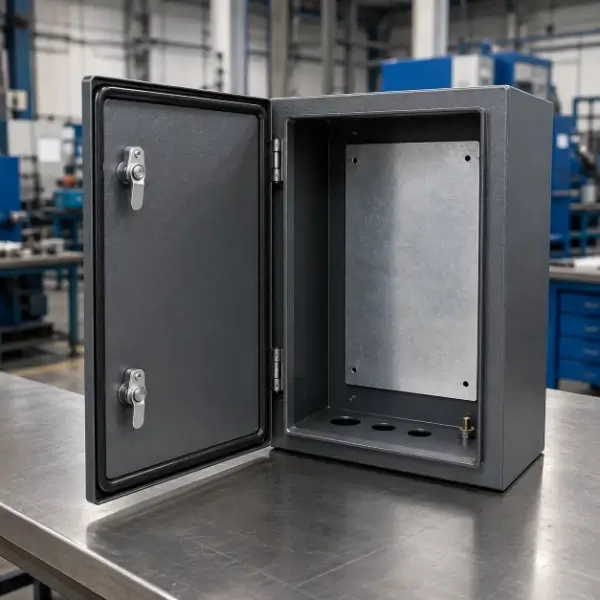
TZR manufactures custom IP rated enclosures from your drawings and CAD files. We design the fabrication route around your target protection level, component layout, installation environment, and production volume.
Send your 2D drawing, 3D model, target IP level, material, and quantity for review.
Choosing a higher target than the application needs can add sealing hardware, structural work, testing, and cost.
Limited dust ingress and splashing water
Protected openings and a consistent door seal
Dust-tight construction and water jets
Continuous sealing and rated entries
Dust-tight construction and powerful water jets
Strong closure pressure and controlled seams
Dust-tight construction and temporary immersion
Sealed joints, suitable accessories, and testing
IP and NEMA Type ratings use separate systems.
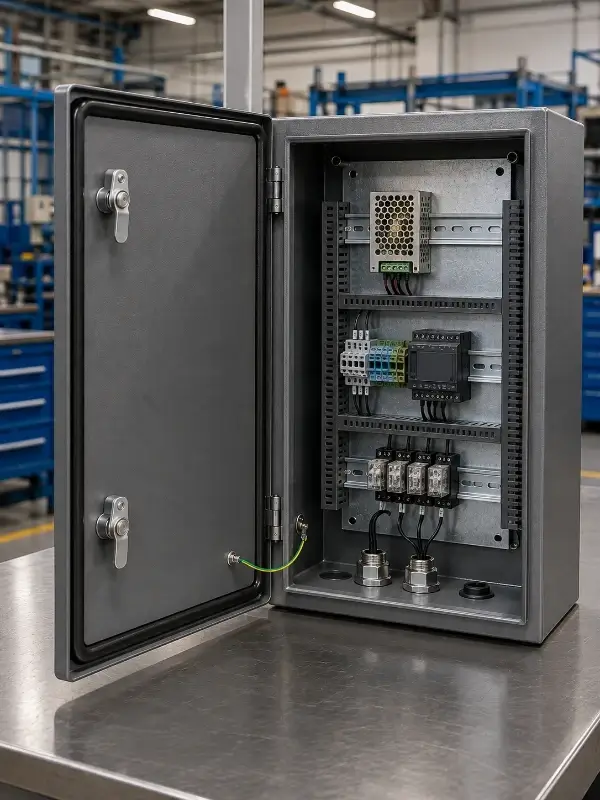
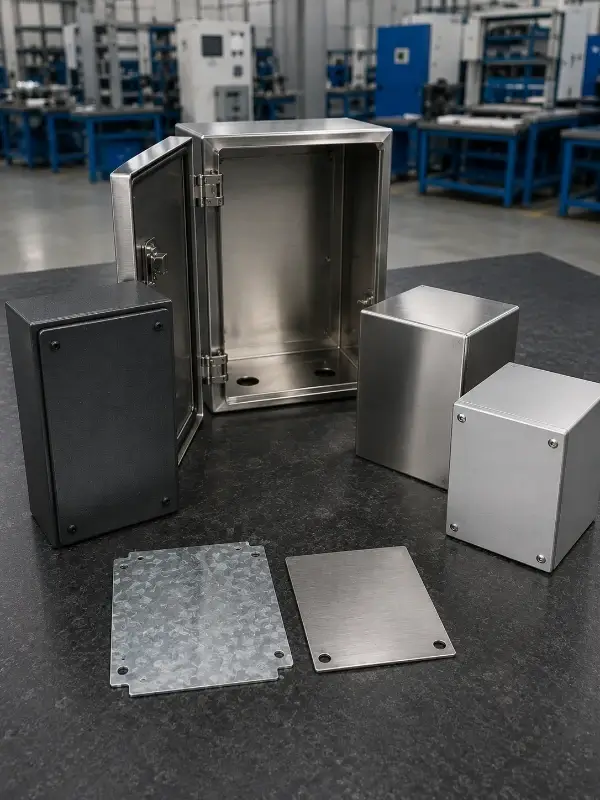
We manufacture wall-mount boxes, hinged enclosures, removable-cover housings, junction boxes, control panels, equipment cabinets, and electronics housings.
Mounting plates, brackets, DIN rails, grounding points, inserts, cable space, and fastener access.
Door swing, hinge position, latch access, removable panels, and maintenance space must suit the installation.
Windows, switches, glands, vents, fans, plugs, and drains must be planned as part of the sealed assembly.
Ingress protection does not prove corrosion resistance. Material and finish must also suit the installation environment.
Strength and practical cost for many industrial installations.
For many wet or frequently cleaned environments.
For chloride, salt, or more corrosive conditions.
Lower weight and good formability for electronics housings.
For internal panels and other specified parts.
Finishes: Powder Coating • Anodizing • Passivation • Electropolishing • Brushing • Polishing • Painting • Plating • Bead Blasting
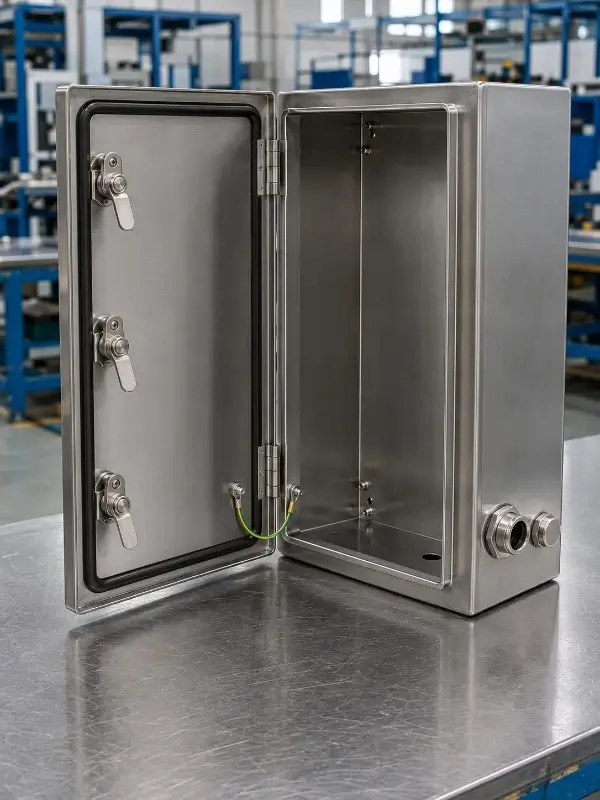
A reliable seal depends on the flange, door structure, closure pressure, entries, and heat-management plan.
The flange needs enough width, stiffness, and flatness. Latches must apply reasonably even compression.
Door stiffness, hinge alignment, bend sequence, corner joints, and welding distortion affect the sealing surface.
Glands, fans, vents, windows, switches, connectors, and plugs become part of the protection system.
Not sure whether the current design supports the target IP level? Upload the drawing for a DFM review.
TZR combines laser cutting, CNC bending, punching, welding, machining, hardware insertion, finishing, and assembly.
Confirm fit, access, door movement, mounting points, gasket layout, and appearance.
Verify fixtures, work instructions, inspection points, assembly, finish, and packaging.
Follow the approved drawing, bill of materials, finish, and revision.
Changes to seals, cutouts, latches, or hardware must be approved before release.
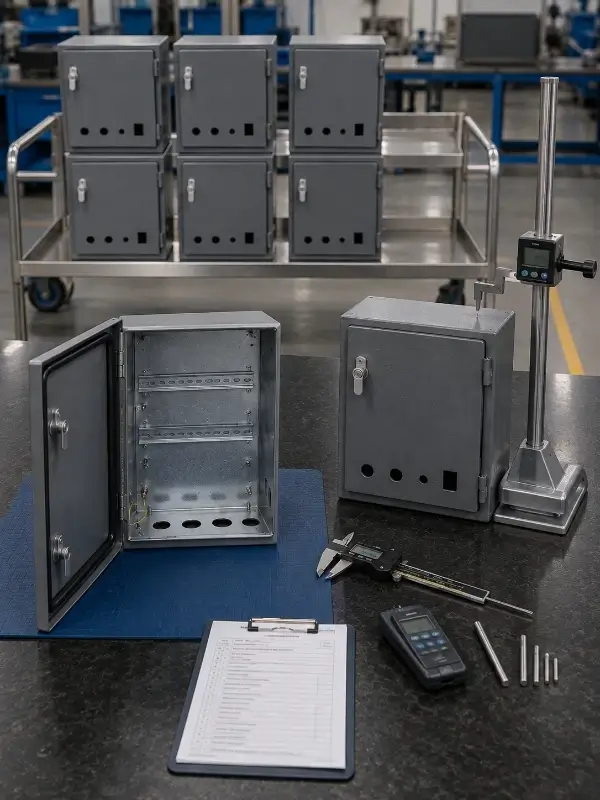
Dimensional inspection confirms the approved drawing.
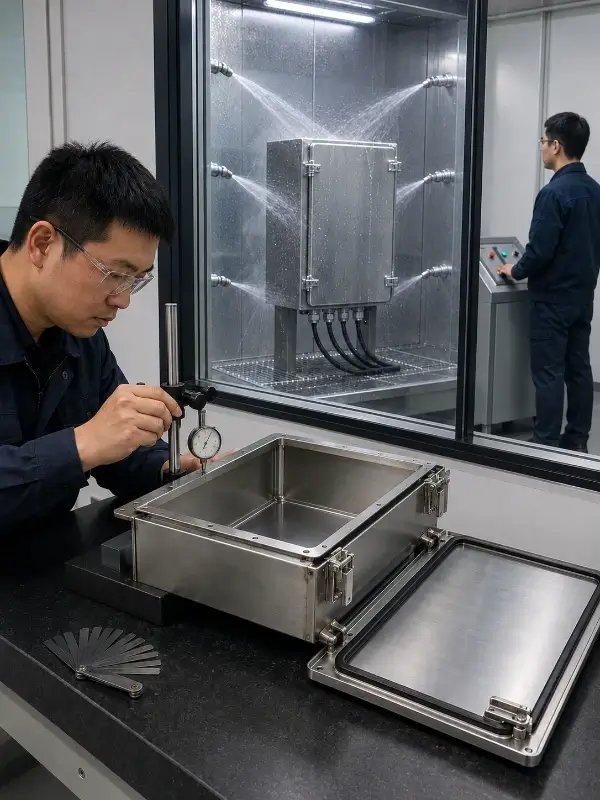
Formal IP validation is a separate requirement.
Check flange flatness, door gaps, hinges, latches, gasket placement, cutouts, plugs, hardware, and assembly.
Test the final assembly with its gaskets, glands, windows, vents, plugs, latches, and accessories.
First article reports, material certificates, finish records, and batch traceability can be included when specified.
A design target is not proof of certification.

 English
 Spanish
 German
 Russian
 Italian
 French