 English
  Spanish
  German
  Russian
  Italian
  French
Introduction
The safety of delicate elements within an electrical enclosure is a basic optimisation issue in the design of outdoor infrastructure. There is a need to strike a balance between the strict requirements of outdoor environments and the financial limitations of project budgets. This decision-making is based on the framework offered by the National Electrical Manufacturers Association (NEMA) in its standard, NEMA 250. In this context, the NEMA 3R rating plays a crucial role among various NEMA enclosures. It is the general outdoor utility standard, providing a calculated balance between the necessary weather protection and affordability.
But the misuse of this standard is widespread. The difference between waterproof and weather-resistant is a common misconception that results in either disastrous equipment failure or unnecessary excessive expenditure on more expensive, higher-rated enclosures.
This guide gives a detailed discussion of the NEMA 3R classification, its specifications, material requirements, and the logic behind its manufacture, which determines its performance. Moreover, we will discuss the production procedures, namely the disjunction between stock and tailor-made production, which define the sustainability of these enclosures in the industry.

What is NEMA 3R
In order to interpret what is nema 3r rating, it is necessary to consider the performance requirements of the NEMA 250 standard strictly. A NEMA 3R enclosure is a housing designed to be used either indoors or outdoors to offer a certain degree of protection to personnel against access to dangerous components, and to offer a certain level of protection to the equipment within the enclosure against the ingress of solid foreign objects (falling dirt) and the ingress of water (rain, sleet, snow).
More importantly, the NEMA 3Renclosure definition contains a condition that the enclosure should not be destroyed by the external formation of ice. This particular provision makes it stand out among most indoor-rated enclosures that would not withstand the freezing conditions.
It is also necessary to determine what NEMA 3R is not. It is not made dust-tight. It is not windblown dust resistant, or hose directed water or submersion resistant. The NEMA 3R enclosure protection mechanism is mostly gravitational; it does not seal the water out, but sheds it. It is intended to keep water out of the enclosure at a level below the lowest live part, and it presupposes that any incidental water that gets into the enclosure will be taken care of by drainage.
Key Features and Specifications of a Compliant NEMA 3R Enclosure
The aesthetic of a NEMA 3R enclosure does not make it compliant; rather, it is the adherence to strict NEMA 3R. These requirements are designed to handle environmental vectors, namely, precipitation and gravity.
Technical Specifications Matrix
| Specification | Requirement |
| Standard Reference | NEMA 250 / UL 50E |
| Primary Environment | Outdoor (can be used Indoor) |
| Ingress Protection (Solids) | Falling dirt (Not dust-tight) |
| Ingress Protection (Liquids) | Rain, Sleet, Snow |
| Ice Loading | Must remain operable when covered in ice |
| Drainage | Mandatory drainage provision at the lowest point |
| Gasketing | Not strictly required if design sheds water naturally |
The Anatomy of Protection
To achieve these specifications, the physical construction of a NEMA 3R enclosure is based on three different design features:
- The Drip Shield (Top Shielding): Like an umbrella, it does not cover its owner by putting him in a vacuum but rather by diverting the flow, the top of a NEMA 3R enclosure always sticks out beyond the door or front cover. This drip shield is an overlapping one so that the falling rain does not enter the door gap but flows over it. This mechanical diversion is more dependable in decades compared to rubber seals which can deteriorate in the presence of UV.
- Weep Holes (Drainage Provisions): The standard recognizes one of the basic facts of outdoor physics: condensation is unavoidable. Moisture can be deposited due to changes in humidity or slight ingress during storms. An obedient NEMA 3R design should have weep holes at the base of the enclosure. These enable the liquid to be removed out of the system and avoid the bathtub effect, whereby water accumulates to reach the electrical parts.
- Latching and Hanging Mechanisms: The standard requires that the enclosure be operable in the presence of ice. As a result, NEMA 3R hinges and latches are usually external and strong, and they are supposed to penetrate a layer of ice without mechanical breakdown.
NEMA 3R vs. Other Ratings: Understanding the Key Differences
The choice of an enclosure is a relative activity. In order to explain why NEMA 3R was chosen, it is necessary to know the reasons why other ratings, namely NEMA 4/4X and NEMA 12, could be rejected or chosen in a particular application.
NEMA 3R vs. NEMA 4/4X
The difference between Type 3R and Type 4 is the pressure of the water vector. NEMA 3R is resistant to falling water (gravity-driven). NEMA 4 is used to protect against hose-directed water (pressure-driven).
Where the application requires cleaning crews to wash down equipment using high-pressure hoses, or where the enclosure is placed on a ship deck where it is exposed to splashing salt water or waves, NEMA 3R is inadequate. NEMA 4 enclosures are made with continuous welded seams and tight gasketing to form a water-tight seal. This watertight standard is corrosion-protected by NEMA 4X.
There is a price associated with this seal, though. NEMA 4 enclosures cost much more to produce because of the accuracy of the welding and gasketing. Moreover, a NEMA 4 enclosure keeps heat and condensation in as well as it keeps water out. The ventilated character of a NEMA 3R design (often incorporating louvers for airflow) is usually technically better than the sealed NEMA 4 environment in outdoor transformers or switchgear that produces heat.
NEMA 3R vs. NEMA 12
The tension in this case is between the outside and the inside world. NEMA 12 is an industrial indoor standard, which is aimed at safeguarding dripping non-corrosive liquids and, most importantly, settling dust and lint.
NEMA 12 is a great protection in a factory, but it does not have the required UV protection and ice-loading capacity to be used outside. On the other hand, NEMA 3R is not dust-tight. It would be an engineering mistake to use a NEMA 3R enclosure within a flour mill or a textile factory because fine particulates would go around the drip shield.

Common Materials Used for NEMA 3R Enclosures
The integrity of a structure is as strong as the material that is used to make the enclosure. Whereas the NEMA standard is a performance dictator, the substrate is decided by the manufacturer.
- Galvanized Steel: This is the utilitarian standard of NEMA 3R. The zinc coating acts as a sacrificial anode and does not rust even when the surface is scratched. It is economical and is commonly applied to utility boxes.
- Powder-Coated Carbon Steel: When a particular appearance is needed or where extra durability is required, the industry standard is carbon steel with a polyester powder coating of outdoor quality. The coating is a protective skin; so long as this skin is not broken, the steel underneath is not subject to oxidation.
- Aluminum (5052-H32): Aluminum has natural corrosion resistance in coastal or high humidity environments. Aluminum also forms a natural oxide coating that shields the substrate as opposed to steel, which depends on coating. In NEMA 3R applications where weight is an issue, aluminum is the best option.
| Material | Corrosion Protection Mechanism | Density (g/cm³) | Cost | Aesthetics | Protection Summary | Recommended Applications |
| Galvanized Steel | Sacrificial zinc coating (anodic) | 7.85 | $ | Average | Retains rust resistance even when scratched; basic appearance | General industrial use, utility boxes |
| Powder-Coated Carbon Steel | Barrier protection from powder coat | 7.85 | $$ | Good | Excellent if coating remains intact; needs touch-up if damaged | Outdoor enclosures with aesthetic concerns |
| Aluminum (5052-H32) | Natural protective oxide layer | 2.68 | $$$ | Good | Lightweight and corrosion-resistant, ideal for harsh environments | Coastal telecom cabinets, lightweight systems |
When Standard Stock Isn’t Enough: The Case for Custom Fabrication
The industrial supply chain has a high level of inefficiency when it comes to the procurement of enclosures. Complex systems are often specified by engineers as standard NEMA 3R enclosures off-the-shelf only to discover that the stock unit must be altered to be functional.
This results in field fabrication – the act of drilling holes, cutting cutouts to fit screens or mounting brackets on site. This is not optimal practice in terms of manufacturing and quality assurance for three reasons:
- Weakened Integrity: When a typical powder-coated box is drilled on the field, the raw metal edges are left to the elements. The defensive wall is broken. These open edges are the sites of rust and corrosion in a NEMA 3R environment, and significantly reduce the life of the enclosure.
- Dimensional Inefficiency: Stock enclosures are rigid and of pre-determined dimensions. Internal parts are not usually in these increments and engineers are compelled to buy oversized enclosures. This leads to wastage of material, higher shipping weights and wastage of real estate used in installation.
- Labor Economics: The labor cost of a skilled technician to measure and cut steel in the field manually is exponentially greater than the cost of a CNC laser to make the same cut in a factory.
How TZR Ensures NEMA 3R Integrity Through Precision Fabrication
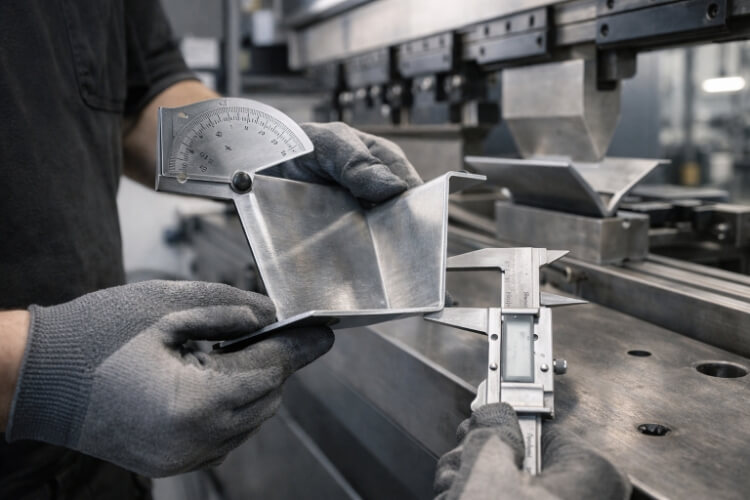
To eliminate the risks of field modification, one must look beyond standard suppliers to a specialized partner. TZR is a leading sheet metal fabrication manufacturer, distinguished by our work in high-stakes industries including automotive, medical devices, 3D printing, and renewable energy. We specialize in the end-to-end design, prototyping, and manufacturing of complex components using steel, stainless steel, aluminum, and copper.
This multi-industry expertise allows TZR to bring a higher standard of precision to NEMA 3R enclosures through our “Fabricate-then-Coat” methodology. By leveraging Design for Manufacturability (DFM) analysis provided by engineers with over a decade of specialized design experience, we optimize your enclosure’s layout before a single sheet is cut. Our technicians, also possessing 10+ years of fabrication experience, then execute these designs using laser cutting and CNC punching to achieve tolerances as tight as ±0.02mm.
By handling everything in-house—from raw material processing to final finishing—we ensure that the protective integrity of the enclosure is never compromised. Meeting and exceeding ISO 9000 certification standards with a 98% quality pass rate, TZR delivers engineered solutions that are cost-effective, spatially optimized, and built to survive the elements.
Typical Applications for NEMA 3R Enclosure
Considering its design limitations and capabilities, NEMA 3R is the standard of infrastructure that is exposed to the elements but not directly abused.
- Utility Meter Sockets: The ubiquitous electric meter on building exteriors is nearly all NEMA 3R.
- Power Distribution and Switchgear: Outdoor breaker panels and disconnect switches are based on 3R protection to avoid rain ingress and allow needed ventilation.
- HVAC Systems: NEMA 3R is used in rooftop control units to ensure the safety of circuitry and regulate the heat load of the building.
- Construction Site Power: This rating is used in temporary power distribution boxes (spider boxes) because it is durable and weather resistant during the construction stage.
- Telecommunications Cabinets: Although sensitive servers may need climate control, the exterior of roadside telecom infrastructure may follow 3R standards of rain protection.
Critical Factors to Consider Before Ordering NEMA 3R Enclosure
The engineer should consider variables that are not limited to NEMA rating before finalizing a specification. The rating ensures that the rain is not penetrated, but not that the system will be successful.
- Thermal Management: NEMA 3R enclosures are exposed to the sun (sun loading). The internal temperature may be much higher than the ambient temperature. Engineers need to determine the heat dissipation needs and take into account the use of sun shields or active ventilation fans (with suitable rain shrouds).
- Mounting Configuration: How will the unit be mounted? Wall-mount, pole-mount, and pad-mount designs need various structural reinforcements. The box is a standard box that can deform when loaded unless it is reinforced to take a pole.
- Security Procedures: Although the standard mandates the use of a tool to unlock the enclosure, unauthorized access is an issue in the open areas. Padlockable hasps or keyed latches are essential features that should be indicated at the design stage.
- Cable Entry: At what point will the conduits enter? NEMA 3R relies on gravity. The top entry is not recommended because it poses a high risk of leakage. The normal best practice is bottom entry to ensure the integrity of the enclosure.

Conclusion
NEMA 3R enclosure is a logical engineering decision in most outdoor electrical systems. It provides the right amount of protection against precipitation and ice, without the high prices of watertight or submersible ratings. Nevertheless, the quality of fabrication is inseparably connected with the efficacy of this protection.
Although the standard stock enclosures are useful in the short term, when the complexity of the project is low, they may not be able to withstand the stringent requirements of specialized industrial projects. Custom manufacturing is the most effective in the integrity of the protective coating, the accuracy of the cutouts and optimization of dimensions. Through working with a dedicated fabrication partner such as TZR, engineers can make sure that their NEMA 3R enclosures are not just in line with the standard, but are tailored to the economic and physical realities of their implementation.
FAQS
Q: Can you use a NEMA 3R enclosure indoors?
A: Yes, technically, but it is rarely the optimal choice. While NEMA 3R is compliant for indoor use to protect personnel, it is not dust-tight. For indoor industrial environments containing circulating dust, lint, or dripping non-corrosive liquids, a NEMA 12 enclosure provides superior protection.
Q: Is a NEMA 3R good for outdoor use?
A: Yes, it is the industry standard for general outdoor utility. NEMA 3R is specifically engineered to withstand rain, sleet, snow, and external ice formation. Unless the environment subjects the equipment to high-pressure washdowns or corrosive salt spray, NEMA 3R is the most cost-effective and functional outdoor solution.
Q: Is NEMA 3R or 4 better?
A: It depends entirely on the application. NEMA 4 is “better” if you need a watertight seal against hose-directed water and windblown dust. However, NEMA 3R is often the superior engineering choice for standard infrastructure because it provides necessary rain protection and ventilation at a significantly lower cost.