 English
  Spanish
  German
  Russian
  Italian
  French
What Plasma Cutting and Laser Cutting Really Mean in Fabrication?
These two cutting methods may seem similar at first, but they support very different production goals. The difference becomes clearer once you look at cut quality, part detail, and downstream work.
What does plasma cutting do?
Plasma cutting removes metal using an electric arc and a high-speed ionised gas. Because the process depends on electrical conductivity, it is mainly used for conductive metals such as carbon steel, stainless steel, and aluminium. In production, it is often a practical fit for thicker parts and more structural work.
What does laser cutting do?
Laser cutting uses a focused beam to cut along a narrow path. That narrow cut path makes it easier to control fine details, small holes, and narrow slots, and to achieve cleaner outer profiles. It is often chosen when the part needs tighter cut control and a better edge condition from the start.
Why does the difference matter?
The real difference is not only how the two processes cut. The real difference is the quality of the parts they produce after cutting.
When the drawing includes small internal cutouts, tighter feature spacing, or visible edges, cut quality affects more than shape alone. It begins to affect fit, appearance, and the amount of work needed before the part moves into bending, coating, or assembly.
One current industrial comparison describes laser cutting as having a kerf of less than 0.5 mm. In contrast, plasma is described at about 1 mm to 4 mm. Plasma kerf can range from about 1.5 mm on very thin metal to around 5 mm on 25 mm material, depending on setup.
Thickness also shifts the decision. Current guidance says plasma becomes especially advantageous above about 16 mm. At the same time, a laser is typically the stronger choice on thinner material when high precision, better edge quality, and intricate cuts matter more.

Material, Thickness, and Part Type: Where the Decision Starts
The best cutting choice usually starts with the part itself, not with the machine. Material, thickness, and part type often decide the direction before cost or speed are compared.
Thickness changes the choice
Thickness can change the answer very quickly. On thinner sheet metal, laser cutting is often the better choice because it usually provides better detail control, a narrower kerf, and cleaner edges. One industrial comparison describes laser kerf as below 0.5 mm, while plasma is described at about 1 mm to 4 mm.
As thickness increases, plasma cutting becomes easier to justify in many jobs. Plasma becomes especially advantageous above about 16 mm, while the laser is usually favoured for thinner material when high precision and better edge quality matter more.
Part type also matters.
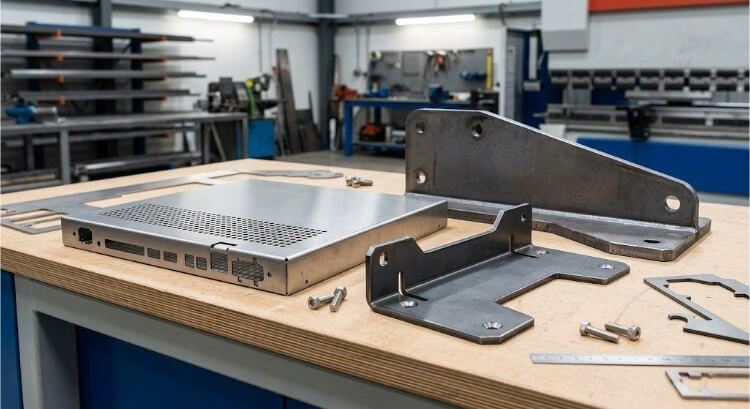
Part type often matters as much as thickness. A visible enclosure panel usually needs cleaner edges, more consistent holes, and less manual cleanup before coating or assembly. A mounting plate with many slots or small cutouts also relies more on cut control, because even small variations can affect fit later. These are the kinds of parts where the narrower kerf and higher contour flexibility associated with laser cutting usually create a better process window.
A thick support bracket or welded base plate creates a different requirement. These parts often place more value on practical cutting than on a fine edge finish. If the workflow already includes weld preparation or edge cleanup, plasma cutting may offer a better balance.
Small features usually need a laser.
A part with narrow slots, small holes, tight inside corners, or closely spaced cutouts usually pushes the choice toward laser cutting. A narrower cut path helps keep these features closer to the drawing and reduces the risk of later corrections.
By comparison, a wider cut path is easier to accept on simpler profiles with larger openings and less detail pressure. One plasma-cutting reference notes that the kerf can range from about 1.5 mm on very thin material to around 5 mm on 25 mm material, depending on the setup.
| Part condition | Laser cutting | Plasma cutting |
|---|---|---|
| Thin sheet with small features | Better fit | Less suitable |
| Visible panels and covers | Better fit | More cleanup likely |
| Thick structural parts | Sometimes suitable | Better fit |
| Parts above about 16 mm | Depends on quality target | Often stronger fit |
Precision, Edge Quality, and Small Feature Capability
Cut quality affects much more than the cut line itself. Precision, edge condition, and feature control often decide how smoothly the part moves into the next step.
Why precision matters?
Precision affects hole position, slot width, edge straightness, and part-to-part consistency. These details directly affect whether the part fits the way the drawing expects. Laser cutting is often the better choice when the part requires tighter control, as its cut path is much narrower. One current industrial comparison describes laser kerf as less than 0.5 mm, while plasma is typically around 1 mm to 4 mm.
That gap matters in production. A wider cut makes it harder to hold the final shape close to the drawing, especially when the part includes narrow slots, sharp corners, or dense feature spacing.
Why do small features favour laser?
Small holes, narrow slots, sharp inside corners, and closely spaced cutouts usually make laser cutting the safer option. The same industrial comparison says that laser offers very high contour flexibility and can produce very small holes. At the same time, plasma has lower contour flexibility, rounded corners, and a minimum hole size that is often 1 to 3 times the sheet thickness.
This matters because small feature errors rarely stay at the cutting stage. A slot that cuts wider than expected or a hole that shifts slightly can create fitting problems later during hardware installation or final assembly. That is one reason detail-sensitive parts usually benefit more from laser cutting.
Why edge quality matters?
Edge quality affects more than appearance. It also changes how much work the part needs before the next step. Cleaner edges usually reduce the need for deburring, grinding, and manual correction. That becomes more valuable when the part will be bent, coated, or assembled directly after cutting. A current laser–plasma comparison notes that the laser produces more accurate angles and cleaner contours, while plasma has higher heat input and less precise inner contours.
This is also why thin detailed parts often move more smoothly through the workflow with laser cutting. When the edge is cleaner from the start, there is usually less correction before the part goes into finishing or assembly.
When plasma cutting quality is enough
Plasma cutting can still be fully suitable for the right parts. Current plasma guidance says high-tolerance systems can cut with about 0.25 mm accuracy, 0–3° bevel, and holes as small as 4.76 mm, while conventional plasma is closer to 0.76 mm accuracy with 3–5° bevel.
That means plasma is not simply “rough.” On thicker, more structural components, a wider cut and more visible edge variation may still be acceptable, especially if the workflow already includes edge cleanup. Current guidance also says plasma systems are ideal for thicker materials, with thicknesses of about 12-16 mm. At the same time, a laser is ideal below that range when high precision and intricate cuts matter more.
Cost and Speed in Real Production
A process that looks cheaper or faster on the machine is not always better for the full job. Real production decisions need to consider total cost, workflow speed, and downstream impact.
Cutting costs is not the full cost
Machine cost is only one part of the decision. A process may look cheaper during cutting, but that advantage can shrink fast if the part needs more deburring, more grinding, or more manual correction later.
There is also a clear equipment cost gap. One current source states that laser systems are generally about two to five times more expensive than plasma systems. That matters for capacity planning, especially when the job mix is heavy on thicker structural parts rather than thin, detailed sheet metal.
Speed depends on the part
Speed is not a fixed advantage for one process. It changes with material thickness, feature detail, and edge-quality requirement.
Plasma becomes especially advantageous above about 16 mm thickness. And that plasma is faster than a 15 kW laser on mild steel above 16 mm, and faster than a 20 kW laser on mild steel above 20 mm. That helps explain why plasma stays highly competitive on heavier-gauge structural work.
On thinner sheet metal, the balance often changes. Laser cutting remains stronger when the job needs narrow kerf, small holes, cleaner contours, and less post-cut correction.
Focus on finished-part cost
A useful cost comparison should include more than cutting time. It should also include labor, consumables, maintenance, edge cleanup, inspection, scrap risk, and rework risk.
Current guidance says plasma typically has lower operating costs on materials thicker than about 12 mm, while laser typically has lower operating costs on thinner materials. The same source notes that lasers use fewer consumables and can reduce material waste, but thicker cutting can increase gas and electricity costs.
That is why a lower cutting price does not always mean a lower production cost. If one method creates more work before welding, coating, or assembly, the savings at the cutting stage may disappear later.
Look at the full workflow
A faster cut is not always a faster job. If the assembly team spends more time correcting fit, or if the finishing team spends more time cleaning edges before coating, the machine-speed advantage may not improve total throughput.
This is why buyers and engineers should assess cost and speed at the full job level. The better question is not which process is cheaper per hour. The better question is which process reduces the total effort needed to make the final part.
| Cost and speed factor | Laser cutting | Plasma cutting |
|---|---|---|
| Thin detailed parts | Better overall fit | Less efficient overall |
| Thick structural parts | Depends on job target | Often a practical fit |
| Lower capital cost | Less favorable | Better fit |
| Materials above about 12–16 mm | Depends on quality target | Often stronger fit |
| Less post-cut cleanup | Better fit | More cleanup likely |
How Downstream Processes Change the Best Choice?
A part may be cut successfully by either process, but that does not mean both choices create the same production result. The more useful question is which method helps the part move into the next step with less extra work.
Bending changes the choice
When a part moves into bending, cleaner edges and more consistent profiles usually become more valuable. This is especially true on thinner sheet metal parts with visible flanges, tighter assembly features, or edges close to bend lines.
Laser cutting is often the better starting point in these cases because it offers tighter contour control and lower burr from the start. A current sheet-metal manufacturing page highlights laser processing for complex thin-sheet components with many bends, forms, and contour features, which fits the needs of many enclosure and panel parts.
Welding changes the choice
Welding can shift the decision in a different direction. For thicker structural parts, edge cleanup and weld preparation may already be part of the normal workflow.
If that work is expected anyway, the value of finer cut detail may become less important than cutting practicality and cost. In this kind of workflow, plasma cutting may still be the more suitable option. At the same time, laser systems can also add value in workflows where cutting and welding are closely linked.
Coating changes the choice
Surface finishing raises the value of edge quality. If a part will be powder-coated, painted, or used in a visible assembly, rougher edges can create more prep work before finishing and may affect the final appearance.
Cleaner edges usually reduce that extra work. This is one reason laser cutting is often a better fit for visible panels, covers, and other parts where appearance matters. The current laser application material also notes that galvanized steel sheets can be cut quickly and to a very high quality, which supports parts that move into later finishing or visible-use applications.
Assembly also matters
Assembly is another stage where the difference becomes easier to see. Hole position, slot shape, edge straightness, and contour accuracy all affect how easily parts fit together.
A cut part may look acceptable on the table, but still cause a delay later if the hardware does not align or if mating parts require manual correction. Current laser application guidance emphasizes high precision, compact design freedom, and reduced rework in related fabrication and welding applications.

How to Choose the Right Process for Your Project?
The best choice should begin with the drawing and the production target. Plasma cutting and laser cutting both have value, but they fit different manufacturing needs. A reliable decision comes from looking at the material, thickness, feature size, edge requirement, and the next steps after cutting.
When laser is the better choice?
Laser cutting is usually the better option when the part needs tighter tolerances, smaller holes, narrow slots, cleaner edges, or better visual quality. It is a strong fit for enclosure panels, covers, detailed brackets, and other parts that move quickly into bending, coating, or final assembly. The narrower kerf and stronger contour flexibility associated with laser cutting help explain why it is usually safer for detail-sensitive parts.
When plasma is the better choice?
Plasma cutting is usually the better option when the material is thicker, the part is more structural, and the tolerance window is more open. It works well for heavy brackets, supports, base plates, welded frames, and other conductive-metal parts where cutting practicality matters more than fine detail. Plasma becomes especially advantageous above about 12 mm to 16 mm, and in some comparisons it outpaces high-power laser systems as thickness increases.
Questions to ask before choosing
A simple selection method starts with a few direct questions:
- Is the part thin and detail-sensitive, or thick and structural?
- Does the drawing include small holes, narrow slots, or visible edges?
- Will the part move directly into bending, coating, or final assembly?
- Can the workflow accept more edge cleanup after cutting?
- Is the real goal lower cut price, or lower finished-part cost?
These questions work because they connect the cutting choice to the real manufacturing result instead of the machine alone.
Conclusion
Plasma cutting and laser cutting both have a clear place in fabrication, but they do not create the same result. Laser cutting is usually the stronger option for thinner parts, tighter tolerances, smaller features, and cleaner edges.
Plasma cutting is often the more practical option for thicker conductive-metal parts where structural use, cutting efficiency, and cost balance matter more than fine detail.
The most reliable way to choose is to review the full job. Material, thickness, part type, edge requirement, and downstream work all shape the right answer.
Need help choosing between plasma cutting and laser cutting for your part? Send us your drawing, material, thickness, and quantity requirements. Our engineering team will review your project and recommend a practical manufacturing solution based on part quality, downstream processing, and total production cost.