 English
  Spanish
  German
  Russian
  Italian
  French
ASTM A108 is frequently referenced on engineering drawings, but it is not a specific steel grade. It is the standard specification for cold-finished carbon and alloy steel bars. The core value of specifying ASTM A108 lies in machining consistency, tighter tolerances, and production efficiency compared to hot-rolled alternatives.
Specifying the wrong bar stock can inflate cycle times or lead to unpredictable tool wear. For CNC machining and mass production, the choice of cold-finished material directly affects tool life and final part cost. This guide outlines the specifications, limitations, and practical trade-offs when selecting cold-finished bars for manufacturing.
What ASTM A108 Controls in Manufacturing?
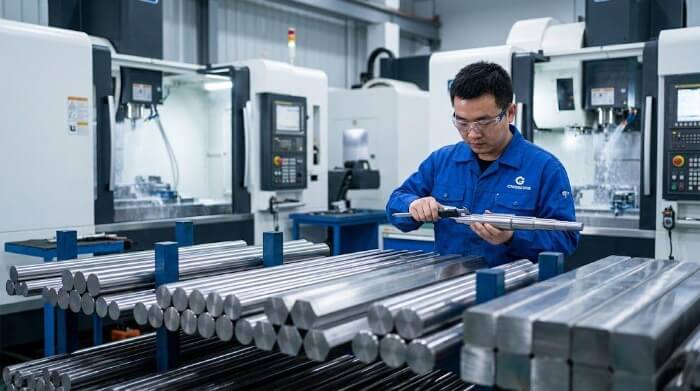
The ASTM A108 standard dictates how steel is mechanically processed after it has cooled from the hot-rolling stage. This secondary processing is what transforms a rough mill product into a precise manufacturing input.
Dimensional Tolerances & Bar Geometries
Common industry processes under this standard include Cold Drawn (CD), Turned and Polished (T&P), and Turned, Ground, and Polished (TG&P). These methods change the physical shape and mechanical properties of the steel. Standard geometries covered by the specification include round, square, hexagon, and flat bars.
Unlike hot-rolled steel, which shrinks unpredictably during cooling and varies in size, cold-finished bars maintain strict dimensional tolerances. For example, a standard 1-inch cold-drawn carbon steel round bar typically holds a size tolerance of minus 0.002 to 0.003 inches. This predictable sizing allows manufacturers to use the stock’s original Outside Diameter (OD) as the final part dimension, feeding bars directly into CNC machine collets without preliminary rough turning.
Surface Roughness & Straightness Specs
The cold finishing process removes the abrasive mill scale found on hot-rolled steel. This results in a cleaner, smoother surface finish, which reduces initial tool wear during machining.
Straightness is another critical factor controlled under ASTM A108, usually specified as a maximum deviation over a set length (for instance, 1/16 inch per 5 feet). Consistent straightness is necessary for Swiss-style CNC lathes and the machining of long-shaft components. Excessive bowing in the raw stock causes runout and spindle vibration during high-speed turning, which can lead to rejected parts and machine damage.
ASTM A108 Selection Rules: When to Use and When to Avoid
Selecting a cold-finished bar over a hot-rolled bar requires evaluating the production volume, the necessary precision, and the secondary operations required for the final part.
Ideal Applications (High-Volume CNC)
Cold-finished bars are primarily utilized for precision machined components. They work well for applications where the material OD serves as the final part dimension. Because the raw material size is already close to the final print, A108 stock is highly suitable for high-volume turning operations. Typical applications include:
- Precision drive shafts and axles
- Internal pins and dowels
- Threaded fasteners and studs
- Custom hydraulic fittings
Minimizing the amount of material removal per cycle translates directly to shorter cycle times and lower machining costs.
When to Avoid A108 (Limitations & Alternatives)
Despite its machining advantages, A108 cold-finished steel is not suitable for every project. It is generally not recommended for:
- Large-scale welded assemblies: The cold-working process leaves residual stresses within the material. When subjected to the localized heat of welding, these stresses release, which may cause unpredictable distortion in the final assembly.
- Components requiring extensive bending or forming: Parts subjected to heavy stamping or folding may crack due to the work-hardening effect inherent in the cold finishing process.
- Low-cost, non-precision structural frames: Where surface finish and tight dimensional tolerances are unnecessary, hot-rolled steel (such as ASTM A36) is a more appropriate and cost-effective alternative.
Cost vs. Precision Trade-offs
Cold-finished steel carries a higher initial material cost per pound compared to hot-rolled stock. The decision to specify A108 depends on whether the savings in machining time offset this material premium—which is typically 15% to 30% higher than hot-rolled equivalents.
For low-volume prototypes or parts requiring heavy milling where the original bar surface will be entirely removed, the cost difference may not be justified. However, as production volume scales up, the economics shift. The reduced cycle times, extended tool life from the scale-free surface, and the elimination of rough turning usually make A108 significantly more cost-effective at volume.
Core ASTM A108 Grades: The Production Workhorses
To standardize procurement and streamline production planning, engineers generally select from a few proven grades within the ASTM A108 specification.
Quick Selection Matrix
| Use Case | Recommended Grade | Core Reason |
| General Pins & Shafts | 1018 Cold Drawn | Best balance of cost, machinability, and weldability. |
| High-Stress Components | 1045 Cold Drawn | Higher yield strength, responds well to induction hardening. |
| High-Volume Turned Parts | 1215 / 12L14 | Maximizes tool life and feed rates; strictly non-weldable. |
| High-Torque / Fatigue | 4140 Cold Drawn | Superior toughness and fatigue resistance for alloy applications. |
1018 & 1045: Standard Carbon Steel
1018 is the baseline material for most machine shops. As a low-carbon steel, it offers excellent weldability and forms well. It is usually used for standard mounting plates, unhardened shafts, and structural tie rods. While its machinability is acceptable, it lacks the carbon content necessary for through-hardening, limiting it primarily to surface case-hardening applications.
1045 is a medium-carbon alternative that provides higher tensile and yield strength out of the box. It works well for axles, gears, and wear components because it responds consistently to induction hardening and flame hardening. However, the higher carbon content makes it harder on cutting tools and reduces its weldability compared to 1018, typically requiring pre-heating before welding to prevent cracking.
1215 & 12L14: Free-Machining Alloys
When cycle time is the primary cost driver, 1215 and 12L14 are the standard choices. These grades contain added sulfur and phosphorus (1215), and sometimes lead (12L14), which act as internal lubricants during the cutting process.
Using standard 1212 steel as a baseline (100% machinability rating), 1018 sits at roughly 78%, while 12L14 achieves a massive 160% to 170% machinability rating. This allows CNC machines to run at significantly higher spindle speeds and feed rates.
However, there are two strict trade-offs. First, 1215 and 12L14 are entirely non-weldable due to severe risks of hot cracking. Second, because 12L14 contains lead, it does not comply with RoHS and REACH directives. If parts are destined for European markets, medical devices, or electronics, engineers must specify the lead-free 1215 grade to ensure compliance.
4140 Cold Drawn: High-Stress Applications
For components subjected to severe impact, high torque, or cyclic fatigue, carbon steel is often insufficient. 4140 is a chromium-molybdenum alloy steel available in cold-drawn bar form. It offers high toughness and fatigue strength, frequently specified for heavy-duty drive shafts, specialized tooling, and high-pressure hydraulic fittings.
Machining 4140 requires rigid machine setups and predictable tool path strategies, as its higher hardness accelerates insert wear compared to 10-series steels.
CNC Machining Dynamics & Tooling Behavior
Material chemistry dictates how a bar behaves when it meets a cutting tool. Understanding these dynamics helps programmers optimize feeds, speeds, and tool selection.
Chip Control & Tool Wear Expectations
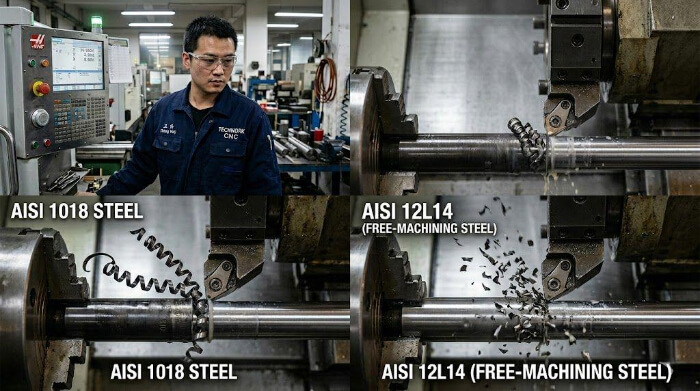
Chip evacuation is a constant concern in automated production. 1018 carbon steel tends to be gummy, often producing long, stringy chips if feeds and speeds are not perfectly dialed in. These chips can wrap around the chuck or tooling, forcing machine stoppages. Machining 1018 typically requires aggressive chip-breaker geometries on the inserts.
In contrast, the sulfur and lead in 12L14 and 1215 cause chips to break into small, easily evacuated pieces. This reduces heat buildup at the cutting edge and extends tool life considerably. When machining harder materials like 1045 or 4140, tool wear becomes the limiting factor. These grades generate more heat, necessitating robust carbide grades and consistent high-pressure coolant delivery to prevent premature insert failure.
Threading & Deep Hole Behavior
Internal features like deep holes and tapped threads highly expose the differences between A108 grades. 12L14 is highly preferred for small-diameter internal threads; it cuts cleanly, leaving precise thread crests while minimizing the risk of tap breakage.
Threading 1018 with standard cut taps can sometimes result in torn or galled threads due to the material’s softer, ductile nature. To bypass this, shops frequently switch to form taps (roll taps) for 1018, leveraging the material’s ductility to cold-form stronger threads by displacing metal rather than cutting it. Drilling deep holes in 4140 or 1045 requires appropriate peck drilling cycles (retracting the drill to clear chips) to prevent chip packing, drill wander, and catastrophic tool failure inside the part.
Manufacturing Limits & Residual Stress Risks
The cold-finishing process imparts excellent mechanical properties and dimensional stability, but it also introduces physical constraints that engineers must address during the design and manufacturing phases.
Stress-Induced Distortion
Cold drawing compresses and elongates the steel grain structure, packing the bar with internal residual stress. As long as the bar remains symmetrical, this stress is balanced. However, if machining removes a large volume of material asymmetrically—such as milling a deep slot down one side of a round shaft—the stress balance is disrupted. The part will often bow or warp immediately after it is released from the vise.
If a part requires heavily asymmetric machining alongside precise straightness, it is usually necessary to rough machine the part, apply a stress-relieving heat treatment (annealing), and then perform the final finishing passes.
Heat Treatment & Weldability Constraints
Material chemistry strictly dictates post-processing limits. As noted, free-machining grades like 1215 and 12L14 must never be specified for welded assemblies. 1018 welds easily with standard MIG or TIG processes, but 1045 requires strict thermal management to prevent brittle heat-affected zones.
When heat treating 1045 or 4140 cold-finished parts, engineers must account for dimensional distortion. Quenching operations cause slight, unpredictable material growth or shrinkage. Tight-tolerance bearing journals or critical fits usually require leaving a grinding allowance of 0.005 to 0.010 inches on the print, followed by a final post-heat-treat grinding operation to hit the exact dimensions.
Corrosion Sensitivity & Storage
Hot-rolled steel has a layer of mill scale that offers mild, temporary protection against rust. Cold-finished A108 steel has no such barrier. The bare, polished metal is highly reactive to moisture.
In a humid shop environment, cold-finished bars can develop surface rust within days. This necessitates careful inventory management. Raw stock must be stored in climate-controlled areas or coated with rust-preventative oil. After machining, if parts are not immediately sent out for plating (like zinc or black oxide), coolant residue must be washed off and the parts must be thoroughly oiled prior to shipping or storage to prevent oxidation.
Cost & Cycle Time Optimization in Production
Cost optimization in CNC turning often comes down to reducing cycle times and maximizing material yield. Because ASTM A108 cold-finished stock arrives with precise dimensions and a clean surface, it provides unique opportunities for production buyers and engineers to eliminate secondary operations entirely.
Hex & Square Stock Utilization
Many shaft and fastener designs require flat surfaces for wrench engagement or mating assembly. If a part is machined from round stock, creating these flats requires live tooling on a lathe or moving the part to a CNC mill for a secondary operation. Both options increase cycle time and labor costs.
A standard cost-reduction strategy is to procure ASTM A108 hex or square bar stock directly. By aligning the part design with the raw material’s existing flat surfaces, the milling operation is completely eliminated. While shaped bars may carry a slight premium over round stock, the reduction in machine time usually makes this highly cost-effective at mass production volumes.
Surface Treatment Interference
Because cold-finished bars lack the protective mill scale of hot-rolled steel, parts often require post-processing like zinc plating or black oxide to prevent rust. Engineers frequently overlook how these treatments affect the tight tolerances (such as h9 or h10) inherent to the A108 material.
Surface treatments add physical thickness. Standard zinc plating typically adds 0.0002 to 0.0005 inches per surface, which easily pushes a tightly toleranced shaft out of spec. The risk is severely compounded on threaded features: because of the 60-degree thread angle, plating thickness on the flanks is amplified roughly four times on the pitch diameter.
If an A108 fastener requires zinc plating, the shop must use oversized taps (like H5 or H6 limits) or cut external threads under the nominal size to prevent assembly failure on the production floor. In contrast, black oxide is a conversion coating that adds virtually zero thickness.
MTR Verification & Scrap Reduction
For production buyers, managing material costs extends beyond the price per pound. It requires precise stock size planning. CNC lathes running automated bar feeders generate “drops”—the unusable remainder of the bar.
When calculating material yield, buyers must account for the part length, the parting tool width, and the 2 to 4 inches of clamping remnant required by the bar feeder spindle. Dividing this true total into standard 12- or 20-foot stock lengths ensures the buyer selects the length that minimizes scrap.
Additionally, raw material should always be validated through Material Test Reports (MTRs). Verifying the MTR ensures the chemistry and mechanical properties match the requested A108 grade (e.g., confirming a 12L14 batch actually contains the specified lead content for machinability), preventing unexpected tool wear or heat treatment failures later in production.
DFM Guidelines for ASTM A108 Parts
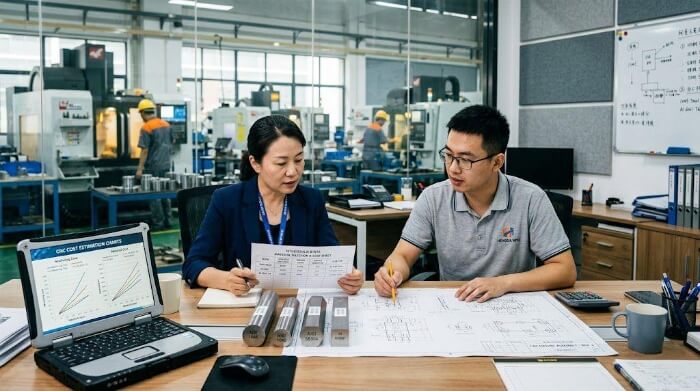
Design for Manufacturability (DFM) bridges the gap between the engineering drawing and the physical realities of the machine shop. When designing components for A108 steel, optimizing the design around the raw material yields immediate cost and time benefits.
Design for Stock Shape Utilization
If the outer diameter of a component does not interface with a bearing, a seal, or a tight-tolerance mating hole, the design should utilize the stock A108 bar diameter. Specifying an arbitrary outer dimension (for example, drawing a 0.950-inch shaft when a standard 1.000-inch bar could be used) forces the machine to turn the entire outer surface. This wastes material, consumes machine time, and shortens insert life.
Before dimensioning non-mating outer features, engineers should consult a standard fractional or metric stock catalog. Leaving the non-critical outside diameter unmachined is a primary rule of DFM for cold-drawn parts.
Machining Allowance Strategy
When a diameter must be turned down from the raw stock size, removing too little material can cause processing issues. Cutting tools require a minimum depth of cut to shear the metal cleanly; if the cut is too shallow, the insert will rub against the material, causing rapid tool wear, work hardening, and a poor surface finish.
A general machining strategy is to leave a minimum allowance of 0.015 to 0.020 inches on the diameter for the finishing pass. This ensures consistent chip formation and maintains the required surface roughness.
Tolerance Stacking Risks
Using the unmachined outer surface of a cold-drawn bar as a primary datum can introduce tolerance stacking risks. While A108 dimensional tolerances are tight, the bars are not perfectly geometric. Minor ovality or slight runout may exist along the length of the bar.
If critical internal features or concentric diameters are machined relying solely on the raw stock surface as the reference point, any existing ovality will transfer to the final part. In engineering terms, this transfers directly as a failure in Concentricity or Total Indicator Reading (TIR). For highly precise components, engineers should dictate that all critical concentric diameters be machined in a single operation, rather than trusting the raw bar surface as a strict baseline.
Conclusion
Specifying ASTM A108 on an engineering drawing is only the first step in controlling part costs. The actual cost of a machined component is determined on the shop floor—by matching the specific cold-finished grade to the right tooling strategy, anticipating residual stress, and utilizing stock geometries to eliminate secondary operations.
At TZR, we look at your prints from a machinist’s perspective. With over 10 years of experience in CNC machining and mass manufacturing, our engineering team actively reviews your material callouts before the chips start flying. If switching a fastener from 1018 to 1215 can safely cut your cycle time, or if adjusting a non-critical tolerance allows us to use the raw stock diameter, we will point it out.
Have a cold-finished part ready for production? Submit your 2D drawings and CAD files to our engineering team for a comprehensive DFM review and a precise manufacturing quote.