 English
  Spanish
  German
  Russian
  Italian
  French
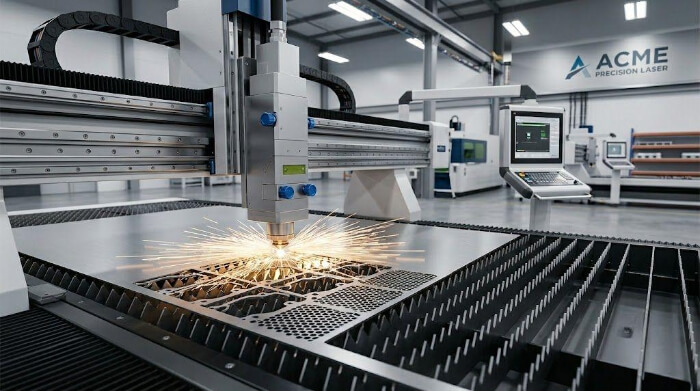
Laser cutting stainless steel is a precision manufacturing process that uses a focused fiber laser and high-pressure assist gases, typically nitrogen, to melt and evacuate the alloy. Unlike processing standard carbon steel, cutting stainless steel requires strict control over heat input and gas dynamics to prevent thermal distortion, oxidation, and hard dross formation on the cut edge.
For engineers and procurement teams, the primary manufacturing challenge is not simply severing the material. Because stainless steel contains high levels of chromium and nickel, it has lower thermal conductivity and higher reflectivity. If the machine parameters are not optimized, the heat stays in the sheet, leading to warped parts and heavily oxidized edges that drive up secondary grinding costs.
The final unit cost and dimensional accuracy of a component depend on a combination of material properties, shop-floor execution, and downstream operations. This guide outlines the core material behaviors, Design for Manufacturability (DFM) rules, and post-processing realities required to produce high-quality stainless steel parts efficiently at scale.
Which Stainless Steel Grades Are Best for Laser Cutting?
Different stainless steel alloys respond differently to the laser cutting process. The material grade directly affects the melting behavior, the required assist gas pressure, and the size of the heat-affected zone (HAZ).
Austenitic Stainless Steel
Austenitic grades feature a face-centered cubic (FCC) crystal structure, making them non-magnetic in their annealed state. The 300 series (like 304 and 316) relies on high nickel content to stabilize this structure, while the 200 series uses manganese and nitrogen. While this composition provides excellent corrosion resistance, it creates a highly viscous molten pool during laser cutting.
To achieve a dross-free edge, the machine requires high-pressure nitrogen to forcefully evacuate the melt before it solidifies. Notably, while austenitic steels are notorious for work-hardening during mechanical processing, laser cutting is a non-contact thermal process. It cleanly severs the material without inducing mechanical work-hardening, ensuring the cut edge remains highly workable for downstream forming.
Ferritic Stainless Steel
Ferritic grades, such as 430, possess a body-centered cubic (BCC) structure. They are magnetic, non-hardenable by heat treatment, and boast better thermal conductivity than austenitic grades. This superior thermal transfer allows the heat from the laser to dissipate across the sheet faster, noticeably reducing the risk of overall warping when processing thin-gauge parts.
The main manufacturing trade-off is metallurgical heat sensitivity. Excessive heat input during laser cutting causes rapid grain growth and embrittlement along the cut edge, severely limiting downstream weldability in thicker sections. Operators must optimize cutting speeds to maintain a strictly controlled, minimal heat input to preserve structural integrity.
Martensitic Stainless Steel
Also part of the 400 series, martensitic stainless steels are produced in high- or low-carbon variants and are unique because they can be hardened through heat treatment and quenching. They trade some corrosion resistance for much higher strength and wear resistance, yet remain highly compatible with fiber laser processing.
Because they contain lower nickel levels and resist work-hardening better than the 300 series, martensitic parts are generally easier to machine. However, when cutting high-carbon variants, the rapid heating and cooling cycle of the laser creates a localized, hardened, brittle edge. Engineers must factor this into the DFM plan, often requiring slower spindle speeds or carbide tooling if the design dictates immediate secondary CNC tapping.
Duplex and Specialty Grades
Duplex stainless steels combine austenitic and ferritic microstructures, offering exceptional yield strength for demanding structural applications. Due to their dense mechanical properties, piercing and cutting duplex grades requires significantly higher laser power and slower travel speeds compared to standard 304 sheets.
Edge quality can vary, and localized hardening consistently occurs along the cut path. This hardened edge accelerates cutting tool wear exponentially. If the flat pattern requires secondary mechanical operations like countersinking or precision reaming, this increased tooling cost and extended cycle time must be built into the initial quote.
How Should Parts Be Designed for Laser Cutting?
Designing for manufacturability (DFM) directly impacts production time, part quality, and unit cost. Parts optimized for the laser cutting process are easier to nest, faster to process, and more reliable to quote.
Hole and Slot Design
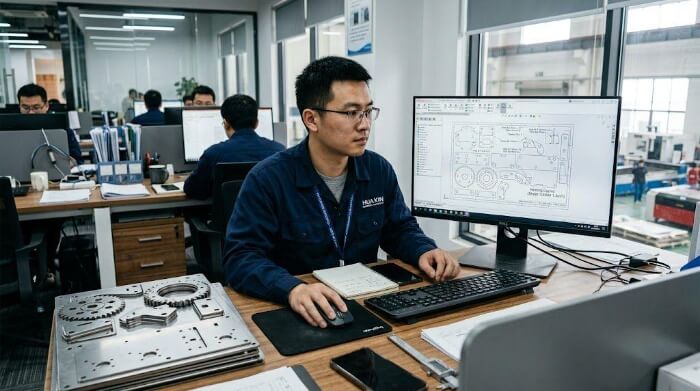
A standard rule in sheet metal cutting is that the minimum hole diameter should be at least equal to the material thickness (a 1:1 ratio). While high-end fiber lasers can achieve smaller ratios, maintaining the 1:1 rule prevents the material from overheating and blowing out during the initial piercing stage.
For slots and narrow cutouts, the minimum width should also follow this material thickness rule. This prevents excessive thermal distortion and ensures the scrap material falls through the cutting bed cleanly, rather than welding itself back onto the part.
Corner and Feature Geometry
Sharp internal corners cause the laser head to decelerate rapidly to change direction. This concentrates heat in a very small area and may cause localized melting, edge rounding, or micro-cracking in thicker stainless sheets.
Adding a small radius (e.g., 0.5mm to 1.0mm) to internal corners solves this issue. It allows the laser to maintain a more consistent cutting speed, which reduces heat buildup and results in a cleaner, more dimensionally stable corner.
Part Nesting and Micro-Joints
When processing multiple parts from a single sheet, adequate spacing must be maintained between the components. This prevents the remaining metal web from warping due to heat accumulation, which can shift the sheet during cutting and ruin the entire batch.
For small parts or designs with intricate cutouts, micro-joints (small tabs of uncut material) are necessary. They keep the part attached to the main sheet, preventing it from tipping up and colliding with the laser nozzle. When designing, it is helpful to indicate non-critical edges where these micro-joints can be placed, as they leave a small burr that may require a quick manual deburring step.
Tolerance Planning
Standard commercial tolerances for laser cutting stainless steel generally fall between ±0.1mm and ±0.2mm, depending on the material thickness and overall part dimensions. While tighter tolerances are technically possible, they require slower cutting speeds and frequent parameter adjustments, which directly drives up the cost per part.
Tolerances should always be specified based on the actual fit and function of the component. If a specific hole requires a tight tolerance for a press-fit pin, it is usually more cost-effective to laser-cut an undersized pilot hole and perform a secondary CNC drilling or reaming operation to hit the exact dimension.
Key Factors Affecting Stainless Steel Laser Cutting Quality
Achieving a clean cut on stainless steel is an exercise in balancing machine parameters. The final edge quality directly depends on how the operator configures the equipment to match the specific properties of the sheet.
Material Thickness
The thickness of the stainless steel sheet dictates the baseline for all other machine settings. Thin sheets (under 2mm) can be processed at very high speeds, but they are highly susceptible to warping from rapid heat accumulation.
As thickness increases, the kerf (the width of the cut) naturally widens, and the cutting speed must drop. For plates over 10mm, the machine requires significantly more power and precise focal control to ensure the molten material is fully cleared from the bottom of the cut without leaving heavy slag.
Power, Speed, and Focus
Laser power and cutting speed must be tightly synchronized. Too much power or a slow travel speed causes the material to over-melt, expanding the heat-affected zone and ruining the dimensional accuracy. Conversely, cutting too fast means the beam fails to pierce completely, leaving a welded seam on the bottom edge.
The focal position of the laser beam is equally critical. For thin stainless steel, the focus is kept at or slightly below the surface to maintain a narrow, precise kerf. For thick plates, the operator moves the focus deeper into the material to widen the cut path, allowing the assist gas to effectively push the heavy molten steel out the bottom.
Assist Gas Selection
The choice of assist gas drives both the edge quality and the total operational cost. Nitrogen is the standard for stainless steel because it acts as a shielding gas, preventing oxidation and leaving a clean, silver edge ready for direct welding. However, high-pressure nitrogen cutting consumes massive volumes of gas, which noticeably increases the hourly cost of the machine.
Oxygen relies on an exothermic reaction to speed up the cut for thicker plates, but it leaves a black oxide layer that requires mechanical removal. Compressed air is a low-cost alternative that leaves a yellowish edge. Air cutting works exceptionally well for internal structural components where cosmetics do not matter, making large-volume production much more cost-effective.
Heat Input Control
Stainless steel holds heat much longer than carbon steel. If the laser stays in one localized area for too long, the metal will expand, causing the sheet to warp, lift, and potentially collide with the laser head.
To manage thermal distortion, programmers use path-planning techniques like jump cutting, which scatters the cutting sequence across the sheet to distribute heat. They also program cooling points—brief laser pauses at sharp corners—allowing the heat to dissipate before the machine changes direction.
What Problems Occur During Stainless Steel Laser Cutting?
Even with well-calibrated machines, manufacturing defects can happen. Identifying the physical cause of these issues on the shop floor is the first step to correcting them and preventing batch rejections.
Burrs and Dross
Dross is the resolidified metal that hangs off the bottom edge of a cut. In stainless steel processing, this occurs when the assist gas pressure is too low to evacuate the viscous melt pool, or when the cutting speed does not match the laser power.
Unlike carbon steel dross, stainless steel dross is extremely hard and bonds tightly to the edge. Removing it requires significant manual grinding, which drives up labor costs and can alter the part’s final dimensions. Adjusting the focal point and increasing the nitrogen pressure is always cheaper than adding a secondary deburring operation.
Oxidation and Edge Discoloration
A perfectly cut stainless steel edge using nitrogen should look metallic and clean. If the edge turns brown, yellow, or black, it indicates that oxygen has entered the cut zone and reacted with the heated metal.
This discoloration is expected when cutting with oxygen or shop air. However, if it happens during a pure nitrogen cut, it usually means the nitrogen gas purity has dropped, the gas delivery pressure is fluctuating, or the cutting nozzle is damaged and drawing in ambient air.
Edge Taper and Dimensional Error
The laser beam is not perfectly straight; it has a slightly conical shape. This naturally creates a slight taper on the cut edge, which becomes highly noticeable on thicker stainless steel plates (typically above 6mm) and can cause the bottom of a hole to be smaller than the top.
This taper affects the assembly of precision parts, especially if the design features tight-tolerance holes for hardware like press-fit studs. If the natural taper causes a hole to fail inspection, the engineer should design an undersized laser-cut pilot hole, allowing a secondary CNC drilling operation to ream it to the exact vertical tolerance.
Warping and Surface Damage
Warping occurs when the internal stresses of the metal sheet are released during cutting, or when too much heat is concentrated in a small area. This is a very common issue when cutting long, narrow strips or parts with dense, perforated hole patterns.
Surface scratches are another common shop-floor issue, usually caused during material handling. Applying a protective plastic film before cutting prevents scratches, but the laser parameters must be adjusted. Operators often run a low-power pre-cut pass to cleanly vaporize the film along the cut line without melting the plastic directly into the stainless steel surface.
How Post-Processing Affects Final Stainless Steel Parts?
Laser cutting is rarely the final step in sheet metal fabrication. The true unit cost and functional quality of a component depend heavily on how well the cut edge prepares the part for bending, welding, and final surface treatment.
Bending and Springback Control
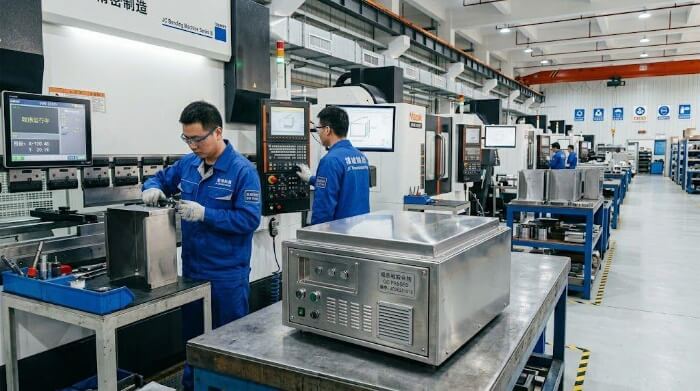
Laser cutting accuracy means little if the subsequent bending operations fail. Stainless steel has high tensile strength, which leads to significant springback after bending. Additionally, the heat from the laser can slightly harden the cut edge, which must be factored into the press brake operator’s bend deduction (K-factor) calculations.
If the flat pattern design does not include proper bend reliefs (small laser-cut notches at the end of a bend line), the material is highly likely to tear, crack, or deform irregularly when formed, leading to immediate part rejection.
Welding Preparation
The choice of laser assist gas dictates the manual labor required before welding. Edges cut with high-pressure nitrogen are completely free of oxidation. These parts can proceed directly to TIG or MIG welding stations without any chemical cleaning or mechanical grinding, keeping the production flow moving.
Conversely, parts cut with oxygen or compressed air develop a dark oxide layer along the edge. If this layer is not ground off completely, it will contaminate the weld pool, causing porosity and a weak, unsafe joint. The manual labor cost to grind these edges usually exceeds the money saved by avoiding nitrogen gas.
Deburring and Edge Conditioning
Even with optimized machine parameters, laser-cut stainless steel often has razor-sharp edges or microscopic burrs. For parts that will be handled by end-users or used to route internal wiring, these sharp edges present significant safety and functional hazards.
Most production facilities run flat parts through automated deburring machines equipped with abrasive belts. This process safely removes sharp edges, applies a slight safety radius, and grinds down any micro-joints left over from the nesting phase, ensuring the part is safe to assemble.
Surface Finishing
Stainless steel is frequently finished with processes like powder coating, bead blasting, or electropolishing. If an oxidized edge from an oxygen cut is left untreated, powder coating will fail to adhere properly, leading to flaking and localized corrosion in the field.
For parts requiring a specific brushed or grained finish (such as a standard #4 finish), the grain direction must be strictly controlled during the laser nesting phase. The programmer must orient all parts so the grain runs consistently across the final assembled enclosure, even if this orientation slightly reduces the material yield of the sheet.
Conclusion
Successful stainless steel laser cutting requires strict control over physical manufacturing variables. Material selection, gas dynamics, and DFM principles must align to prevent thermal distortion and eliminate unnecessary secondary operations. Considering how the cut edge affects bending, welding, and finishing is the most reliable way to reduce lead times and control production costs.
At TZR, our engineering team applies over 10 years of sheet metal fabrication experience to every project. Whether you need rapid prototyping or are scaling up to mass manufacturing, we optimize the laser cutting, stamping, and CNC machining processes to deliver precise, cost-effective components. Send us your CAD or STEP files today to discuss the DFM and production strategy for your next project.
FAQs
What is the maximum thickness of stainless steel a laser can cut?
This depends entirely on the laser’s wattage. A modern 10kW to 12kW fiber laser can cleanly cut stainless steel up to 20mm or 30mm thick. However, edge taper becomes much more pronounced on plates thicker than 10mm, which usually requires secondary CNC machining if tight tolerances are required.
Why use nitrogen instead of oxygen to cut stainless steel?
Nitrogen acts as a shielding gas that prevents the heated metal from oxidizing, resulting in a clean, weld-ready silver edge. Oxygen causes an exothermic reaction that speeds up the cut but leaves a dark oxide scale that demands expensive mechanical removal before welding or coating.
Does laser cutting make stainless steel magnetic?
Austenitic grades like 304 and 316 are generally non-magnetic in their raw sheet form. However, the localized heat from the laser and the severe mechanical stress from subsequent bending can cause a slight phase change in the microstructure, making the cut edges and bend radii mildly magnetic.
How do operators prevent small cut parts from falling into the machine?
Engineers program micro-joints—tiny tabs of uncut metal—into the cutting path. These tabs keep small parts securely attached to the main metal skeleton, preventing them from tipping up and colliding with the laser nozzle. After cutting, operators manually snap the parts out and quickly grind the remaining tab flush.