A sheet metal louver is a cut and formed feature that creates a raised opening in a metal panel. It allows air to move through the panel while reducing direct access to the components behind it.
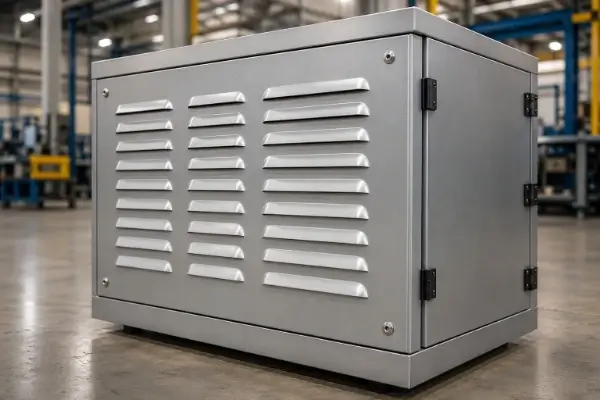
Electrical enclosures, machine control cabinets, electronic housings, HVAC panels, battery equipment, telecommunications equipment, laboratory equipment, and generator covers.
Louver size and direction affect airflow, heat dissipation, and internal clearance. Additional guards, mesh, or filters may be needed for greater protection.
Louvers are not waterproof by themselves. Outdoor or washdown equipment may require internal shields, drainage paths, filters, or gaskets.
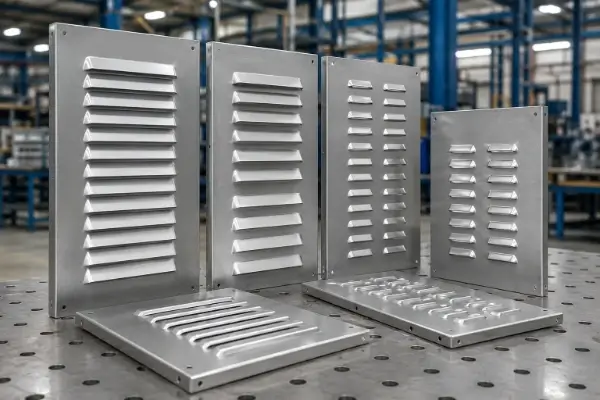
The right louver design depends on airflow, appearance, available tooling, material behavior, and the space available on the panel.
Often the most practical option for repeat production. Existing tools can reduce initial tooling cost and simplify future orders.
Used when the project needs a specific length, opening height, end shape, or airflow pattern. Tooling cost should be separated from unit price.
Drawings should show opening direction, visible side, quantity, and spacing. A clear layout improves airflow, appearance, and inspection.
Material selection affects louver formability, corrosion resistance, appearance, and cost. TZR commonly reviews carbon steel, galvanized steel, stainless steel, and aluminum based on the part design and operating environment.
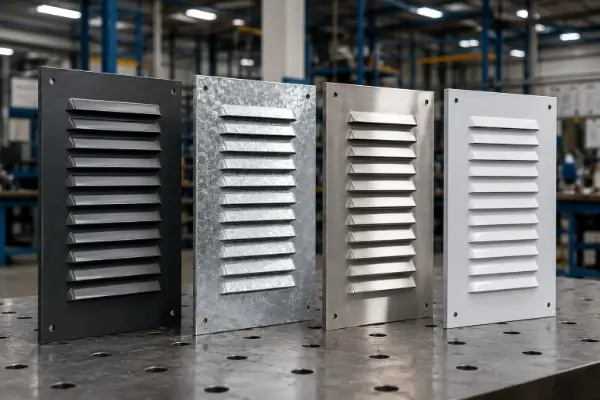
A practical option for painted or powder-coated panels. Good general formability for many indoor industrial enclosures.
Provides zinc-coated corrosion protection. Louver forming may expose cut edges or change the coating near the formed area.
Often used where corrosion resistance and cosmetic quality matter. Forming force and springback should be reviewed together.
Helps reduce weight and offers good corrosion resistance. Alloy, temper, and thickness affect cracking risk and surface marking.
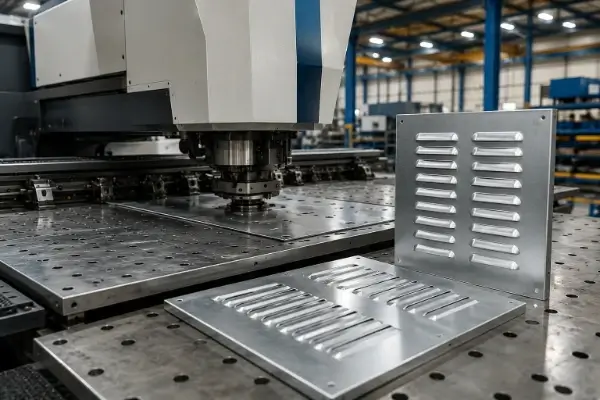
The right process depends on louver size, part geometry, order volume, and design stability. TZR reviews the louver operation together with cutting, bending, finishing, and assembly.
Suitable for prototypes, low-volume runs, and parts that combine louvers, holes, and formed features in one flat pattern.
Best suited for stable repeat programs when a higher tooling investment can support lower unit cost.
Used for longer or special profiles when one standard tool hit is not enough. Suitability depends on geometry and appearance.
Louvers are often formed while the sheet is flat, but the full cutting, bending, hardware, and finishing sequence must be reviewed first.
Most louvered parts require more than one operation. TZR reviews cutting, bending, hardware, welding, finishing, and packaging as one manufacturing flow for prototypes, repeat orders, and production builds.
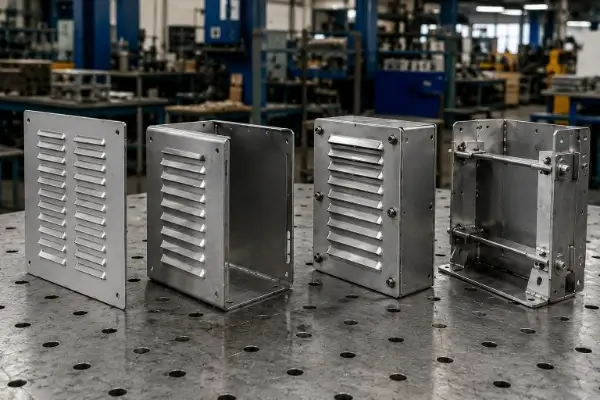
Outer profiles, holes, slots, and louvers are planned together in the flat pattern. Laser cutting and turret punching are selected based on geometry and volume.
Flanges, returns, and enclosure walls are formed after the louver operation. Bend access and louver protection should be checked before production.
PEM nuts, studs, standoffs, hinges, and other hardware should be defined in the drawing. Installation sequence should avoid damage to louvers and visible surfaces.
Joining methods are selected according to strength, access, heat input, and distortion risk. Thin louvered panels may need extra support during welding.
Filters, mesh, brackets, and customer-supplied components can be assembled before shipment. Packaging should protect raised louvers from scratches and crushing.
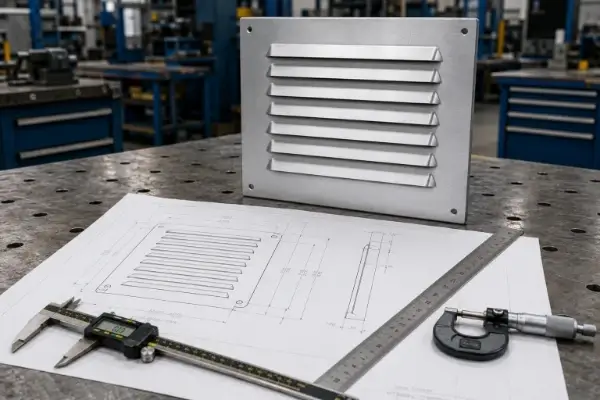
A louver is a cut and formed feature, so spacing, surrounding geometry, and panel stiffness should be reviewed before tooling is approved. Good DFM helps prevent tearing, distortion, uneven openings, and interference with nearby features.
Define length, width, formed height, opening direction, quantity, spacing, and critical dimensions. If the profile can follow standard tooling, note that in the drawing.
Keep enough distance from panel edges, bend lines, and corners. Clearance depends on material, thickness, louver profile, and formed height.
Check nearby mounting holes, PEM hardware, and other formed features. Material movement around the louver can affect hole shape, position, and tool access.
Large louver arrays can reduce stiffness and cause bowing or oil canning. Review open area, panel support, and airflow needs together during design.
Louvers create raised surfaces, cut edges, and recessed areas that affect coating coverage, appearance, and post-processing. Surface finishing should be reviewed together with the material, louver geometry, and cosmetic requirements.
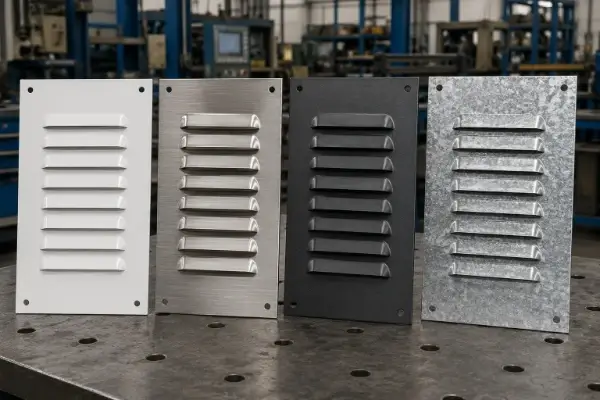
Common for carbon steel enclosures. Coating coverage around raised louvers and cut edges should be checked before production.
Used for suitable aluminum and stainless steel projects. Forming can change the surface appearance around the louver area.
These finishes can highlight reflection changes near formed features. Cosmetic zones and grain direction should be defined in the drawing.
Raised louvers and narrow gaps may affect cleaning, coating access, and edge condition. Review preparation needs before finishing.
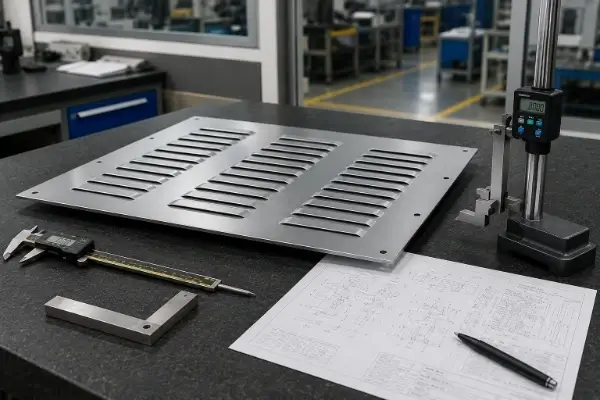
Inspection should confirm that the louvered part meets the approved drawing for function, appearance, and repeat production. The quality plan should cover formed dimensions, surface condition, and process consistency.
Check louver location, opening direction, formed height, panel dimensions, edge condition, and fit with mating parts.
Define the visible side, acceptable tool contact, scratch limits, finish coverage, grain direction, and coating appearance.
Follow the approved drawing revision, material specification, tooling setup, finish requirements, and inspection plan for repeat orders.
The cost of a louvered sheet metal part depends on the complete manufacturing process, not just the number of louvers.
Providing complete drawings and production details helps us evaluate tooling, unit cost, lead time, and long-term supply reliability.
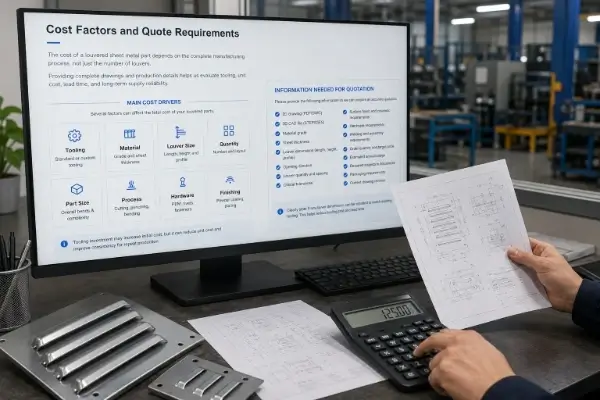
Several factors can affect the total cost of your louvered parts.
Standard or custom tooling
Grade and sheet thickness
Length, height and profile
Number and layout
Overall bends & complexity
Cutting, punching, bending
PEM, rivets, fasteners
Powder coating, plating
Tooling investment may increase initial cost, but it can reduce unit cost and improve consistency for repeat production.
Please provide the following information so we can prepare an accurate quotation.
Clearly state if any louver dimensions can be adjusted to match existing tooling. This helps reduce tooling cost and lead time.
 English
  Spanish
  German
  Russian
  Italian
  French