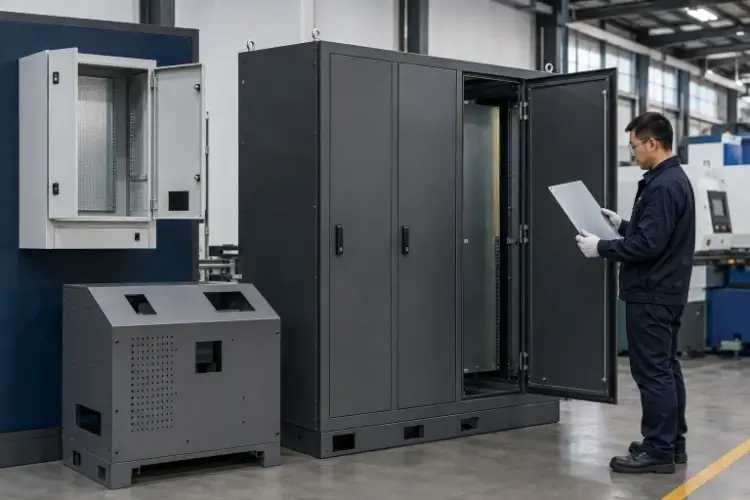
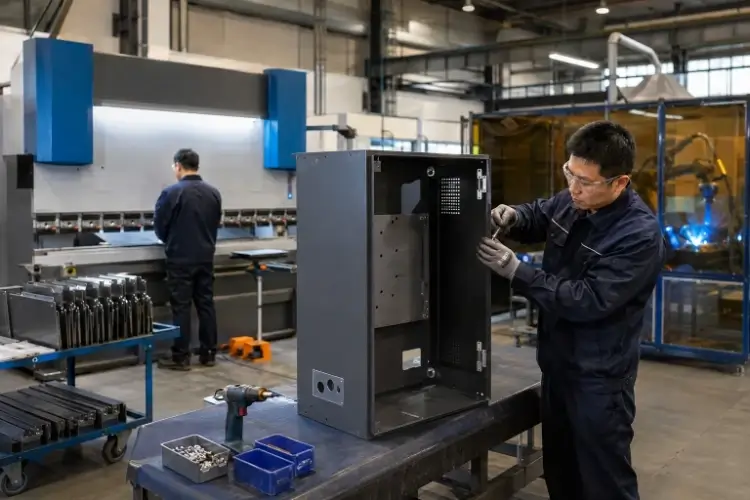
A custom cabinet follows your equipment layout, mounting points, cable routes, and service needs instead of forcing your design into a standard box.
TZR manufactures cabinets for industrial, electrical, electronic, and commercial equipment. Each design can be adapted to the product, installation space, and operating environment.
Wall-mounted boxes, freestanding cabinets, machine-side enclosures, equipment housings, and welded frames.
Machine controls, factory automation, power systems, communications equipment, and laboratory devices.
Define doors, mounting systems, ventilation, cable entry, access panels, lifting features, and external finish.
Send the current 2D or 3D files and tell TZR what the cabinet must protect, support, and contain.
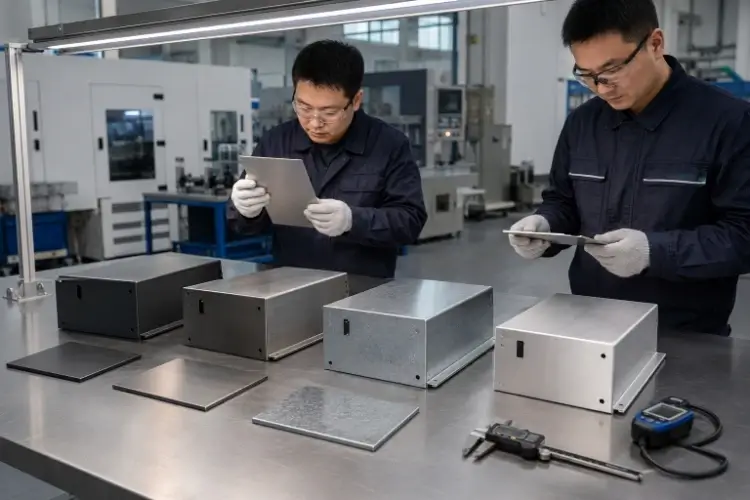
Material selection affects cabinet strength, weight, corrosion resistance, grounding, appearance, and total project cost.
TZR commonly manufactures cabinets from carbon steel, stainless steel, galvanized steel, and aluminum.
When the specification is open, describe the operating environment and expected service life. We can compare practical manufacturing options.
A practical balance of strength and cost. It is often powder coated or painted.
Suitable for corrosive, washdown, hygienic, or appearance-sensitive use.
Provides added corrosion protection for many indoor or sheltered applications.
Reduces weight and supports powder-coated, anodized, or brushed finishes.
Share the grade, thickness, color, texture, gloss level, cosmetic requirements, and operating conditions with TZR.
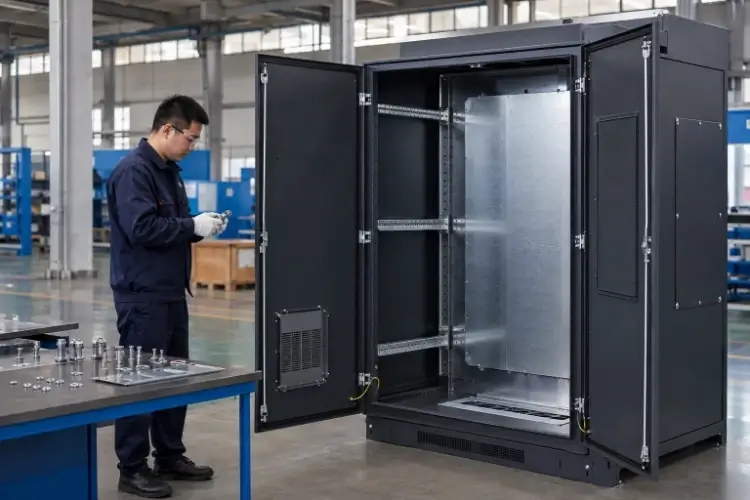
Cabinet performance often depends on the details around doors, panels, installed hardware, cable entry, and future service access.
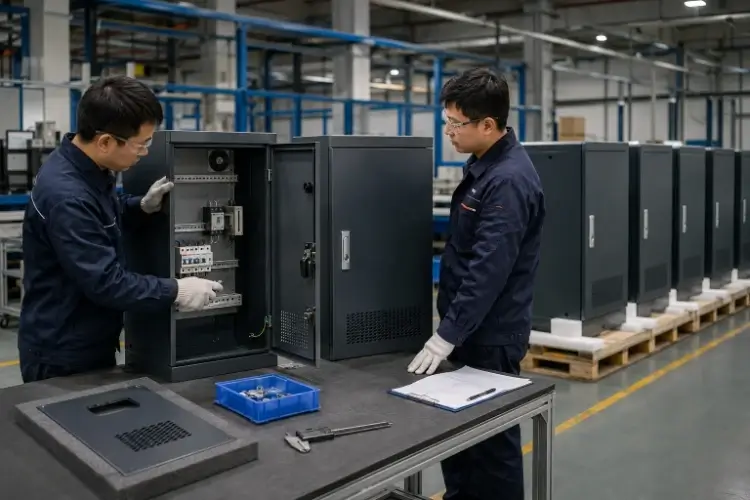
TZR can plan cabinet access and installed features around your equipment layout, assembly process, and future service needs.
Hinges, handles, locks, removable covers, and access panels should support installation and later service.
Plan mounting plates, shelves, brackets, inserted nuts, studs, standoffs, rivets, fasteners, and grounding points.
Coordinate vents, louvers, cable entry, equipment cutouts, gasket channels, seams, and drainage paths.
Share the required rating, environment, and validation responsibility. Door compression, gaskets, seams, openings, drainage, and installed hardware all affect final protection.
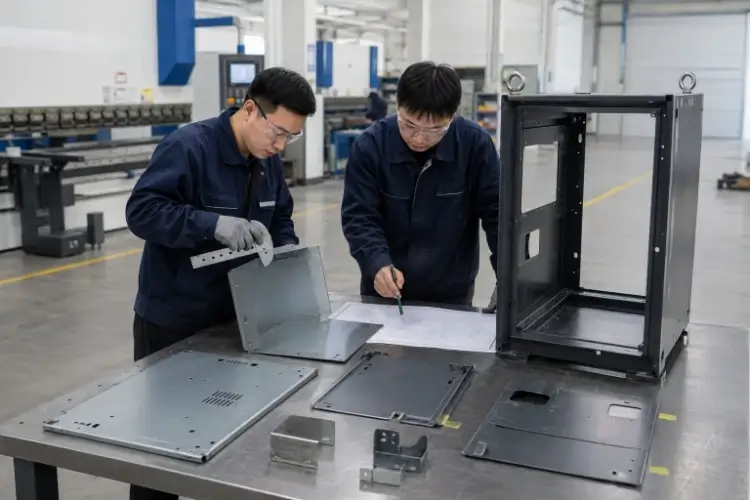
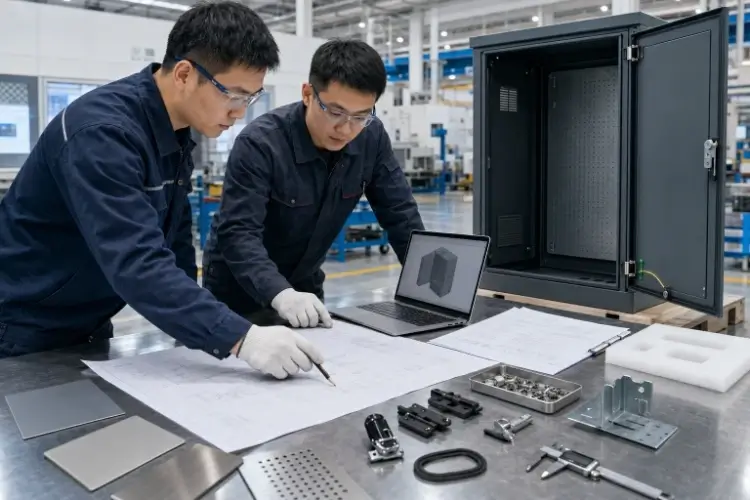
A cabinet can look complete in CAD but still create problems during bending, welding, finishing, assembly, or inspection.
TZR reviews the cabinet as one connected manufacturing and assembly process, not as separate flat panels.
Check material, thickness, bend geometry, bend reliefs, hole position, short flanges, and flatness risk.
Review weld access, distortion, coating buildup, masking, trapped liquids, and cosmetic surfaces.
Confirm hardware clearance, panel alignment, assembly sequence, door fit, and measurement access.
TZR ties proposed adjustments to the controlled drawing revision, so engineering and purchasing can review function, cost, and manufacturability before metal is cut.
Connected manufacturing steps reduce handoff errors and help protect critical features from cutting through final packaging.
TZR plans the manufacturing route around cabinet geometry, material, order volume, finish, hardware, and appearance requirements.
Profiles, holes, knockouts, and formed features.
Cabinet panels formed to the approved geometry.
Joint choice matched to material and distortion risk.
Masking protects threads, contacts, and mating faces.
Hardware, fit checks, and project packaging.
Send the drawing revision, BOM, finish, and assembly scope so TZR can plan a connected route for the complete cabinet.
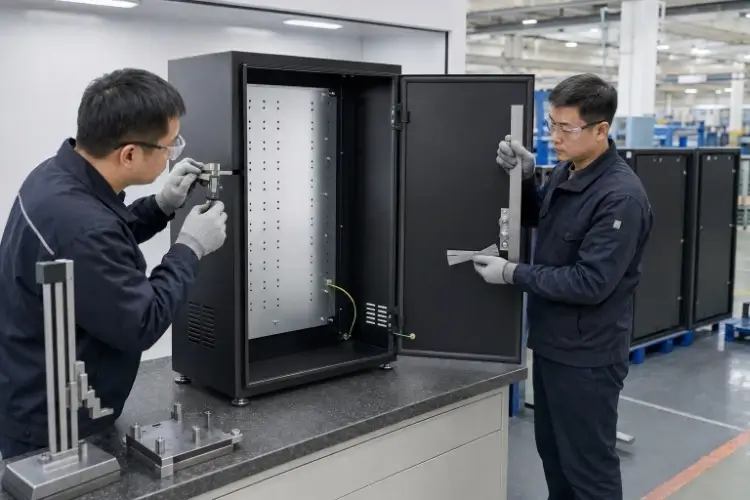
Cabinet quality includes door alignment, panel flatness, hole position, installed hardware, coating appearance, and final assembly fit.
TZR checks first articles, in-process features, surface requirements, and finished assemblies against the approved drawing and inspection plan.
Measure critical dimensions, mating interfaces, hole positions, flatness, door alignment, and assembly fit.
Check weld condition, coating appearance, cosmetic faces, locks, hinges, fasteners, and grounding points.
Plan certificates, dimensional reports, finish records, traceability, fixtures, and packaging checks before quotation.
Mark critical dimensions, cosmetic surfaces, mating interfaces, reports, traceability, and special packaging requirements in the RFQ.
A prototype helps verify cabinet function and appearance, while complete program data supports realistic cost, lead-time, and capacity planning.
Use prototypes to check the cabinet in the real equipment and installation context before approving repeat production.
Cabinet dimensions, bend count, welding content, access, and critical tolerances shape the manufacturing route.
Material grade, thickness, coating, masking, texture, color, and cosmetic limits affect cost and schedule.
Prototype quantity, order size, annual usage, purchased hardware, and assembly scope guide production planning.
Reports, traceability, special checks, protection, and shipping requirements should be defined before quotation.
Share prototype quantity, first-order quantity, annual usage, and expected volume changes so TZR can review fixtures, material purchasing, packaging, and capacity.
Clear design files, quantities, finish requirements, and acceptance criteria help TZR confirm scope and identify open technical points before production.
Send controlled 2D drawings and 3D CAD files. Mark critical dimensions, interfaces, and any open design decisions.
Define material, thickness, finish, hardware, assembly, prototype quantity, production quantity, and annual demand.
List inspection records, traceability, packaging, target delivery date, destination, and confidentiality controls.
Send your drawings, CAD files, BOM, and order quantity. TZR will review the manufacturing scope, identify open technical points, and prepare a quote based on your actual requirements.
 English
  Spanish
  German
  Russian
  Italian
  French