
 English
 Spanish
 German
 Russian
 Italian
 French
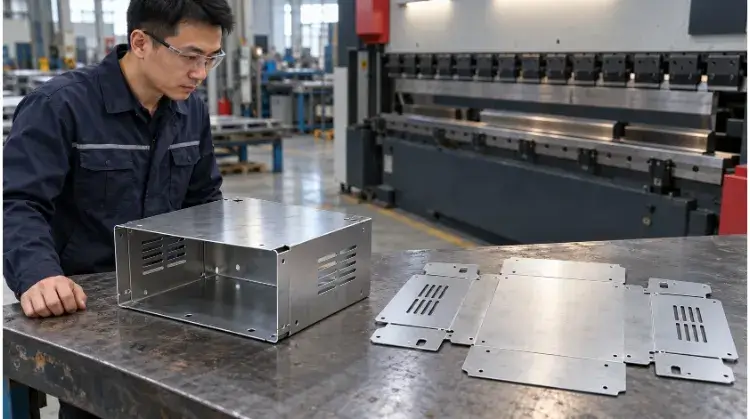
9 Mistakes to Avoid When Designing Sheet Metal Parts
A sheet metal part that functions perfectly in a CAD assembly does not always survive the press brake. This disconnect
A sheet metal part that functions perfectly in a CAD assembly does not always survive the press brake. This disconnect
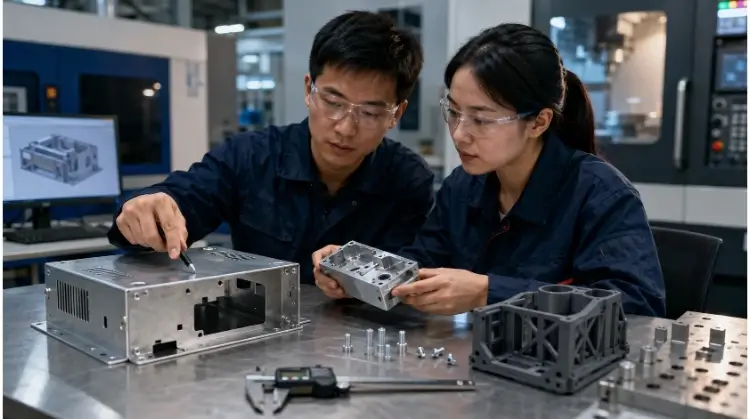
Sheet metal prototyping is the rapid fabrication of physical metal parts from 3D CAD models using precise cutting, bending, and assembling processes. It allows engineers to validate form, fit, and functional performance before investing in expensive mass production tooling.

Tolerance stacking is the accumulation of dimensional variations in a multi-part assembly. As individual components connect, their acceptable manufacturing deviations add together. If unmanaged, this combined variance causes parts to bind, leak, or fail to fit, even when every single component passes inspection.
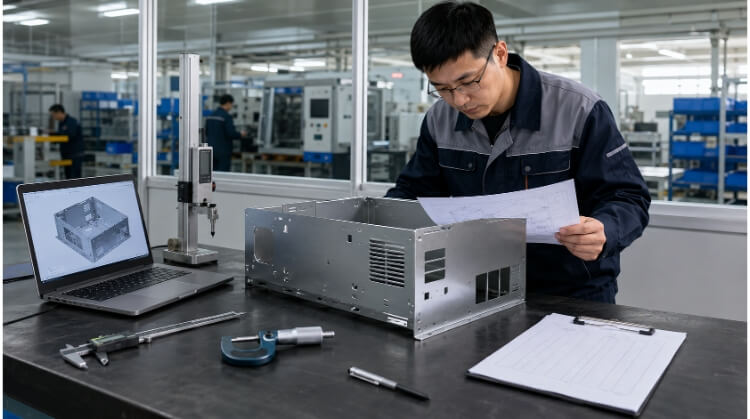
First Article Inspection (FAI) is a verification process used to confirm that the first manufactured part meets all design specifications and dimensional requirements. For engineering and procurement teams, it serves as a necessary checkpoint before committing to volume production.

Tooling in manufacturing refers to custom physical devices—such as dies, molds, and fixtures—used to cut, shape, or hold raw materials. It replaces manual setups with fixed mechanical constraints, ensuring strict dimensional tolerances and predictable part costs during mass production.
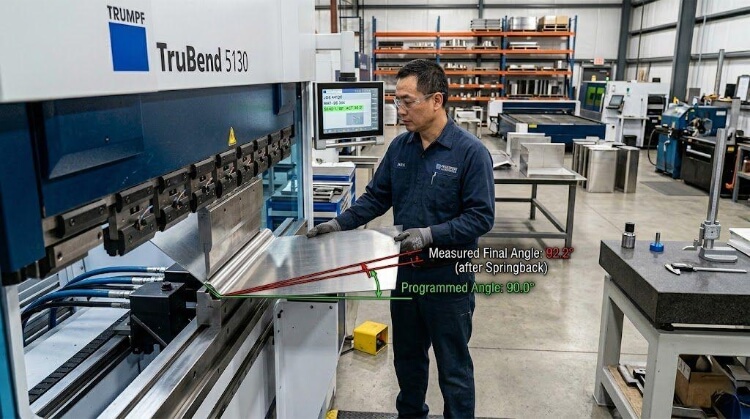
Springback is the geometric distortion where a metal part partially returns to its original shape after forming forces are removed. Caused by elastic recovery, this phenomenon creates deviations in angles and dimensions, requiring precise tooling compensation in sheet metal fabrication.
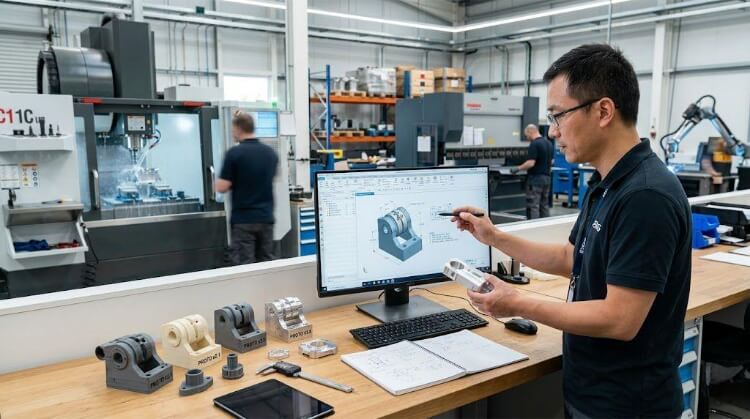
Contract manufacturing is an outsourcing process where a client partners with a manufacturer to fabricate components or complete assemblies to exact specifications. This turnkey solution optimizes supply chains, cuts overhead costs, and leverages dedicated engineering support, allowing companies to focus on core R&D and market scaling.

An aluminum prototype is not just a physical representation of a CAD file; it is an engineering testbed. Its primary
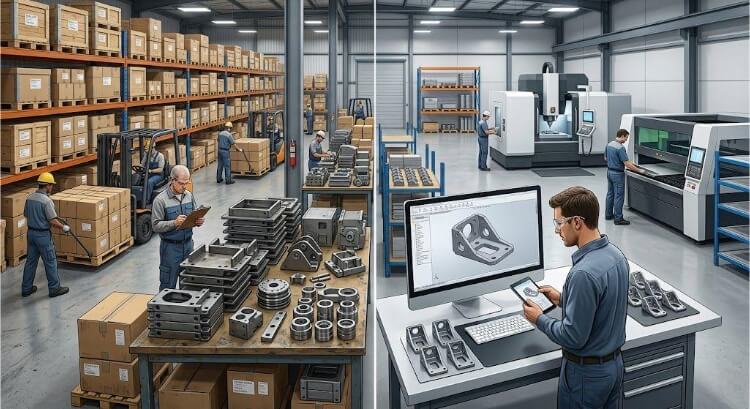
On-demand manufacturing is a production method in which parts are made only after an order is placed. The factory produces the exact quantity needed instead of building inventory in advance. This model is driven by actual demand, not long-range forecasts.
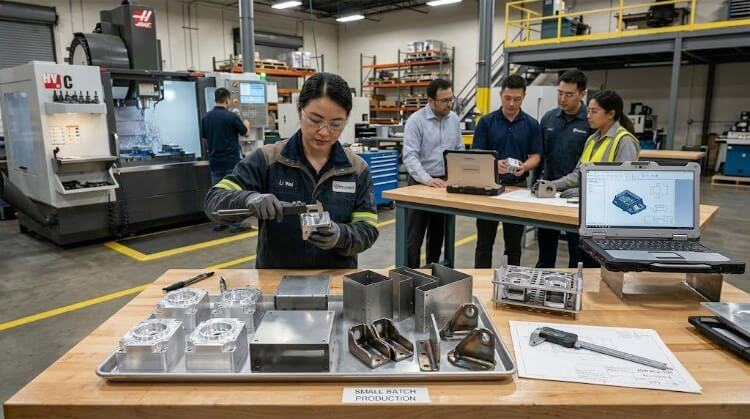
Low-volume production is a manufacturing approach used when a company needs more than prototype quantities, but is not ready for full mass production. It is often used in the stage between product validation and stable scale-up.
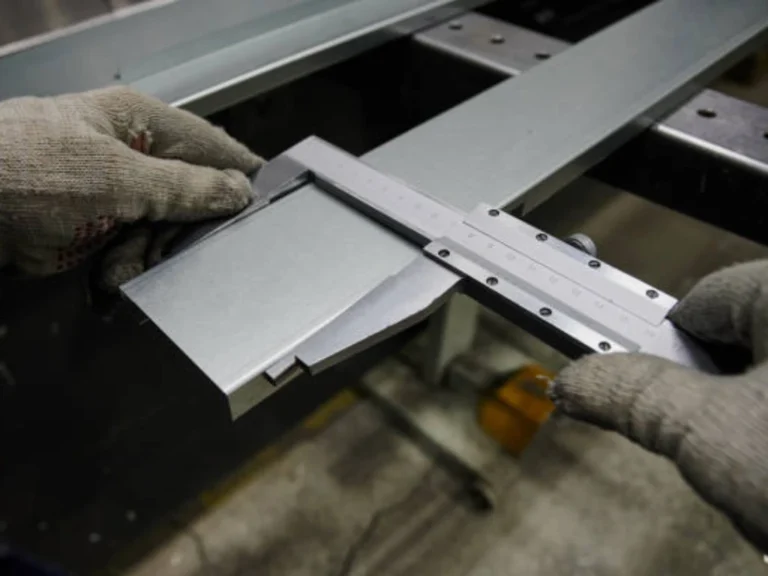
In engineering and manufacturing, accuracy is not a concept, it is a measurable requirement. For a sheet metal part to
The process of transforming a design idea into a physical object is one that is based on effective communication. The