 Spanish
  English
  German
  Russian
  Italian
  French
La pintura electrostática es un proceso de recubrimiento de metales muy eficaz que utiliza una carga eléctrica para atraer partículas de pintura atomizada a una superficie metálica conectada a tierra. Esto crea un efecto "envolvente" de 360 grados que garantiza un acabado uniforme y resistente a la corrosión en piezas complejas, al tiempo que maximiza la eficiencia de la transferencia y elimina prácticamente los residuos de exceso de pulverización.
El proceso funciona bien para una amplia gama de piezas metálicas conductoras. Suele utilizarse para componentes mecanizados por CNC, bastidores tubulares y recintos complejos en los que llegar a todos los ángulos con una pistola de pulverización estándar es difícil y requiere mucha mano de obra.
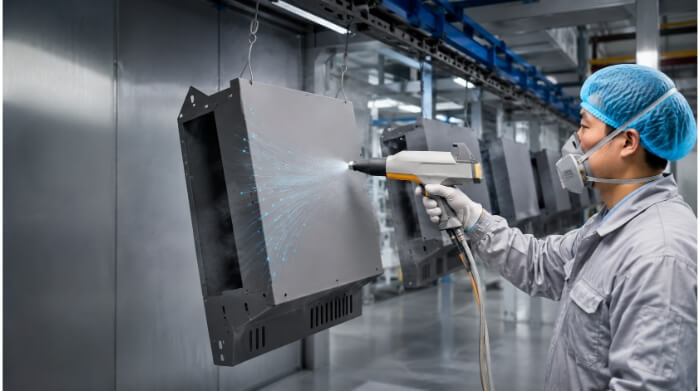
Cómo funciona la pintura electrostática?
La eficacia de la pintura electrostática se basa en el control de los campos eléctricos para guiar la pintura. Este proceso cambia la forma en que las partículas de pintura se desplazan desde la boquilla de pulverización y cómo se adhieren a la superficie metálica.
Principio electrostático
El mecanismo central se basa en la atracción eléctrica. El equipo de pulverización aplica una carga positiva de alto voltaje y bajo amperaje a la pintura líquida cuando sale de la boquilla.
Al mismo tiempo, la pieza metálica que se pinta está físicamente conectada a tierra, lo que le confiere una carga neutra o ligeramente negativa. Esta diferencia de polaridad hace que las partículas de pintura cargadas positivamente sean atraídas directamente hacia el objeto metálico conectado a tierra.
Preparación de la superficie
Una adherencia adecuada depende totalmente de la limpieza de la superficie. Antes de pintar, las piezas metálicas deben someterse a un proceso de limpieza y pretratamiento. Esto suele comenzar con el desengrasado para eliminar los aceites de mecanizado, los lubricantes de estampación y los fluidos de corte.
Tras el desengrase, las fábricas suelen aplicar un revestimiento de conversión química, como el fosfatado para el acero o la conversión al cromato para el aluminio. Estos tratamientos crean una microtextura para mejorar la adherencia y evitar la oxidación. Si quedan aceites residuales, alteran la conductividad eléctrica y debilitan la adherencia del revestimiento.
Atomización de pintura
La pintura líquida se bombea a la pistola pulverizadora, donde se descompone en una fina niebla. Esta atomización suele conseguirse mediante aire comprimido, presión de fluidos o campanas giratorias.
La creación de un tamaño de gota fino y uniforme es un paso fundamental. Las partículas más pequeñas retienen la carga eléctrica de forma más eficaz y se distribuyen más uniformemente por la superficie de la pieza, lo que garantiza un acabado final más suave sin acumulaciones pesadas.
Deposición electrostática
A medida que la pintura atomizada y cargada se acerca a la pieza conectada a tierra, el campo eléctrico guía las gotas. A diferencia de la pulverización direccional estándar, las partículas siguen las líneas del campo electrostático.
Esta atracción física es lo suficientemente fuerte como para alterar la trayectoria de vuelo de la pintura. Atrae las gotas hacia la superficie más cercana a tierra, lo que permite que la pintura envuelva activamente los bordes en lugar de limitarse a golpear las zonas frontales.
Secado y curado
Una vez aplicada, la pintura líquida necesita tiempo para curarse y formar una película sólida. Dependiendo de la formulación específica de la pintura (como epoxis, uretanos o esmaltes), el curado se produce mediante secado al aire a temperatura ambiente u horneado a baja temperatura.
Este requisito de temperatura más baja es una ventaja significativa para la chapa metálica de calibre fino o los componentes de aluminio extruido. Al evitar los pesados hornos de alta temperatura de 200 °C (400 °F) necesarios para el recubrimiento en polvo, se evita la deformación y distorsión térmicas que pueden hacer que las piezas con tolerancias ajustadas no pasen la inspección.
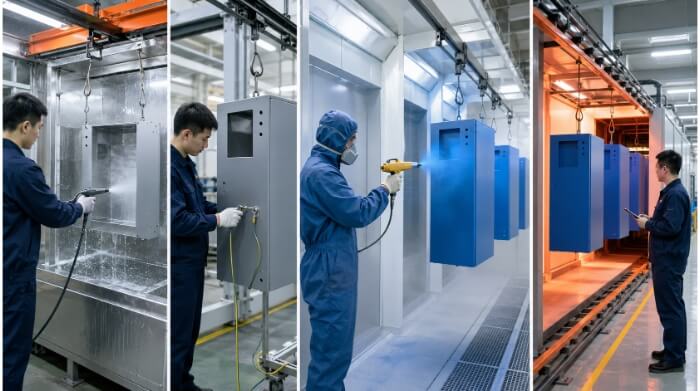
Por qué los fabricantes eligen la pintura electrostática?
A la hora de decidir proceso de acabadoLos ingenieros y responsables de compras evalúan el equilibrio entre la calidad de la cobertura y los costes de tratamiento. La pintura electrostática ofrece ventajas específicas frente a la pulverización con aire convencional, sobre todo en lo que respecta a la eficiencia de la mano de obra y el material.
Eficiencia de la transferencia
La eficacia de transferencia mide el porcentaje de pintura que se adhiere realmente a la pieza frente a la que se pierde en el aire en forma de exceso de pulverización. Los sistemas de pulverización convencionales suelen funcionar con una eficacia de transferencia de entre 30% y 40%, con lo que se desperdicia más de la mitad del material.
Con una conexión a tierra y unos ajustes del equipo adecuados, la pintura electrostática suele alcanzar eficiencias de transferencia de entre 70% y 85%. Esta mejora cuantificable reduce drásticamente el consumo de pintura y disminuye directamente el coste unitario por pieza.
Cobertura global
Para formas complejas, la pulverización convencional requiere que el operario pulverice desde múltiples pasadas y ángulos, lo que aumenta el tiempo de procesamiento. El campo electrostático crea un efecto "envolvente", atrayendo partículas de pintura cargadas a zonas ocultas o de difícil acceso, como las caras posteriores de tubos cilíndricos o los bordes plegados de chapas estampadas.
Esta propiedad física reduce drásticamente el tiempo de trabajo manual. Los operarios pasan menos tiempo recolocando piezas y realizando retoques manuales en puntos ciegos, lo que agiliza el ciclo de producción general y aumenta el rendimiento.
Consistencia del acabado
Un problema común con la pulverización manual estándar es el grosor desigual de la pintura, que puede causar goteos, corridas o puntos finos. Como las partículas de pintura cargadas se repelen de forma natural en el aire, pero son atraídas hacia el metal, se distribuyen uniformemente.
Una vez recubierta una sección del metal, queda temporalmente aislada. Esto hace que las partículas cargadas restantes busquen automáticamente las zonas no recubiertas o más finas, lo que da como resultado una tolerancia mucho más ajustada en el grosor final de la película y un acabado cosmético muy uniforme.
Ahorro de material y retorno de la inversión
Una mayor eficacia de transferencia significa que se consume menos pintura líquida por tirada de producción. Menos exceso de pulverización también se traduce en menos sustituciones de filtros en la cabina de pulverización, menos tiempo de inactividad para la limpieza del equipo y menores costes de eliminación de residuos peligrosos y COV.
Para los responsables de compras, esta eficiencia repercute directamente en el balance final. En las series de producción continua, la reducción del uso de materias primas y de los costes de gestión de residuos resulta más rentable por volumen, lo que compensa rápidamente la inversión inicial en equipos especializados de pulverización electrostática.
Requisitos de diseño antes de pintar
Un error común en el desarrollo de productos es tratar el proceso de acabado como algo secundario. La pintura electrostática añade un grosor cuantificable y altera las propiedades de la superficie, lo que repercute directamente en el encaje de las piezas.
Espesor de revestimiento permitido
La pintura electrostática suele añadir un grosor de película de 25 a 75 micras (1 a 3 mils) por superficie recubierta. Aunque esto proporciona una excelente protección, altera las dimensiones finales de la pieza.
Los ingenieros deben especificar explícitamente si las cotas y tolerancias de un dibujo 2D se aplican "Prepintado" o "Postpintado". Para alta precisión Piezas mecanizadas por CNC o componentes de chapa metálica con tolerancias estrechas, definirlo claramente en el plano de ingeniería evita disputas sobre las dimensiones durante la inspección final de calidad.
Espacio libre de montaje
Cuando dos piezas pintadas tienen que encajar, el diseño debe tener en cuenta el doble de grosor del revestimiento. Para ajustes por deslizamiento, bisagras o costuras de chapa apretadas, los ingenieros suelen tener que dejar una separación mínima de 0,1 mm a 0,15 mm.
Si las holguras de montaje son demasiado estrechas, los operarios tendrán que forzar las piezas en la línea de montaje. Esta fricción suele raspar la pintura de las superficies de contacto, exponiendo el metal desnudo a una posible oxidación y degradando el aspecto estético.
Enmascaramiento de roscas
Dado que la pintura electrostática envuelve los bordes y se adhiere con fuerza, recubre fácilmente el interior de los orificios roscados. Una vez que la pintura se endurece en el interior de una rosca, altera el paso de rosca y hace que los tornillos se atasquen o se desprendan durante el montaje.
Para evitarlo, todos los orificios roscados -especialmente los M4 o más pequeños- deben protegerse físicamente. Los diseñadores deben escribir explícitamente "Enmascarar todos los orificios roscados" en el bloque del título o en las notas técnicas del dibujo 2D. En el taller, los trabajadores insertarán tapones de silicona de alta temperatura o puntos de enmascaramiento especializados para sellar estos orificios antes de que la pieza entre en la cabina de pulverización.
Zonas de contacto conductoras
Muchos armarios metálicos se utilizan para componentes electrónicos y requieren que determinadas zonas permanezcan sin pintar para que sirvan de puntos de conexión eléctrica a tierra. Dado que la pintura curada actúa como aislante, rociar toda la pieza romperá la continuidad eléctrica.
Los diseñadores deben indicar claramente estas almohadillas de conexión a tierra, espárragos o zonas de contacto de blindaje EMI en los planos de fabricación, en lugar de limitarse a mostrarlas en un modelo 3D. A continuación, el equipo de producción aplicará cinta adhesiva personalizada a estas zonas específicas para garantizar un contacto desnudo de metal con metal en el ensamblaje final.
Retos de calidad y control de procesos
Aunque la pintura electrostática ofrece una gran eficacia de transferencia, el proceso es muy sensible a las variables físicas y ambientales. La calidad constante del revestimiento depende en gran medida de una gestión estricta del taller.
Calidad de la conexión a tierra
Todo el proceso de atracción electrostática depende de que la pieza tenga una toma de tierra eléctrica sólida. Las piezas suelen estar suspendidas en ganchos o bastidores metálicos a su paso por la cabina de pulverización.
A lo largo de varias series de producción, estos ganchos se recubren con capas de pintura curada, que actúa como aislante. Si los bastidores no se limpian con regularidad, la pieza pierde su conexión a tierra. Para mantener la continuidad eléctrica, las fábricas suelen utilizar hornos de quemado a alta temperatura o baños de decapado químico para limpiar periódicamente los bastidores hasta dejarlos como metal desnudo.
Ajustes de tensión
La tensión aplicada por la pistola controla la intensidad del campo electrostático. Aunque el aumento de la tensión suele mejorar la eficacia de la transferencia, un valor demasiado alto puede causar problemas no deseados.
Un voltaje excesivo puede causar un defecto conocido como retroionización. Esto ocurre cuando se acumulan demasiadas partículas cargadas en la superficie y empiezan a repeler las nuevas gotas de pintura entrantes, lo que da lugar a una textura áspera y desigual conocida comúnmente como "piel de naranja."
Temperatura y humedad
El microambiente del interior de la fábrica influye directamente en la conductividad eléctrica de la pintura y el aire. Si el aire está demasiado seco, la carga estática no se transfiere eficazmente, lo que reduce la eficacia del revestimiento.
Por el contrario, si la humedad es demasiado alta, puede provocar arcos eléctricos entre la pistola y la pieza, o atrapar humedad bajo la película de pintura. Para mantener estables estas variables, suele ser necesario mantener una cabina de pintura climatizada.
Efecto jaula de Faraday
Al pintar piezas con huecos profundos, esquinas internas o canales en forma de U, el campo electrostático se concentra de forma natural en los bordes exteriores más cercanos a la pistola. Esto crea una "jaula de Faraday", que repele físicamente las partículas de pintura para que no entren en las esquinas interiores.
Para superar esta limitación, los operarios no pueden confiar simplemente en la atracción electrostática. Deben ajustar manualmente el equipo, normalmente reduciendo el voltaje de la pistola para debilitar el campo eléctrico y aumentando la presión del aire para forzar físicamente la pintura atomizada en los huecos.
Defectos comunes del revestimiento
Incluso con controles estrictos del proceso, pueden producirse ocasionalmente defectos localizados como descuelgues (corridas) o puntos finos. Dado que la pintura electrostática se adhiere firmemente a la superficie metálica preparada, a menudo no resulta práctico lijar simplemente un defecto.
La reparación de una pieza defectuosa suele implicar la eliminación completa del revestimiento. Las fábricas suelen utilizar decapantes químicos o un ligero chorro abrasivo para dejar la pieza al descubierto. Después de repetir el proceso de pintado, la pieza retocada suele verificarse según normas industriales, como la prueba de adhesión cruzada ASTM D3359, para confirmar que la nueva capa se adhiere correctamente.
Pintura electrostática frente a otros métodos de recubrimiento
La selección del proceso de acabado adecuado requiere un equilibrio entre la geometría de la pieza, las propiedades del material y los límites de tolerancia específicos. Aunque la pintura electrostática es muy eficaz, los ingenieros y los responsables de compras deben evaluar cómo se compara con otros métodos alternativos.
Pintura convencional
La pulverización neumática convencional se basa exclusivamente en la presión del aire para atomizar y dirigir la pintura. La principal ventaja es el menor coste del equipo y la posibilidad de pintar materiales no conductores, como madera o plástico, sin preparación especial.
Sin embargo, suele desperdiciar entre 50% y 70% de la pintura en forma de exceso de pulverización. Por tanto, la pulverización convencional suele utilizarse para tiradas de muy bajo volumen o piezas de gran tamaño en las que no resulta práctico instalar un sistema electrostático de puesta a tierra.
Recubrimiento en polvo
Recubrimiento en polvo se aplica electrostáticamente un polvo de plástico seco, que luego se funde en un horno a unos 200°C (400°F) para formar una capa dura. Suele proporcionar un acabado más grueso (de 75 a 150 micras) y duradero que la pintura líquida.
Sin embargo, el recubrimiento en polvo no es adecuado para conjuntos que contengan juntas de goma o plásticos. Además, la elevada temperatura de curado puede deformar las chapas finas. En estos casos, suele preferirse la pintura líquida electrostática.
Recubrimiento por inmersión
El revestimiento por inmersión consiste en sumergir toda la pieza metálica en un tanque de pintura líquida. Esto garantiza la eficacia de la transferencia de 100% y recubre eficazmente las cavidades internas, pero carece de control del espesor. Al retirar la pieza, la gravedad hace que la pintura se acumule y gotee en los bordes inferiores.
Nota: El revestimiento por inmersión tradicional es diferente del revestimiento por electroforesis (E-coating). Aunque el revestimiento electrolítico también utiliza una corriente eléctrica en un baño de fluido, requiere una gestión de líquidos mucho más compleja. El revestimiento por inmersión tradicional suele dar lugar a un acabado muy irregular, lo que lo hace inadecuado para montajes mecánicos de precisión.
Selección de procesos
La decisión suele reducirse a la precisión y la sensibilidad al calor. Si una pieza requiere una capa protectora gruesa y resistente y puede soportar 200 °C, el recubrimiento en polvo suele ser la opción estándar.
Por otro lado, la pintura electrostática se convierte en la opción más práctica para escenarios específicos. Funciona mejor si la pieza presenta tolerancias de montaje ajustadas, está formada por chapas finas propensas a la distorsión térmica o requiere una pintura líquida de grado aeroespacial muy específica.
Coste, aplicaciones e idoneidad para la producción
La evaluación de la viabilidad financiera de la pintura electrostática depende en gran medida de la escala de producción y de la complejidad de los componentes.
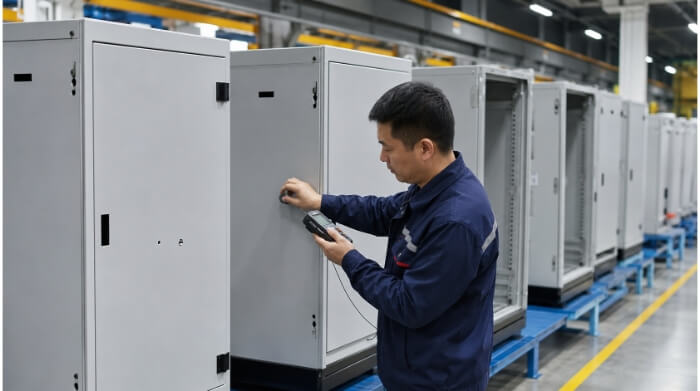
Aplicaciones típicas
Dado que ofrece una excelente cobertura en geometrías complejas, este método funciona bien para estructuras de marco abierto y carcasas intrincadas.
Las aplicaciones típicas incluyen cajas de dispositivos médicos, armarios de telecomunicaciones, chasis mecanizados CNC a medida y marcos de aluminio extruido. Es especialmente eficaz para piezas con rejillas, aletas de refrigeración o secciones perforadas.
Volumen de producción
El tiempo de preparación para la pintura electrostática es mayor que el de la pulverización convencional. Los operarios deben garantizar una conexión a tierra adecuada y configurar los ajustes de voltaje específicos. Para un solo prototipo, la mano de obra necesaria para configurar las líneas de fluido puede superar el ahorro de material.
Sin embargo, el proceso resulta muy rentable en volúmenes bajos y medios (de cientos a decenas de miles de piezas). En estos casos, la drástica reducción del consumo de pintura y del tiempo de retoque manual absorbe rápidamente los costes iniciales de configuración.
Inversión en equipos
Para los fabricantes, la integración de sistemas electrostáticos requiere una importante inversión inicial en pistolas pulverizadoras especializadas, sistemas de suministro de fluidos aislados y cabinas de pulverización conectadas a tierra.
Para los responsables de compras, esto significa trabajar con un proveedor que ya disponga de esta infraestructura. El coste unitario global de un proveedor bien equipado suele ser inferior, simplemente por el volumen de pintura que se ahorra durante la producción.
Componentes sensibles al calor
Algunos proyectos de fabricación implican piezas que no pueden exponerse a altas temperaturas. Esto incluye componentes premontados con juntas o insertos de plástico prensados.
También se aplica a aleaciones de aluminio específicas, como 6061-T6 o 7075, que pueden perder su temple y resistencia estructural a temperaturas elevadas. Dado que la pintura líquida electrostática puede formularse para secarse al aire a temperatura ambiente o curarse en entornos de baja temperatura (entre 60 °C y 80 °C), recubre con seguridad estos componentes sin riesgo de degradación térmica.
Conclusión
La pintura electrostática tiende un puente entre el desperdicio de material de la pulverización convencional y las limitaciones térmicas del recubrimiento en polvo. Al utilizar campos eléctricos para guiar las partículas de pintura, ofrece una cobertura envolvente superior y un importante ahorro de material en piezas metálicas complejas.
Sin embargo, para aprovechar estas ventajas es necesaria una planificación adecuada. Los ingenieros deben tener en cuenta el grosor del revestimiento durante la fase CAD y definir claramente los requisitos de enmascaramiento en los planos de fabricación para evitar problemas de montaje.
Si no está seguro de cómo afectará el grosor del revestimiento a su próximo montaje, el equipo de ingenieros de TZR puede ayudar. Revisamos los modelos CAD para recomendarle el proceso de acabado más fiable y rentable para su proyecto.
Preguntas frecuentes
¿Se puede utilizar la pintura electrostática en piezas de plástico?
En general, no. El proceso electrostático requiere que la pieza sea eléctricamente conductora y esté conectada a tierra para atraer la pintura cargada. Sin embargo, los plásticos pueden pintarse electrostáticamente si se recubren primero con una imprimación conductora especializada.
¿Es difícil cambiar de color durante la pintura electrostática?
Cambiar de color lleva más tiempo que con las pistolas convencionales. Como la pintura es líquida y viaja a través de un sistema especializado de suministro de fluidos, los operarios deben lavar a fondo las bombas y las mangueras. Deben limpiar la pistola con disolvente para evitar la contaminación del color y los cortocircuitos eléctricos. Por lo tanto, siempre es más eficiente ejecutar lotes completos de un solo color antes de cambiar.
¿Cuál es el grosor del revestimiento en comparación con el revestimiento en polvo?
La pintura líquida electrostática es notablemente más fina. Suele aplicar un espesor de película de 25 a 75 micras (1 a 3 mils). El recubrimiento en polvo, por su parte, suele comenzar en torno a las 75 micras y puede superar las 150 micras (de 3 a 6 mils). El perfil más fino de la pintura electrostática la hace mucho más adecuada para componentes de alta precisión con espacios de montaje reducidos.