
 German
  English
  Spanish
  Russian
  Italian
  French
Q235-Stahl ist das Arbeitspferd unter den Kohlenstoffbaustählen in der chinesischen Fertigung. Ingenieure und Einkäufer verlassen sich auf ihn, um die Kosten für Rahmen, Halterungen, Maschinensockel und geschweißte Baugruppen zu senken. Er bietet ein zuverlässiges Verhältnis zwischen Festigkeit und Kosten, eine schnelle Umformung und eine hervorragende Schweißbarkeit.
Q235 als universellen "Billigstahl" zu betrachten, ist jedoch ein teurer Fehler. Ohne strenge Auswahl der Güteklasse (A bis D), Dickenkontrolle und eine definierte Strategie für die Oberflächenbehandlung wird Ihr kostengünstiges Fertigungsprojekt schnell durch starken Schweißverzug oder Frührost scheitern.
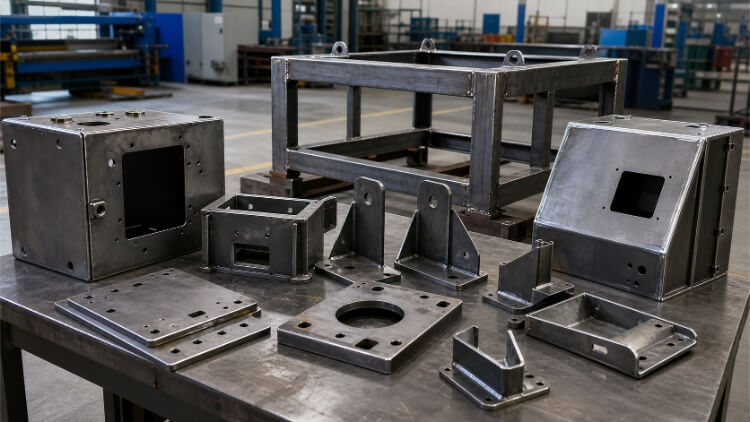
Q235 Stahl auf einen Blick
Q235-Stahl ist weit verbreitet, weil er erschwinglich, schweißbar und leicht zu verarbeiten ist. Bevor man sich für diesen Stahl entscheidet, müssen die Ingenieure seine grundlegenden Stärken und Grenzen kennen.
Kohlenstoffbaustahl für die allgemeine Fertigung
Q235 gehört zu der Familie der unlegierten Baustähle. Das "Q" steht für Streckgrenze (Qu Fu Dian), und "235" steht für die ungefähre Streckgrenze von 235 MPa.
Der Kohlenstoffgehalt von Q235 liegt normalerweise bei 0,22%. Diese spezifische chemische Basislinie ist der Grund, warum es in der Werkstatt so gut funktioniert. Es ermöglicht aggressives Biegen und schnelles Schweißen ohne das Risiko der Rissbildung durch Vorwärmung oder Wärmebehandlung nach dem Schweißen, das bei Legierungen mit höherem Kohlenstoffgehalt besteht.
Festigkeit, Schweißbarkeit und Kostenprofil
Das Material kann typische strukturelle Belastungen effizient bewältigen und bietet eine Streckgrenze von etwa 235 MPa. Es ist nicht für hochbelastete oder leichte Anwendungen in der Luft- und Raumfahrt konzipiert. Sein primärer technischer Wert liegt in der Geschwindigkeit der Verarbeitung. Schweißer und CNC-Bediener können Q235 schnell verarbeiten und so die Gesamtkosten Ihrer Fertigung unter Kontrolle halten.
Gängige Lieferformen und typische Anwendungen
Stahlwerke liefern Q235 in erster Linie als warmgewalzte Bleche, Röhren und Strukturprofile (wie Winkel- oder Kanalstahl). In der Schwerindustrie und in Blechbearbeitungsbetrieben wird es für Maschinengehäuse, elektrische Schaltschränke, hochbelastbare Montagebügelund industrielle Plattformen.
Benotung, Standards und Substitutionsrisiko
Q235 ist nicht eine einzige feste Wahl für jedes Projekt. Sorte, Norm und Zulassungsdetails können sich auf Sicherheit, Inspektion und internationale Beschaffung auswirken.
Chemische und mechanische Basisdaten
Die kohlenstoffarme Chemie bestimmt die mechanischen Grenzen von Q235. Sie begrenzt die maximale Härte, garantiert aber die Duktilität. Diese Duktilität verhindert die Rissbildung bei schweren Abkantvorgängen. Wenn Ihre Konstruktion jedoch eine hohe Belastbarkeit bei geringem Gewicht erfordert, ist Q235 einfach zu schwer und zu schwach für diese Aufgabe.
Auswahl Q235A, Q235B, Q235C und Q235D
Viele Ingenieure geben auf einer Zeichnung "Q235" an, ohne zu wissen, dass damit vier verschiedene Qualitätsstufen gemeint sind. Der entscheidende Unterschied liegt in der strengen Kontrolle von Verunreinigungen (Schwefel und Phosphor) und den vorgeschriebenen Kerbschlagzähigkeitstemperaturen.
| Klasse | Praktische Anwendung | Logik der Auswahl |
| Q235A | Unkritische Teile | Einfacher Einsatz mit geringeren Prüfanforderungen |
| Q235B | Allgemeine Fertigung | Industriestandard für gefertigte Teile |
| Q235C | Teile mit niedrigeren Temperaturen oder Stoßrisiken | Besseres Wirkungserfordernis als B |
| Q235D | Kältere oder risikoreichere Strukturen | Bessere Anforderungen an die Kälteschlagzähigkeit |
Q235B ist der Industriestandard für die allgemeine Fertigung. Sie müssen auf Q235C oder Q235D aufsteigen, wenn das gefertigte Teil Temperaturen unter dem Gefrierpunkt, starken Vibrationen oder dynamischen Stoßbelastungen ausgesetzt ist. Die Verwendung von Güteklasse A unter diesen Bedingungen garantiert ein vorzeitiges Versagen der Struktur.
ASTM A36, SS400 und S235JR im Vergleich
Die Wege von Q235, ASTM A36, SS400 und S235JR kreuzen sich häufig in internationalen Lieferketten. Obwohl sie ähnliche strukturelle Anwendungen haben, sind sie nicht automatisch austauschbar.
Die europäischen und US-amerikanischen Normen schreiben oft strengere Grenzwerte für Phosphor- und Schwefelverunreinigungen vor. Der Austausch von A36 gegen Q235, nur weil die Streckgrenze auf dem Papier übereinstimmt, führt dazu, dass Ihre Teile bei der Eingangskontrolle (IQC) durchfallen, wenn der Kunde die chemische Zusammensetzung streng prüft.
Materialzeugnis und Zulassungsrisiko
Die Substitution von Werkstoffen ist nach wie vor ein großes Risiko bei globalen Fertigungsprojekten. Wenn in einer Kundenzeichnung ausdrücklich eine ASTM-, JIS- oder EN-Norm angegeben ist, sollten Sie niemals ohne formale technische Genehmigung auf Q235 zurückgreifen.
Holen Sie vor der Ersetzung eine schriftliche Genehmigung ein. Prüfen Sie genau, welche Unterlagen der Kunde für die Freigabe der Teile benötigt, sei es ein Materialprüfungszertifikat (MTC), spezifische Schmelznummern oder die Überprüfung durch ein Drittlabor.
Mechanische Leistung in echten Teilen
Materialdaten sind nur dann von Bedeutung, wenn sie mit der tatsächlichen Leistung des Teils in Verbindung stehen. Belastung, Dicke, Verformung und Ermüdungsrisiko beeinflussen das Verhalten von Q235 im Einsatz.
Streckgrenze und Tragfähigkeit
Mit einer Streckgrenze von etwa 235 MPa eignet sich Q235 hervorragend für statische, tragende Anwendungen wie Maschinensockel, Montageplatten und Geräterahmen. Es trägt typische industrielle Lasten vorhersehbar und sicher.
Wenn Ihre Konstruktion jedoch ein hohes Verhältnis von Festigkeit zu Gewicht erfordert, zwingt Q235 Sie zu sperrigen, schweren Geometrien. Es ist nicht das richtige Material für leichte Mobilitäts- oder Raumfahrtstrukturen.
Zugfestigkeit und Verformungsrisiko
Strukturelles Versagen bei Blechen bedeutet selten, dass das Teil in zwei Hälften bricht, sondern in der Regel eine inakzeptable Verformung. Große Q235-Paneele oder lange Halterungen geben unter schweren, konzentrierten Lasten nach.
Sich allein auf die Materialstärke zu verlassen, um ein Verziehen zu verhindern, ist ein teurer Fehler. Sie müssen Biegungen, strukturelle Rippen oder Zwickel in Ihre Konstruktion einbauen, um die Steifigkeit und Dimensionsstabilität zu erhalten.
Auswirkungen der Dicke auf die Festigkeit
Dünnblech Q235 (1mm - 3mm) eignet sich perfekt für gefaltete Gehäuse und leichte Halterungen. Grobblech (10mm+) bietet massive Stabilität für Industriegehäuse.
Die Erhöhung der Blechdicke, um die Festigkeit zu erhöhen, hat jedoch einen kaskadenartigen Effekt auf die Produktionskosten. Dickere Bleche verlängern die Laserschneidzeit dramatisch, erfordern Abkantpressen mit höherer Tonnage und erfordern einen massiven Wärmeeintrag beim Schweißen. Sobald Sie 8 oder 10 mm überschreiten, kommen noch die versteckten Kosten für das Anfasen der Kanten hinzu, nur um eine vollständige Schweißnaht zu erreichen.
Ermüdungsrisiko bei wiederholter Belastung
Q235 eignet sich hervorragend für statische Belastungen. Bei kontinuierlicher Vibration, zyklischer Belastung oder wiederholten mechanischen Stößen wird die Ermüdung jedoch zu einem kritischen Fehlerpunkt.
Mikrorisse bilden sich in Bereichen mit hoher Spannungskonzentration. Wenn Ihr Teil auf einer vibrierenden Motorhalterung oder einem sich bewegenden Roboterarm arbeitet, müssen Sie scharfe Innenecken, gestanzte Löcher und die Spitze von Schweißnähten genau überwachen.
Fabrikationsgrenzen in der Werkstatt
Q235 lässt sich zwar leicht verarbeiten, hat aber dennoch seine Grenzen in der Werkstatt. Schneiden, Biegen, Stanzen, Schweißen und Bearbeiten müssen kontrolliert werden, um Qualitätsprobleme zu vermeiden.
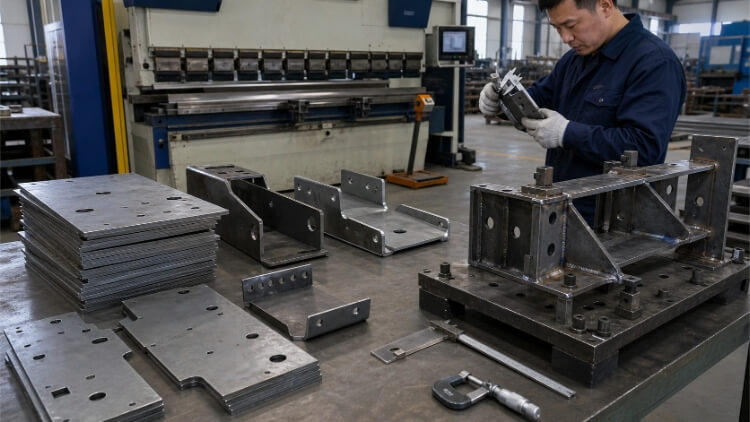
Laserschneidkantenqualität und Wärmeeffekt
Q235 lässt sich mit modernen Faserlasern schnell und sauber schneiden. Bei der Bearbeitung von Grobblechen entsteht jedoch eine örtlich begrenzte Wärmeeinflusszone (WEZ). Die intensive Hitze härtet die Schnittkante erheblich.
Wenn Ihre Zeichnung CNC-Gewindebohrungen, Senkungen oder Präzisionsreibahlen unmittelbar neben einer lasergeschnittenen Kante vorsieht, zerstört diese gehärtete Zone Schneidwerkzeuge, bricht Gewindebohrer und beeinträchtigt die Gewindequalität. Als Faustregel gilt, dass Gewindebohrungen oder Präzisionsreibahlen mindestens das 1,5- bis 2-fache der Materialdicke von jeder lasergeschnittenen Kante entfernt sein sollten.
Kontrolle von Biegeradius und Rückfederung
Q235 gibt auf einer Abkantpresse vorhersehbar nach, aber eine Materialrückfederung ist unvermeidlich. Der genaue Rückfederungswinkel hängt von der Blechdicke, dem Werkzeugradius und der Walzrichtung des Stahlwerks ab.
Wenn Sie Stanzlöcher oder Ausschnitte für Beschläge zu nahe an der Biegelinie anbringen, dehnen und verformen sich diese Merkmale während der Formgebung. Entwerfen Sie Lochkanten immer mindestens 2,5- bis 3-mal so weit wie die Materialstärke von der Biegelinie entfernt, um Montagetoleranzen zu gewährleisten.
Genauigkeit beim Stanzen, Prägen und Lochen
Für Großserien, CNC-Revolverstanzung schlägt oft Laserschneiden in schierer Geschwindigkeit. Q235 stanzt sauber, vorausgesetzt, der Matrizenspalt passt perfekt zur Materialstärke.
Ein falscher Matrizenspielraum führt sofort zu starkem Kantenrollen, starken Graten und lokalem Verzug des Teils. Dies verlängert die manuelle Entgratungszeit und erhöht den Endpreis Ihres Teils.
Verzug und Spannungsabbau beim Schweißen
Q235 zeichnet sich durch seine außergewöhnliche Schweißbarkeit aus, aber Hitze führt unweigerlich dazu, dass sich das Metall bewegt. Lange, durchgehende Schweißnähte an dünnen Q235-Platten führen dazu, dass sich das Teil verzieht und aus der Toleranz gerät.
Um dies zu kontrollieren, sind starre Befestigungen, Stichschweißen und eine strikte Schweißreihenfolge erforderlich. Für hochpräzise, maschinell bearbeitete Schweißteile müssen Sie einen thermischen Spannungsabbau (Glühzyklus) vorgeben. Andernfalls wird die Schweißeigenspannung während der CNC-Bearbeitung freigesetzt, was dazu führt, dass sich das fertige Teil völlig außerhalb der Spezifikation verdreht.
Oberflächenbehandlung und Wartungskosten
Q235 hat niedrige Materialkosten, aber der Korrosionsschutz kann die Gesamtkosten verändern. Die richtige Oberflächenbehandlung hängt von der Umgebung, dem Aussehen, der Montage und der Nutzungsdauer ab.
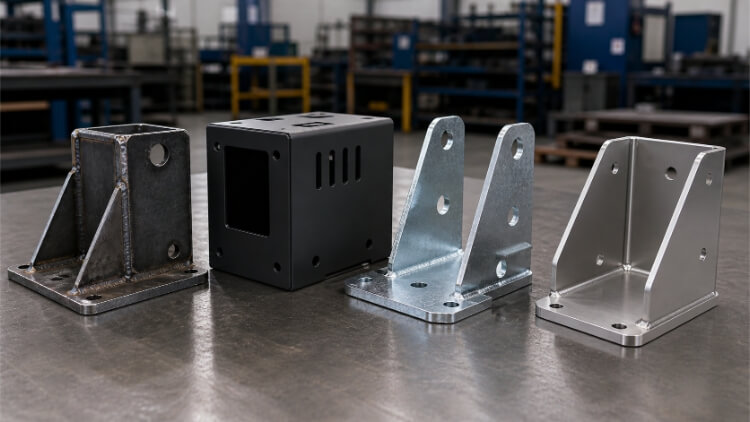
Rostgefahr für blanken Stahl
Rohes Q235 rostet aggressiv, wenn es Feuchtigkeit ausgesetzt wird. Ohne entsprechenden Oberflächenschutz ist es für den Einsatz im Freien, bei Seefracht oder in Einrichtungen mit hoher Luftfeuchtigkeit völlig ungeeignet.
Selbst wenn das Teil für eine klimatisierte Innenumgebung konzipiert ist, benötigt der blanke Stahl eine leichte Ölbeschichtung, um den Transport und die Lagerhaltung zu überstehen.
Pulverbeschichtung, Lackierung und E-Beschichtung
Die Pulverbeschichtung bietet eine robuste, kratzfeste Oberfläche, die sich ideal für Maschinengehäuse, Gerätetafeln und industrielle Standardteile eignet. Die Flüssiglackierung ist eine flexible Option für sehr budgetabhängige Projekte.
Bei komplexen Schweißnähten oder Teilen mit versteckten inneren Hohlräumen reichen die Standardspritzverfahren nicht aus, um eine vollständige Abdeckung zu erreichen. In diesen Fällen, E-Beschichtung (elektrophoretische Abscheidung) ist die obligatorische Wahl, um einen vollständigen und gleichmäßigen Rostschutz auf allen Innenflächen zu gewährleisten.
Verzinkung für Außenanlagen
Die Feuerverzinkung (HDG) ist der Industriestandard für Außenhalterungen, Konstruktionsrahmen und Plattformen, die den Elementen ausgesetzt sind. Das geschmolzene Zink schafft eine robuste metallurgische Verbindung mit dem Stahl.
Die Ingenieure übersehen jedoch oft die thermischen Auswirkungen. Das Verzinkungsbad arbeitet mit einer Temperatur von etwa 450 °C. Wenn dünne Q235-Bleche in geschmolzenes Zink getaucht werden, kommt es zu massiven thermischen Verformungen, die das Blech irreparabel verzerren. HDG sollte dickeren Blechen und schweren Strukturprofilen vorbehalten sein.
Beschichtungsdicke und Montagepassung
An dieser Stelle scheitern viele Baugruppen in der Werkstatt. Oberflächenbehandlungen fügen dem Teil ein messbares Volumen hinzu. Pulverbeschichtung wird in der Regel eine zusätzliche Schichtdicke von 60 bis 100 Mikrometern erreicht, während die Verzinkung zwischen 50 und 120 Mikrometern betragen kann.
Wenn Sie Gleitbahnen, Scharnierpunkte oder enge Montageabstände auf der Grundlage der Rohmaterialabmessungen konstruieren, passen die Teile nach der Beschichtung nicht mehr zusammen. Sie müssen die Abdeckungsanforderungen für kritische Passflächen und Gewindebohrungen in Ihren Fertigungszeichnungen genau festlegen. Eine Pulverbeschichtung innerhalb eines M4-Gewindes verschließt Ihre Baugruppe vollständig.
Langfristige Wartungskosten
Es ist eine Falle, sich nur auf die niedrigen Rohstoffkosten von Q235 zu konzentrieren. Wenn Sie die Oberflächenbehandlung für eine raue Umgebung unterspezifizieren, müssen Sie mit hohen langfristigen Lebenszykluskosten (LCC) rechnen. Die anfänglichen Einsparungen verschwinden vollständig, wenn man die Arbeitskosten für Reparaturen vor Ort, den Neuanstrich verrosteter Anlagen und die Bearbeitung verärgerter Kundenreklamationen berücksichtigt.
Q235 gegenüber alternativen Materialien
Die Wahl von Q235 ist oft eine Grundsatzentscheidung. Wenn die strukturellen oder umwelttechnischen Anforderungen steigen, müssen Sie wissen, wann Sie auf ein anderes Material umsteigen müssen.
| Material | Am besten für | Hauptvorteil | Hauptanliegen |
| Q235 | Allgemeine Strukturen und Fertigteile | Geringe Kosten und schnelle Herstellung | Hohes Rostrisiko |
| Q345 | Höher belastete Strukturen | Höhere Streckgrenze | Höhere Materialkosten |
| Rostfreier Stahl | Korrosionsbeständige Teile | Ausgezeichnete Korrosionsbeständigkeit | Hohe Kosten und härtere Bearbeitung |
| Aluminium | Leichte Baugruppen | Geringes Gewicht und natürliche Rostbeständigkeit | Höhere Kosten und spezielles Schweißen |
| Kaltgewalzt | Dünnblechgehäuse und ästhetische Teile | Bessere Oberflächen- und Maßkontrolle | Begrenzte strukturelle Verwendung im Vergleich zu Platten |
Q235 vs. Q345
Wählen Sie Q235, wenn Kostenreduzierung und allgemeine Fertigung am wichtigsten sind. Steigen Sie auf Q345 (jetzt oft als Q355 bezeichnet) um, wenn Ihre Konstruktion eine höhere Tragfähigkeit, eine bessere strukturelle Integrität und eine bessere Leistung bei niedrigen Temperaturen erfordert, ohne dass die Materialstärke übermäßig zunimmt.
Q235 vs. rostfreier Stahl
Q235 ist bei den Materialkosten leicht im Vorteil, erfordert aber einen kontinuierlichen Korrosionsschutz. Rostfreier Stahl (wie 304 oder 316) ist wesentlich teurer und verschleißt die Schneidwerkzeuge schneller, ist aber für die Lebensmittelverarbeitung, medizinische Geräte oder hochkorrosive chemische Umgebungen unbedingt erforderlich.
Q235 vs. Aluminium
Q235 bietet ein solides Verhältnis zwischen Festigkeit und Kosten, hat aber einen hohen Gewichtsnachteil. Aluminiumlegierungen (wie 5052 oder 6061-T6) senken das Gewicht um fast zwei Drittel und bieten eine natürliche Oxidationsbeständigkeit. Aluminium erhöht jedoch die Materialkosten und erfordert streng kontrollierte WIG- oder MIG-Schweißverfahren.
Q235 vs. kaltgewalzter Stahl
Diese Unterscheidung ist für die Blechbearbeitung von entscheidender Bedeutung. Q235 wird in der Regel warmgewalzt geliefert und hinterlässt eine raue, verzunderte Oberfläche mit geringeren Dickentoleranzen. Kaltgewalzter Stahl (CRS, z. B. SPCC) wird einer weiteren Verarbeitung unterzogen, die zu einer glatten Oberfläche und einer hohen Maßgenauigkeit führt. Wählen Sie CRS, wenn Sie sichtbare Elektronikgehäuse, Gehäuse mit engen Toleranzen und kosmetische Verkleidungen entwerfen, die eine makellose pulverbeschichtete Oberfläche erfordern.
Schlussfolgerung
Q235 ist ein äußerst praktischer Kohlenstoffbaustahl für eine breite Palette von allgemeinen Fertigungsprojekten. Er bietet ein ausgezeichnetes Gleichgewicht zwischen moderater Festigkeit, zuverlässiger Schweißbarkeit, leichter Formbarkeit und aggressiver Kostenkontrolle. Er eignet sich vorhersehbar für Maschinensockel, Halterungen, Strukturrahmenund geschweißten Gehäusen.
Die größten technischen Risiken sind jedoch Korrosion, eine falsche Auswahl der Güteklasse für niedrige Temperaturen, starker Schweißverzug bei dünnen Blechen und die Nichtberücksichtigung der Beschichtungsdicke bei der Montage. Ingenieure und Einkäufer müssen Q235 auf der Grundlage von strukturellen Belastungen, Betriebsumgebungen und einer strengen Planung der Oberflächenbehandlung bewerten.
Wenn Sie ein Teil aus Q235-Stahl planen, Senden Sie Ihre Zeichnung zur strengen DFM-Prüfung. Unser Ingenieurteam verfügt über 10 Jahre Erfahrung in der Blechverarbeitung. Wir helfen Ihnen bei der Prüfung von Materialqualität, Dicke, Umformungsrisiken, Schweißreihenfolge und Oberflächenbehandlungsoptionen.