Pad Printing: Process, Design, Quality, and Cost

Finishing

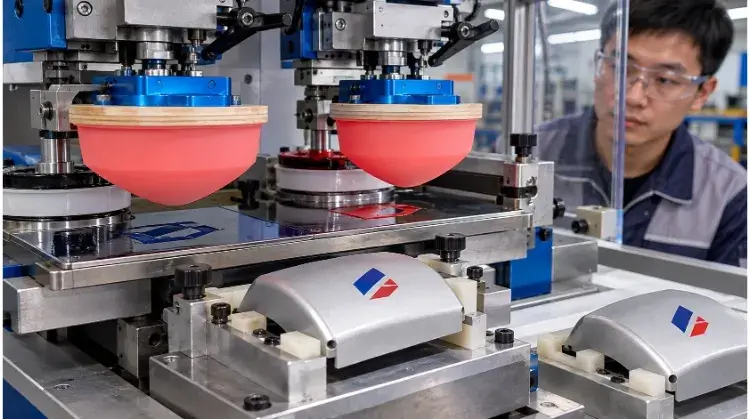
Silicone Pad Printing a Metal Housing

Pad Printing: Process, Design, Quality, and Cost

Pad printing is an indirect offset gravure process that uses a flexible silicone pad to transfer a 2D ink image from an etched plate onto a 3D object. It is ideal for printing on curved, textured, or recessed surfaces where flat screen printing cannot reach.
Read More »
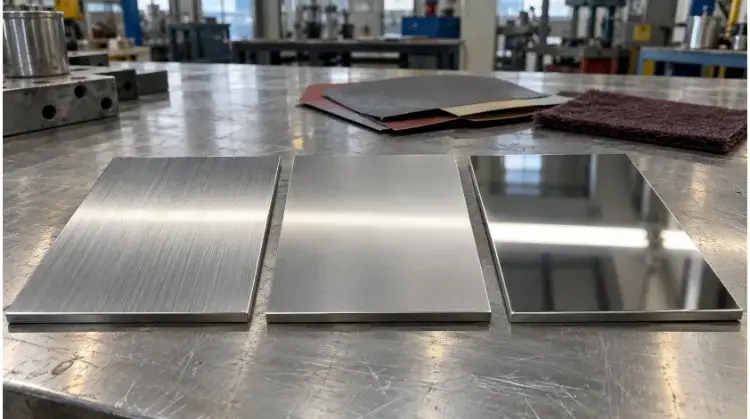
Brushed and Polished Stainless Steel Samples

Sanding Stainless Steel: How to Get an Even Finish

To properly sand stainless steel, start with a 36 to 60-grit abrasive for weld removal or deep scratches. Progress sequentially through 120, 240, and 400-grit to refine the surface. Always sand parallel to the grain and strictly use iron-free (INOX) abrasives to prevent corrosion.

Read More »
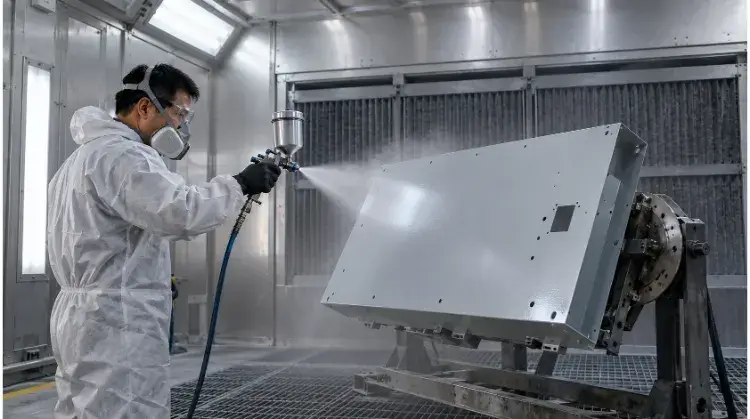
Spray Painting a Metal Enclosure Panel

Spray Coating for Metal Parts: Methods, Design, and Quality

Spray coating for metal parts applies liquid paint or powder to enhance corrosion resistance and aesthetics. However, engineers must account for coating thickness—typically adding 20 to 100μm per surface—requiring strict DFM planning for masking, threads, and mating surfaces to prevent assembly interference.

Read More »
Satin Finished Stainless Steel Enclosure and Metal Parts

Satin Metal Finish: Process, Specifications, and DFM

A satin metal finish is a smooth, low-gloss surface created through controlled abrasive machining. Its microscopic texture diffuses light to reduce glare and hide minor fingerprints and scratches. Unlike a bright mirror polish, it provides a uniform, muted sheen ideal for visible cosmetic components.

Read More »
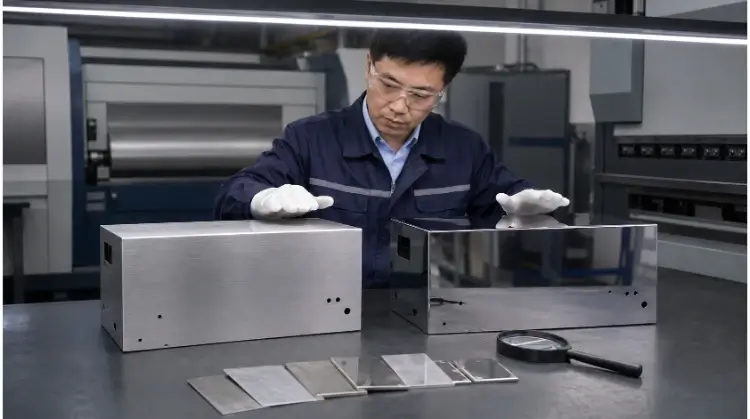
Stainless Steel Finishes from 2B to Mirro

Mirror Finish for Metal Parts: Process, Quality, and Cost

A mirror finish, often classified as a No. 8 finish, is a highly reflective, scratch-free surface achieved through progressive mechanical grinding and buffing. For industrial metal parts, it typically requires a surface roughness (Ra) below 0.1 μm to produce a clear, distortion-free reflection.

Read More »
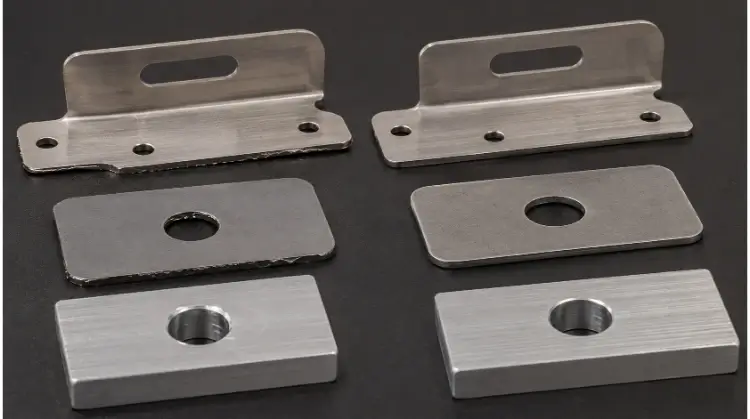
Surface Conditions from the Same Production Trial

Electropolishing: Process, Tolerances, and Design Rules

Electropolishing is an electrochemical finishing process that removes a thin, controlled layer of metal from a part’s surface. Often called reverse electroplating, it selectively dissolves microscopic high points to reduce surface roughness, remove micro-burrs, and improve corrosion resistance on alloys like stainless steel.

Read More »
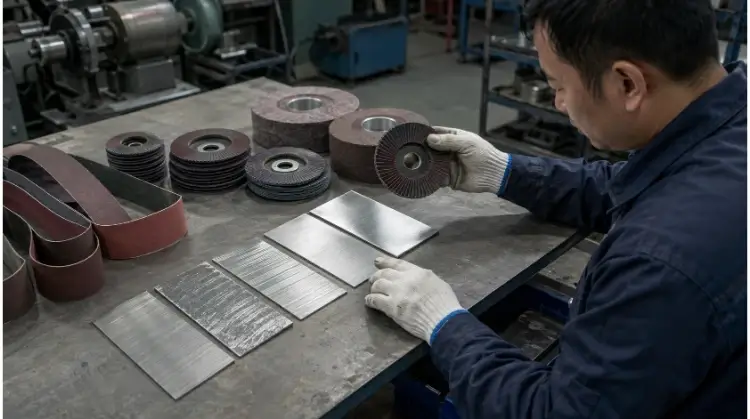
Fresh Abrasives Beside Stainless Finish Samples

Grinding Stainless Steel: Abrasives, Heat, and Surface Finish

To successfully grind stainless steel, operators must control heat to prevent warping and discoloration. Use INOX-rated ceramic or zirconia abrasives, apply consistent light pressure, and keep the grinder moving. Never use carbon steel tools on stainless steel to avoid iron contamination and rust.

Read More »
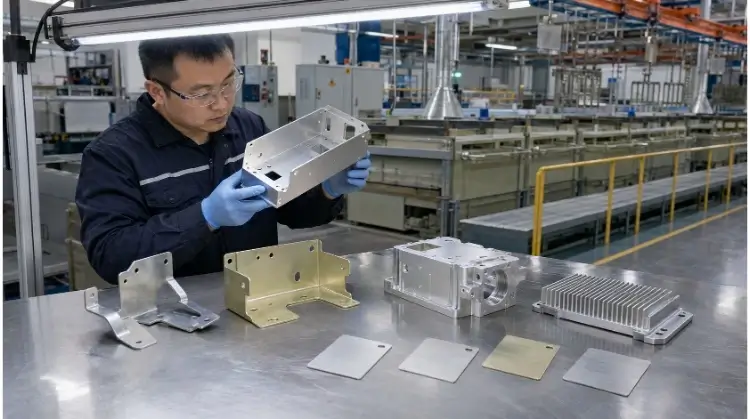
Aluminum Enclosures with Clear and Gold Chem Film

Aluminum Chromating Guide: Chem Film Types, Specs and DFM

Aluminum chromating (also known as chem film or Alodine) is a chemical conversion process that creates a thin protective layer on aluminum. It provides excellent corrosion resistance, maintains surface electrical conductivity, and serves as an ideal base for paint, without altering part dimensions.

Read More »
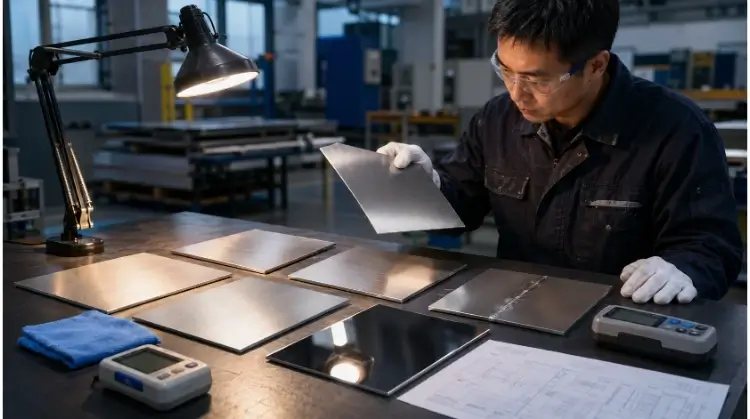
Stainless Steel Finish Samples Under Workshop Light

How to Polish Stainless Steel: Steps, Finishes, and Cost

To polish stainless steel, clean the surface thoroughly, then use progressive abrasives starting from the grit that matches your deepest defect (e.g., 80-grit). Refine scratches sequentially up to 1200-grit, and finish by buffing with cutting and coloring compounds to achieve the desired brushed, satin, or mirror finish.

Read More »

Get in Touch with Us

Drag & Drop Files, Choose Files to Upload