Permanent Mold Casting: Design, Tolerances, and Cost

Fabrication

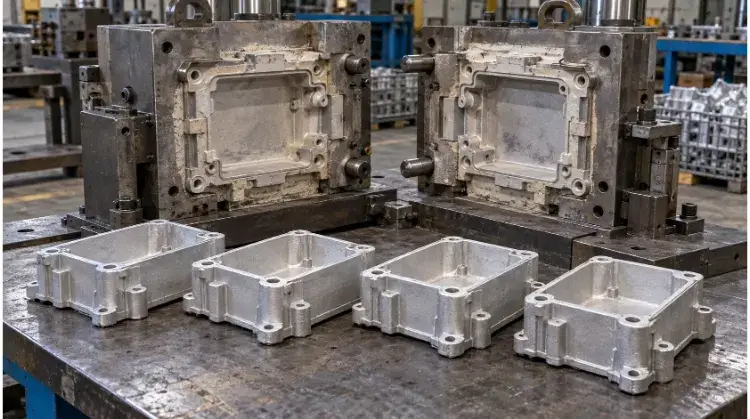
Aluminum Housings Beside Their Casting Mold

Permanent Mold Casting: Design, Tolerances, and Cost

Permanent mold casting is a metalworking process that uses reusable steel or cast iron molds to produce highly dense, non-ferrous metal parts. It delivers better mechanical strength and tighter tolerances than sand casting, making it the optimal choice for medium-to-high volume aluminum and zinc components.
Read More »
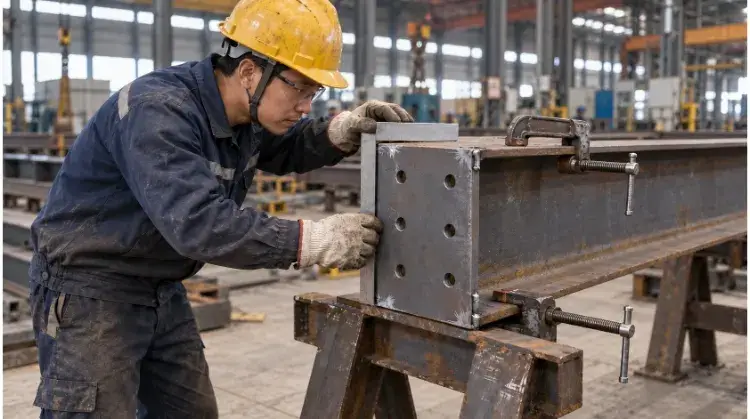
Fabricated Steel Beams and Columns on the Shop Floor

Structural Steel Fabrication: Process, Quality, and Cost

Structural steel fabrication is the industrial process of cutting, bending, and welding standard raw steel into specific load-bearing components. This process transforms raw materials into ready-to-assemble frames for commercial buildings, industrial equipment, and infrastructure projects.

Read More »
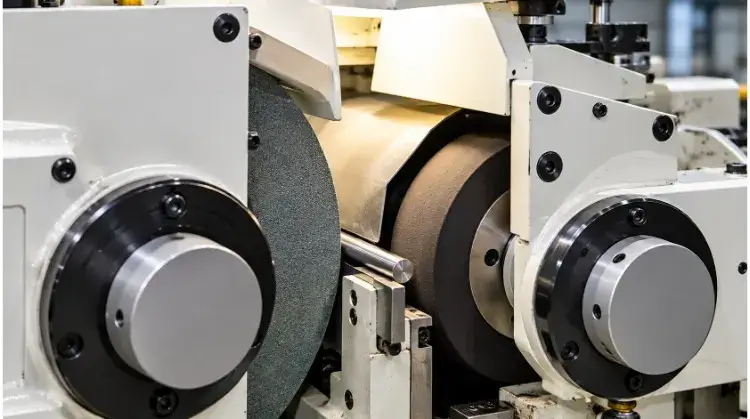
Steel Workpiece Between the Grinding and Regulating Wheels

Centerless Grinding: How It Works and When to Use It

Centerless grinding is an outer-diameter (OD) machining process that removes material from cylindrical parts without using spindles or chucks. Instead, the workpiece is supported between a grinding wheel, a regulating wheel, and a workblade, enabling high-volume production with extreme dimensional precision.

Read More »
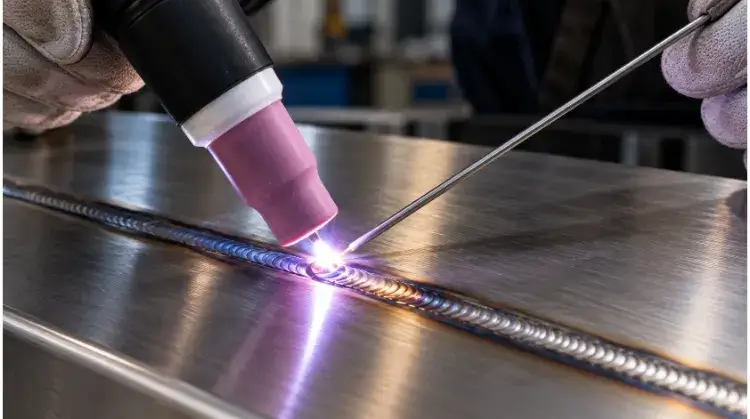
TIG Welding

TIG Welding Mistakes: Common Problems and Practical Fixes

Common TIG welding mistakes include inadequate surface cleaning, incorrect tungsten grinding, excessive shielding gas flow, and poor heat control. These errors cause porosity, arc wandering, and severe part distortion. Fixing them requires strict joint preparation, optimizing gas coverage, and balancing amperage with travel speed.

Read More »
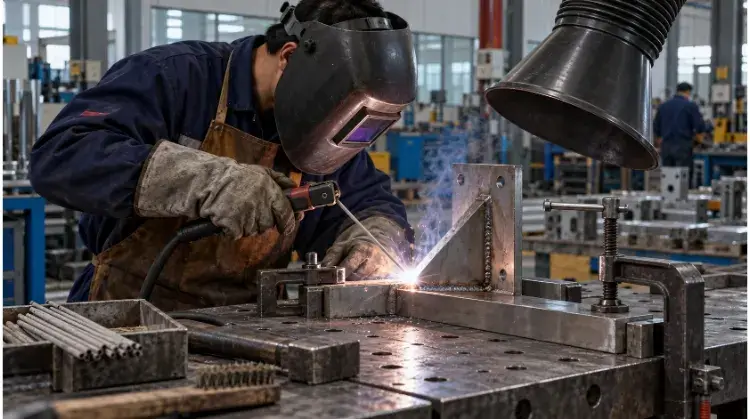
Stick Welding a Stainless Steel Bracket in the Workshop

Stick Welding Stainless Steel: When to Use It and How

Stick welding (SMAW) is highly effective for stainless steel in drafty outdoor environments or heavy structural repairs where TIG is impractical. Using low-carbon electrodes like E308L maintains corrosion resistance. However, high heat input and slag removal make it unsuitable for thin sheets under 1.5mm or high-volume production.

Read More »
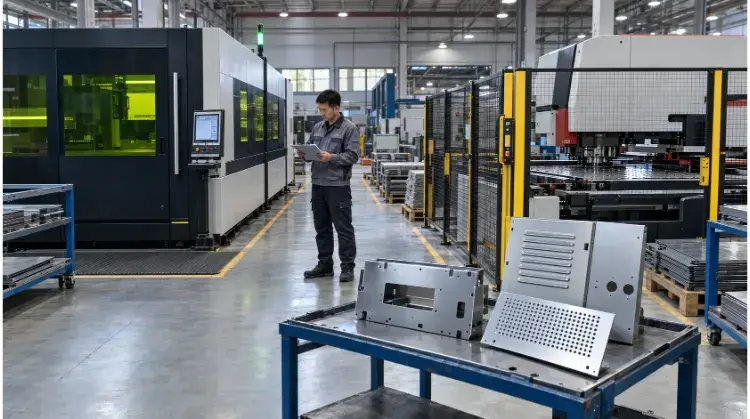
CNC Punching and Laser Cutting in a Sheet Metal Workshop

Punching vs. Laser Cutting: Which Process Fits Your Part?

In sheet metal fabrication, CNC punching uses mechanical force and physical dies to rapidly stamp holes and formed features, making it ideal for high volumes. Fiber laser cutting uses a thermal beam for precise, tool-less cuts, making it best for low-volume prototypes and complex profiles.

Read More »
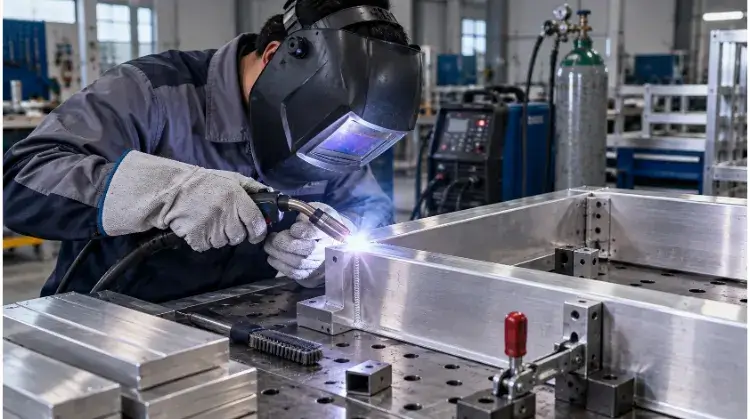
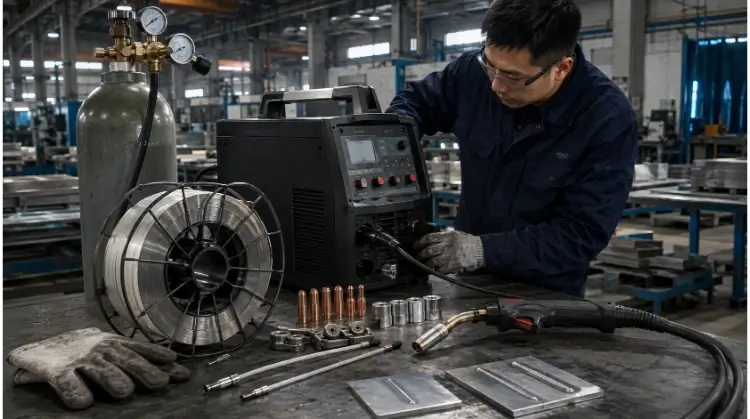
aluminum MIG welding

MIG Welding Aluminum: Settings, Defects, and DFM

MIG welding aluminum requires a continuously fed aluminum wire (such as ER4043 or ER5356), 100% pure argon shielding gas, and a spool gun or push-pull system to prevent wire tangling. Success depends on pre-weld oxide removal and precise heat input to avoid burn-through on this highly conductive metal.

Read More »
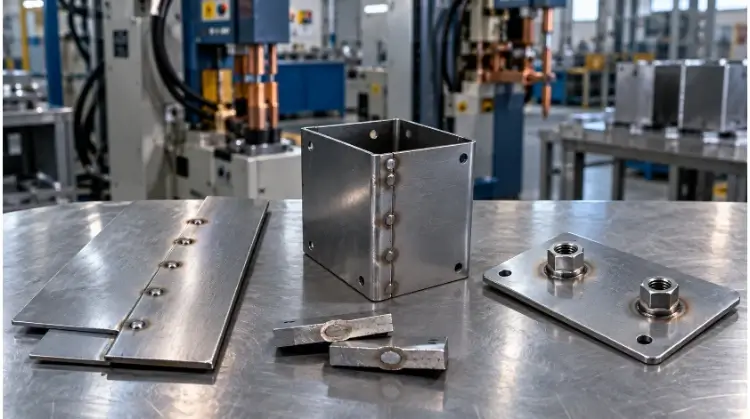
Spot, Seam, and Projection Weld Samples

Electric Resistance Welding: Process, DFM, and Quality

Electric resistance welding (ERW) is a high-speed manufacturing process that joins metal sheets using applied pressure and localized heat generated by electrical current. It requires no filler materials, making it a cost-effective, highly repeatable solution for custom sheet metal enclosures and high-volume assemblies.

Read More »
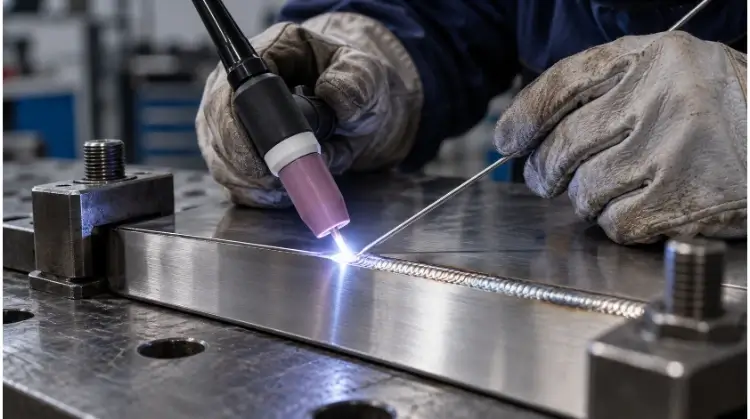
Heliarc welding an Aluminum Enclosure

Heliarc Welding: Process, Design, Quality, and Cost

Heliarc welding is the original trade name for Gas Tungsten Arc Welding (GTAW) or TIG welding. It uses a non-consumable tungsten electrode and inert shielding gas to produce highly precise, spatter-free welds. In modern manufacturing, Heliarc and TIG are the exact same process.

Read More »
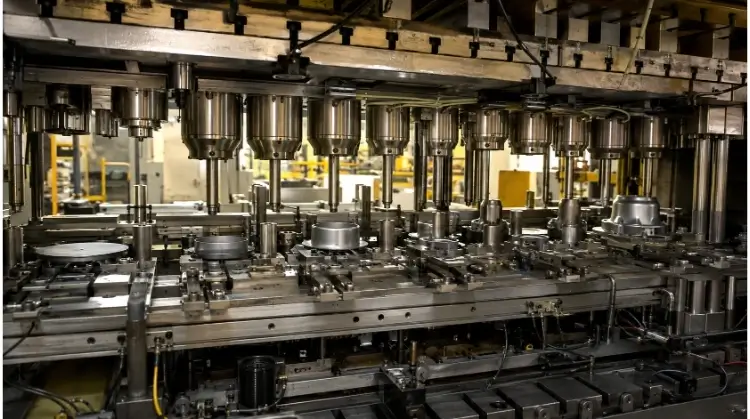
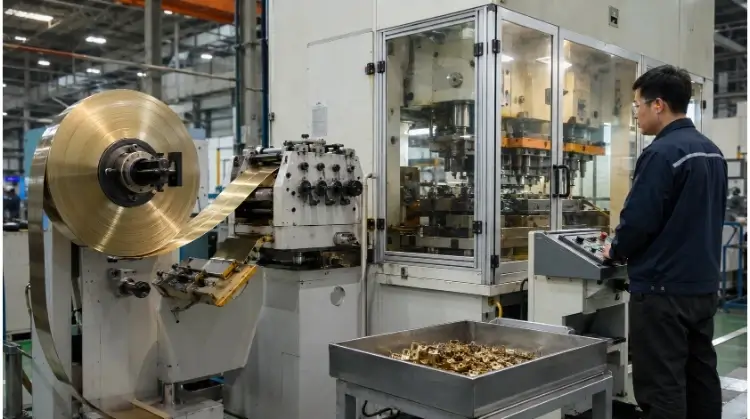
Transfer Press Stamping Line in Operation

Transfer Press Stamping: Process, Design Rules, and Cost

Transfer press stamping is a multi-stage metal forming process where blanks are separated from the strip and mechanically moved through individual die stations to create complex, deep-drawn parts. This allows the part to be redrawn, repositioned, pierced, trimmed, and formed without remaining attached to a carrier strip.

Read More »

Get in Touch with Us

Drag & Drop Files, Choose Files to Upload